







Alan Jacobs
Opportunity Costs
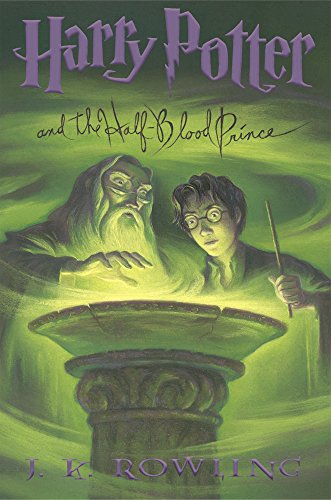
What does it profit a man to defeat the Dark Lord but lose his soul?The stab of envy came instantly, unexpectedly. I was somewhere quite new to me: on one of the enormous ferries that run between the mainland of British Columbia and Vancouver Island. As we moved westward we traded shifting clouds for brilliant morning sunshine. My wife and I had every expectation of a delightful day on the island, and had even managed to procure some surprisingly good coffee from a helpful machine. We sat at a small round table, sipping the coffee and gazing on the small islands in the Strait of Georgia; all was well indeed. But then my eye strayed to a neighboring table. There sat a ten-year-old boy, gazing fixedly upon the face of his father, who was reading in a tense whisper from Harry Potter and the Half-Blood Prince. It was July 16, 2005. The book had been released just eight hours earlier, at midnight, and though I had felt a slight pang when I discovered that I would be vacationing in Canada at the time—celebrating my 25th wedding anniversary, as it happened—I dismissed it immediately, and gave the matter no further thought. (Except, that is, to order a copy from Amazon Canada and have it sent to the B&B where we would be staying. With my wife's permission, of course.) I had every reason to believe that the book would be waiting for me when we returned that evening, but at the moment that prospect yielded little comfort. (I got still less when the book didn't show up at all. But that's another story.) It occurred to me that this was the first time since the first book in the series that anyone I knew read a Potter installment before I did. When the second one, Harry Potter and the Chamber of Secrets, appeared in Britain some months before it was scheduled to appear in the United States, I ordered that volume from Amazon U.K.—as did thousands of others, a practice that quickly led Scholastic, J. K. Rowling's American publisher, to insist upon simultaneous release of future volumes. From then on I read each book on the day of its publication, and even wrote an essay in praise of J. K. Rowling (one that received much critical commentary from my Christian brothers and sisters).
Why this excitement? Why would a middle-aged man—who also happens to be a professor of literature—get so worked up about a series of books for young people? Indeed, why do so many millions of people get similarly worked up, as they have about no other books? There is no real answer to this question, though every time another book in the series is released the newspapers of the world fill with speculations. The closest we can come to an answer is to note that J. K. Rowling does three things exceptionally well: first, she creates characters readers really care about—not just Harry but also Ron, Hermione, Hagrid, Dumbledore, Neville, etc.—usually because they possess some admirable trait (kindness, or courage, or wisdom) but are also somehow vulnerable; second, she writes suspenseful plots, so that you really want to know how it's all going to come out; and third, she creates a whole imaginative world that people love to inhabit, even after they already know what happens in the stories. Many writers can do one of those things; a few can do two; hardly any can achieve all three. (Tolkien is one of them, which is why he also, though a very different and much greater writer than Rowling, is equally beloved.) It's the combination that makes her special.
Critics who complain that Rowling's writing style is pedestrian or cliché-laden—Harold Bloom being prominent among them—therefore miss the point. She is certainly not much of a stylist, she does indeed fall sometimes into cliché, and in fact a key moment in the new volume, one meant to be deeply moving, is marred by the kind of grammatical error that makes an English teacher like me grind his teeth and mutter about the decline in the professional skills of editors. But the last thing I want when I'm reading a Harry Potter book is to pause and admire the felicity of the diction. This ain't Emily Dickinson, after all. And I found that grammatically erroneous passage deeply moving anyway because I cared about the characters involved, I cared about the story, I cared about the world.
That world—let's start there—has been a source of great delight to me over the years. Rowling's imaginative universe takes every dusty old piece of furniture from the common stock of tales about witches—pointed hats and cloaks, flying broomsticks, eye of newt and toe of frog, the whole shebang—cheerfully accepts it, and raises it to the next power. She adds to that the love of odd names that also characterized Charles Dickens, matching his Dick Swiveller with her own Argus Filch, and his town of Eatanswill with her village of Hogsmeade. It is tempting to heap up examples. She has a keen ear for the absurd, and has picked up curious words and phrases from all over the place: the names of two of her main characters, Dumbledore and Hagrid, seem to have been taken from a passage about country dialects in Thomas Hardy's Mayor of Casterbridge. (A "dumbledore" is a bumblebee, and to be "hag-rid" is to be worn out.) The portraits at Hogwarts School of Witchcraft and Wizardry talk, and the subject of any one will occasionally depart to visit the inhabitants of the others; in the great wizard shopping street called Diagon Alley one can buy Self-Stirring Cauldrons; rooms and tents and even automobiles are often bewitched so that their insides are larger than their outsides. Each book in the series has added to this storehouse of treasures and curiosities.
But Harry Potter and the Half-Blood Prince does so less than any of its predecessors. Such new information about the magical world that we acquire is disturbing if not terrifying: we learn, for instance, of the Horcrux, an object enchanted to receive a portion of a person's soul—but only when that person has severed a bit of his soul by murdering someone. One of the few light-hearted moments in the book comes early on, when Harry and his friends visit Weasleys' Wizard Wheezes, the joke shop run by Fred and George Weasley, and see a variety of magical pranks and tricks. But one of the new comical items Fred and George are proud of—Peruvian Instant Darkness Powder—much later in the book enables one of Harry's enemies to escape capture, and this escape leads, indirectly at least, to the death of a beloved character. There is no less magic in this book than in any of the others, but any distinction between serious and frivolous magic is being occluded, or even erased.
So too is the distinction between "good" and "dark" magic—or, as the magicians of the Renaissance would have put it, between magia and goetia. In the previous installment of the series, Harry Potter and the Order of the Phoenix, a group of students wants to learn how to defend themselves against possible attacks by Dark wizards, especially the Death Eaters, the most trusted servants of the greatest and Darkest of Dark wizards, Lord Voldemort, Harry's great antagonist. They are all taking a course called Defense Against the Dark Arts, but it is useless, so they determine to study under the tutelage of Harry, who by this time has had to defend himself against the Dark Arts more than a few times. Harry's dear friend Hermione Granger invents a way to inform people of future meetings: she enchants coins so that their serial numbers are replaced by the date and time of the next meeting of the Defense Association. Clever indeed! But the same enemy who buys Peruvian Instant Darkness Powder from Weasleys' Wizard Wheezes learns of the trick and employs it to bring Death Eaters into Hogwarts Castle. Moreover, the meetings of the Defense Association take place in a place called the Room of Requirement, which alters its shape, size, and furnishings in order to meet the needs of the people using it; and this room is also commandeered by Harry's enemy, again following our heroes' example.
These are sobering events that require some reflection. In Harry Potter's world, magic does not involve communing with spirits. (The contrast with the recent Bartimaeus books of Jonathan Stroud—in which the only power that wizards have is the power to summon and command spirits—is noteworthy.) Rowling has imagined magic as a kind of technology, but one that works only for some people. And even those people have to study and practice to be able to use the technology correctly: learning to use a wand is not so different from learning to drive a car. Like many of the technologies we are familiar with in our Muggle world, magical ones tend to be morally neutral: insofar as they have power, that power can be used for good or evil, and the greater the power, the greater its effect in either direction. So one is tempted to say that what Hermione designed for good purposes was taken by a Dark wizard and used for evil ones; but such a judgment would be too facile.
Yes, Dolores Umbridge—the Defense Against the Dark Arts teacher who, in her other capacity as High Inquisitor of Hogwarts, prohibited secret meetings—is a nasty piece of work; and yes, though she is not a Dark wizard herself, her policies aid and abet the forces of Darkness, and inhibit the ability of good wizards to combat those forces. Hermione's little invention would seem, then, perfectly justified in the troubling circumstances; and at the time no one questions it. But here at the end of the next volume we see it in a new light: we are reminded that, after all, it was a device to ensure secrecy, to prevent the faculty and staff of the school from learning what some students were up to. And when the school is led by Albus Dumbledore rather than Dolores Umbridge, the success of such deception becomes disturbing.
Yet it must be said—and this too is a reflection prompted only by the concluding chapters of book 6—that Dumbledore himself has not only tolerated deception by Harry and his friends, he has positively encouraged it. Key to many of Harry's secret adventures is the Invisibility Cloak that he inherited from his father—but it was actually given to him by Dumbledore, and once when Harry had lost it, Dumbledore returned it to him. Near the end of Chamber of Secrets, Dumbledore acknowledges that Harry has "a certain disregard for the rules," but he does so with a twinkle in his eye—even though he makes this comment in listing the traits prized by Salazar Slytherin, the ancestor (literally or figuratively) of the Dark wizards that plague with wizarding world in these books. Rowling raises the possibility here that Dumbledore's encouragement of deceptive practices by his most gifted and devoted students has been a significant mistake.
If so, it would not be his only one. In the latter pages of Order of the Phoenix Dumbledore confesses that he had withheld important information from Harry—information about the link between Harry and Lord Voldemort—for several years. He says that he did so out of concern and affection for Harry. But in fact secrecy seems to be habitual with Dumbledore. In a recent interview, Rowling made this intriguing comment: Dumbledore's "wisdom has isolated him … where is his equal, where is his confidante, where is his partner? He has none of those things." By the time book 6 begins, Dumbledore has recognized this problem, because he immediately begins taking Harry deeper and deeper into his confidence, trusting him more fully and even relying on him. Indeed, one of the most moving passages in the entire series occurs at a crucial moment in this book, when Harry is trying to help a Dumbledore weakened by powerful Dark magic: "It's going to be all right, sir … Don't worry," Harry says. "I am not worried, Harry," the great wizard replies. "I am with you."
But by the time I put down Harry Potter and the Half-Blood Prince—rather hag-rid from the excitement and pain of it all—I wondered if Dumbledore had not learned his lesson too late. In the course of the book he reveals much to Harry, but when he has the chance to answer a question that has been of obsessive concern to Harry, and to many other characters, since the first book in the series, he refrains:
"Professor … how can you be sure Snape's on our side?" Dumbledore did not speak for a moment; he looked as though he was trying to make up his mind about something. At last he said, "I am sure. I trust Severus Snape completely."
But why, Professor, why do you so completely trust Severus Snape? That question, along with many others, most of them less consequential, will be answered in the final volume, which Rowling has said she will not begin serious work on until next year. Therefore fans of the series will have plenty of time to reflect on the disastrous (or apparently disastrous) events of book 6, and to speculate on possible ways the story could be brought to conclusion.
I find myself thinking especially of something I have already mentioned: the draining away of delight from the books, the narrowing of Harry's horizons to a point, that point being an ultimate encounter with Lord Voldemort. At this stage in the series—the last book could of course surprise me—it is hard to imagine that there will be much room in Harry's mind for any other thoughts. Earlier, when the threats were less immediate, when Harry could be confident in the protection of others, and when he had not yet learned of the depth and strength of his perverse bond with Voldemort, he could revel in the distractions of Quidditch, the wizard sport at which he excels; but Rowling has already said that we have seen a Quidditch match for the last time. In book 6 the only real refuge from war with the Dark Lord is found in adolescent romance; and that, while often funny, is never felt by those who experience it as light-hearted pleasure.
More dismaying is the book's suggestion that Harry (and therefore the story) may not return to Hogwarts at all. Now, I strongly suspect that it will be necessary for Harry to return to Hogwarts in one way or another—he needs to return to the Room of Requirement, I think, and there may be some relics of the Hogwarts founders that he should investigate—but if he did not, there would be a great gaping hole at the heart of the book, because Hogwarts has been a key character in the books, and almost as central to the series as Harry himself. In any case, that such a suggestion can even be made indicates the seriousness of the crisis that has come upon Harry and the whole wizarding world. Everything is expendable except struggle with the Dark Lord; and everything that pleases us can be used by the forces of evil for their own purposes.
This foreclosure of possibilities for Harry, the narrowing of his world to a single dreadful task, is an exaggerated and intensified version of what growing up is for everyone. As Robert Nozick once wrote, "Although [young people] would agree, if they thought about it, that they will realize only some of the (feasible) possibilities before them, none of these various possibilities is yet excluded in their minds. The young live in each of the futures open to them … Economists speak of the opportunity cost of something as the value of the best alternative foregone for it. For adults, strangely, the opportunity cost of our lives appears to us to be the value of all the foregone alternatives summed together, not merely the best other one. When all the possibilities were yet still before us, it felt as if we would do them all." The "opportunity cost," for Harry and for many others, of defeating Voldemort is terrifyingly high. Handled in a certain way, the denouement of this story could confirm every child's worst suspicions of what it means to grow up.
But I do not think that Joanne Rowling wants to say that adulthood consists in foregoing all delight, all leisure and playfulness, and that young people had better get used to it. Rather, she is showing that there are times when some people, at least, must forgo such pleasures so that they may be retained, or regained, by others. And it is at this point that the comparisons between Rowling's books and The Lord of the Rings—comparisons that I have tended to dismiss— begin to ring true. Reading the last pages of Harry Potter and the Half-Blood Prince, I found myself hearing in my head some of the last words Frodo utters to Sam: "I tried to save the Shire, and it has been saved, but not for me. It must often be so, Sam, when things are in danger: some one has to give them up, lose them, so that others may keep them." Harry has indeed given up many things: all the delights of Rowling's imaginative world that I have mentioned, and many more. We are left to wonder whether he must give them up permanently, or whether, his quest complete, he will remain whole enough to reclaim them.
Four people very dear to Harry have died trying to protect him from Lord Voldemort, and at the end of book 6 he is determined that no others shall do so. From this point on he will move forward alone: he ruthlessly, if regretfully, cuts as many ties as he can. But—here again we are reminded of Tolkien, of the refusal of Merry and Pippin and (above all) Sam to abandon Frodo—Ron and Hermione make their position clear: "We're with you whatever happens." I expect that the final book of the series will pay proper homage to the first one, in which the skills of all three friends were necessary to prevent Voldemort from claiming the Philosopher's Stone and thereby achieving endless life. Which is another way of saying that I believe that Voldemort will, in the end, be defeated.
But what will be the cost of victory, to Harry and to those he loves? I am not confident that Harry, Ron, and Hermione will all survive the seventh book. But even if they do, I wonder what the agon will do to them. I especially wonder what will be left of the Harry Potter we first met almost a decade ago. Let us meditate on this: in each of the two most recent books in the series, Harry has tried to use an Unforgivable Curse, each time on a person whom he has great reason to hate. Yet he has been unable to perform the curses, because his heart is not in them, his will is not fully behind them. "You need to mean them, Potter," says one enemy; "You need to really want to cause pain—to enjoy it." "No Unforgivable Curses from you, Potter!" says the other of Harry's intended victims. "You haven't got the nerve or the ability." Harry, for all the misery and loss he has suffered—perhaps because of all the misery and loss he has suffered—finds it impossible to summon and will true hatred. Without that will, without that hatred, will he be able to do what he knows he must do: kill Voldemort? It seems unlikely. But would a Harry who can summon the hatred to kill, even if the Dark Lord himself is the victim, still be the Harry Potter we have come to love?
In the early books in the series—indeed up through the fifth book—the obvious and recurrent historical analogue to the story is the beginning of World War II: the Minister of Magic, Cornelius Fudge, is a Neville Chamberlain figure, an appeaser, in denial about the real state of affairs even though all the evidence is right before his eyes; while Dumbledore (in a kind of "political wilderness" at Hogwarts) is the clear-eyed, straight-talking Churchill of the tale. But the sixth book treats life, not in conditions of open battlefield warfare or air assault, but under the constant but unpredictable threat of terrorism. Thus the debate at the end of the book about whether Hogwarts should remain open: some want it closed to protect the students, while others argue that the students would be safer at Hogwarts than at home, and in any case, they say, the supporters of Voldemort must not be given the satisfaction of knowing that they had closed the school. (This strongly resembles the debates that go on in, say, Israel— though Israelis seem almost fully to have chosen the second option, opting for at least the semblance of normalcy no matter what.)
Rowling denies conscious reference to the current historical moment, and indeed her description of this new wizards' war seems mandated by the intrinsic shape of the story—by the necessary form of Voldemort's rebellion. Still, the first chapter of this book is rather eerie: Cornelius Fudge and his successor show up in the office of the Muggle Prime Minister, who is troubled by a series of strange and destructive events. When he learns that these are not accidents or natural disasters, but rather the work of Voldemort and his Death Eaters, he splutters, "But for heaven's sake—you're wizards! You can do magic! Surely you can sort out—well—anything." To this Cornelius Fudge, with a wan smile, replies, "the trouble is, the other side can do magic too, Prime Minister." (Rowling held a midnight book-release party at Edinburgh Castle on July 16, and had originally planned to read this chapter to the children whom she had invited; but the then-recent Underground bombings in London caused her to decide instead on a chapter from an earlier book.)
Therefore, the great question facing readers who look forward to the seventh and last Harry Potter book is not just which side will win, but which magic will triumph. Dumbledore has always fought Voldemort through overt and covert action—again, his honesty and courage counter Fudge's head-in-the-sand befuddlement—but he has refused to fight on Voldemort's terms, always refraining from Dark magic (like the Unforgivable Curses). But the effectiveness of that noble refusal now seems to have been called into question. As Harry moves towards his final confrontation with Voldemort, he, by contrast, seems determined to use the weapons of evil against evil. But what does it profit a man to defeat the Dark Lord but lose his soul?
Alan Jacobs is professor of English at Wheaton College. He is the author most recently of The Narnian: The Life and Imagination of C. S. Lewis, just published by HarperSanFrancisco.
Copyright © 2005 by the author or Christianity Today/Books & Culture magazine.
Click here for reprint information on Books & Culture.
 Email Newsletter
No comments
See all comments
*