The Primary Source of the Millennium Legends/Historical Events


These excerpts from what is known by the Eastern Slavs as the Primary Chronicle, written nearly 900 years ago, contain in dramatic prose the chief accounts upon which the millennial celebrations are based: that of the Apostle Andrew visiting Ukraine; that of Olga’s baptism; and that of the great baptism of Kiev.
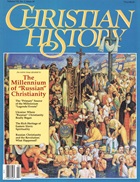
It is being called, variously (depending upon one’s biases), “The Millennium of Christianity in Ukraine,” “The Millennium of Christianity in Russia,” “The Millennium of Christianity in the USSR,” “The Millennium of the Russian Orthodox Church,” “The Millennium of the Ukrainian Orthodox Church,” and several others.
Yet regardless of their widely varying biases, all the groups participating in the thousands of celebration activities are united in referring to one document as a source for what events are being commemorated: The Primary Chronicle (Laurentian Text), or Tales of the Bygone Years—a compilation that probably first appeared at its current length in 1116, under the name of one Sylvester, but which is widely accepted as being primarily written by a Ukrainian Orthodox monk named Nestor, and added to later by Sylvester and others.
In its nearly 200 pages, this extensive compendium includes stories of the Eastern Slavs history dating from the days of Noah right up until the 12th century, dealing broadly with all the history of Kievan Rus’ but, being authored by a monk, focusing especially on the Eastern Slavs’ “salvation history.”
Regarding the millennium, the celebrants refer most frequently to three of the Chronicle’s accounts: that of the Apostle Andrew visiting the future site of Kiev and other portions of the modern USSR; that of the baptism of Princess Olga, a queen of Kievan Rus’ and the grandmother of Grand Prince Vladimir; and that of Vladimir ordaining Christianity as the official religion of his realm and ordering all the citizens to be baptized. In excerpts taken from the 1953 translation called The Russian Primary Chronicle, edited and translated by Samuel Hazzard Cross and Olgerd P. Sherbowitz-Wetzor (Medieval Academy of America: Cambridge, Mass.), these accounts are presented below, interspersed with editor’s notes of explanation and commentary.
But first, a note about accuracy: While historians from a broad range of perspectives question the accuracy of the details in these accounts, even the most-skeptical historians seem to agree that the Chronicle is generally accurate in its accounts of the general happenings. In the case of the latter two accounts, their general accuracy has been much corroborated by other reliable sources. As for the first account, a persuasive case can be made (see The Soviet Union Celebrates 1000 Years of Christianity) that it probably contains at least a germ of accuracy, though the evidence for it is clearly speculative.
However, it is not speculative that, for at least 800 years, the Chronicle has been a much-loved collection of “the peoples’ stories,” a legacy of history and legend that has been passed proudly down from one generation of Eastern Slavs to the next, even to this very day.
Andrew the Apostle Visits Rus’-Ukraine, C. 50–60
Dating from at least the 4th century, the tradition has been strong and pervasive among Eastern Slavic believers that Andrew the Apostle of Christ, during his mission journeys to the Greek colonies on the Black Sea, visited the territories that were later to become Ukraine and Russia—and possibly left some new converts to Christianity behind. Whether historically verifiable or not, here is definitely one of the “primary” sources of the millennial celebration.
The Dnieper [River] flows through various mouths into the Pontus Sea, which is called the Russian [today the Black] Sea, and it was this sea beside which taught St. Andrew, Peter’s brother.
When Andrew was teaching in Sinope and came to Kherson [an ancient city on the north side of the Black Sea opposite Constantinople], he observed that the mouth of the Dnieper was nearby. Conceiving a desire to go to Rome, he thus journeyed to the mouth of the Dnieper.
Thence he ascended the river, and by chance he halted beneath the hills upon the shore. Upon arising in the morning, he observed to the disciples who were with him, “See ye these hills? So shall the favor of God shine upon them that on this spot a great city shall arise, and God shall erect many churches therein.” He drew near the hills, and having blessed them, he set up a cross. After offering his prayer to God, he descended from the hill on which Kiev was subsequently built, and continued his journey up the Dnieper.
He then reached the Slavs at the point where Novgorod [an ancient city to the northeast of Kiev] is now situated. He saw these people existing according to their customs, and on observing how they bathed and scrubbed themselves, he wondered at them. He went thence among the Varangians [the leading Slavic tribe in the region] and came to Rome, where he recounted what he had learned and observed. “Wondrous to relate,” said he, “I saw the land of the Slavs, and while I was among them, I noticed their wooden bathhouses [or spas or saunas]. They warm them to extreme heat, then undress, and after anointing themselves with an acid liquid, they take young branches and lash their bodies.”
“They actually lash themselves so violently that they barely escape alive. Then they drench themselves with cold water, and thus are revived. They think nothing of doing this every day, and though tormented by none, they actually inflict such voluntary torture upon themselves. In fact, they make of the act not a mere washing but a veritable torment.” When his hearers learned of this, they marveled. But Andrew, after his stay in Rome, returned to Sinope.
This latter story, about Andrew’s observation of the Novgorodians, is the most highly questioned part of the narrative. Scholars suggest it was added into the Chronicle sometime after Nestor, probably by a Kievan who, inheriting the legacy of an an age-old rivalry between the cities of Kiev and Novgorod, wanted to confirm that the Novgorodians were foolish as far back as the 1st century.
The Baptism of Olga, C. 955
Princess Olga (or Ol’ha) is the first woman to have been recorded in Ukrainian history as having openly become a Christian—though it’s very unlikely she was the first Ukrainian Christian woman. But because she was a princess, she was the first Ukrainian woman to have been recorded as a Christian.
She was the wife of Prince Ihor (r. 913–945), a Norseman who was one of the first great princes of the Kievan-Rus’ empire. Also, she was the grandmother of Prince Vladimir who ordained the national baptism.
The Chronicle asserts that she was clever and regal even before becoming a Christian, but that she initially used her cleverness and regal bearing to exact cruel and unexpected vengeance upon her enemies. When she first learned about Christianity is unknown; it is almost certain there were several believers in her husband’s retinue, and she could have learned of it from them. Yet obviously, she did not make her profession of faith known until her husband was several years dead.
How public she actually was about changing from her subjects’ pagan faith to the “new” Christian faith is open to much question; however, according to the Chronicle, she made up her mind quickly and proclaimed it openly, without regard of the consequences to her reputation with her people. This is the Chronicle’s romantic account:
Olga went to Greece, and arrived at Tsar’grad [Constantinople]. The reigning emperor was named Constantine [VII], son of Leo. Olga came before him, and when he saw that she was very fair of countenance and wise as well, the emperor wondered at her intellect.
He conversed with her and remarked that she was worthy to reign with him in his city. When Olga heard his words, she replied that she was still a pagan, and that if he desired to baptize her, he should perform this function himself; otherwise, she was unwilling to accept baptism. The emperor, with the assistance of the patriarch, accordingly baptized her.
When Olga was enlightened, she rejoiced in soul and body. The patriarch, who instructed her in the faith, said to her, “Blessed art thou among the women of Rus’, for thou hast loved the light, and quit the darkness. The sons of Rus’ shall bless thee to the last generation of thy descendants.” He taught her the doctrine of the Church, and instructed her in prayer and fasting, in almsgiving, and in the maintenance of chastity. She bowed her head, and like a sponge absorbing water, she eagerly drank in his teachings. The princess bowed before the patriarch, saying, “Through thy prayers holy father, may I be preserved from the crafts and assaults of the devil!” At he, baptism she was christened Helena, after the ancient empress, mother of Constantine the Great. The patriarch then blessed her and dismissed her.
After her baptism, the emperor summoned Olga and made known to her that he wished her to become his wife. But she replied, “How can you marry me, after yourself baptizing me and calling me your daughter? For among Christians that is unlawful, as you yourself must know.” Then the emperor said, “Olga, you have outwitted me.” He gave her many gifts of gold, silver, silks, and various vases, and dismissed her, still calling her his daughter.
Since Olga was anxious to return home, she went to the patriarch to request his benediction for the homeward journey, and said to him, “My people and my son are heathen. May God protect me from all evil!” … So the patriarch blessed her, and she returned in peace to own country, and arrived in Kiev …
…. and the Greek emperor sent a message to her saying, “Inasmuch as I bestowed many gifts upon you, you promised me that on your return to Rus’ you would send me many presents of slaves, wax, and furs, and dispatch soldiery to aid me.” Olga made answer to the envoys that if the emperor would spend as long a time with her in the Pochayna [region] as she had remained on the Bosporus [Sea], she would grant his request. With these words, she dismissed the envoys.
Now Olga dwelt with her son [the boy-king] Sviatoslav [she was regent to him until he was of age]. And she urged him to be baptized, but he would not listen to her suggestion—though when any man wished to be baptized, he was not hindered, but only mocked ….
The Chronicle goes on to discourse on the blindness of those like Sviatoslav who do not believe, and on Olga’s continuing witness to her son. The Chronicle then recounts several of Sviatoslav’s battle campaigns. Finally, Sviatoslav announces that he is going to move his throne to the Danube region, but the ailing Olga convinces him to stay in Kier until she is dead. Only three days later, according to the Chronicle, she breathes her last. After the beloved lady’s death, . . .
Her son wept for her with great mourning, as did likewise her grandsons and all the people ….
Olga was the precursor of the Christian land, even as the day-spring precedes the sun as the dawn precedes the day. For she shone like the moon by night, and she was radiant among the infidels like a pearl in the mire, since the people were soiled, and not yet purified of their sin by holy baptism … [The Chronicle asserts that] she was the first from Rus’ to enter the kingdom of God, and the sons of Rus’ thus praise her as their leader, for since her death she has interceded with God in their behalf.
Vladimir’s Acceptance of Christianity and the Baptism of Kievan Rus’, C. 988
Despite the Chronicle’s assertion that Olga was “the first from Rus’ to enter the kingdom of God,” there is no question that Christianity was introduced into Kievan Rus’ long before Olga, and certainly before Prince Vladimir. For example, the Chronicle, contradicting itself, says a Christian church existed in Kiev during the reign of Olga’s husband, Ihor. And other records convince us there were many merchants in the area, as well as knights and soldiers, who were either converts to or had an acquaintance with the new faith.
In its rambling narrative, the Chronicle reports several legends concerning the adoption of Christianity as the state religion, as well as several traditional accounts of the baptism of Prince Vladimir. A great irony about the millennium is that no one knows exactly where or when Vladimir was baptized (though it was most likely in 988 or 989, with the baptism of Kiev coming at least one year later—thus making it impossible to have the celebrated baptism of Kiev in 988).
And regardless of the fact that the Chronicle makes the widespread acceptance of imposed Christianity sound simple, it is certain that while some citizens of Kievan Rus’ accepted it peacefully, others resisted and “had to be convinced” by force. This knowledge is tempered by the fact that Vladimir’s acceptance of Christianity was not merely a spiritual move; with his kingdom in such close proximity to the Christian Byzantine Empire, it was also a very political move. Nonetheless, it gave Christianity the prince’s endorsement, and afforded the church with greater resources to carry out her mission. The account begins with representatives from various religions coming to visit the up and-comingPrince Vladimir:
c. 986—Vladimir was visited by Bulgars [from the region of Bulgaria] of Mohammedan faith, who said, “Though you are a wise and prudent prince, you have no religion. Adopt our faith, and revere Mohammed.” Vladimir inquired what was the nature of their religion.
They replied that they believed in God, and that Mohammed instructed them to practice circumcision, to eat no pork, to drink no wine, and after death, promised them complete fulfillment of their carnal desires. “Mohammed,” they asserted, “will give each man 70 fair women. He may choose one fair one, and upon that woman will Mohammed confer the charms of them all, and she shall be his wife. Mohammed promises that one may then satisfy every desire, but whoever is poor in this world will be no different in the next.” They also spoke other false things (which out of modesty may not be written down).
Vladimir listened [intently] to them, for he was fond of women and indulgence, regarding which he heard with pleasure. But circumcision and abstinence from pork and wine were disagreeable to him. “Drinking,” said he, “is the joy of the Russes. We cannot exist without that pleasure.”
Then came the Germans [of the Latin Church], asserting that they were come as emissaries of the pope. They added, “Thus says the pope: ‘Your country is like our country, but your faith is not as ours. For our faith is the light. We worship God, who has made heaven and earth, the stars, the moon, and every creature, while your gods are only wood.’ ”
Vladimir inquired what their teaching was. They replied, “Fasting according to one’s strength. But whatever one eats or drinks is all to the glory of God, as our teacher Paul has said.” Then Vladimir answered, “Depart hence; our fathers accepted no such principle.”
The Jewish Khazars [members of the Khazar tribe were numerous in that region] heard of these missions, and came themselves saying, “We have learned that Bulgars and Christians came hither to instruct you in their faiths. The Christians believe in him whom we crucified, but we believe in the one God of Abraham, Isaac, and Jacob.”
Then Vladimir inquired what their religion was. They replied that its tenets included circumcision, not eating pork or hare, and observing the Sabbath. The prince asked where their native land was, and they replied “in Jerusalem.”
When Vladimir inquired where that was, they made answer, “God was angry at our forefathers, and scattered us among the Gentiles on account of our sins. Our land was then given to the Christians.” The prince then demanded, “How can you hope to teach others while you yourselves are cast out and scattered abroad by the hand of God? If God loved you and your faith, you would not be thus dispersed …. Do you expect us to accept that fate also?”
Then the Greeks [as in Greek Orthodox] sent to Vladimir a scholar, who spoke thus: “We have heard that the Bulgarians came and urged you to adopt their faith, which pollutes heaven and earth. They are accursed above all men, like Sodom and Gomorrah, upon which the Lord let fall burning stones, and which he buried and submerged. The day of destruction likewise awaits these men, on which the Lord will come to judge the earth, and to destroy all those who do evil and abomination.”
“For they moisten their excrement, and pour the water into their mouths, and anoint their beards with it, remembering Mohammed. The women also perform this same abomination, and even worse ones.” Vladimir, upon hearing hearing their statements, spat upon the earth, saying, “This is a vile thing.”
Then the scholar said, “We have likewise heard how men came from Rome to convert you to their faith. It differs but little from ours, for they commune with wafers, called oplacki, which God did not give them, for he ordained that we should commune with bread. For when he had taken bread, the Lord gave it to his disciples, saying, ‘This is my body broken for you.’ Likewise he took the cup, and said, ‘This is my blood of the New Testament.’ They do not so act, for they have modified the faith.”
Then Vladimir remarked that the Jews had come into his presence and had stated that the Germans and the Greeks believed in him whom they crucified. To this the scholar replied, “Of a truth we believe in him. For some of the prophets foretold that God should be incarnated, and others that he should be crucified and buried, but arise on the third day and ascend into heaven. For the Jews killed the prophets, and stills others they persecuted. When their prophecy was fulfilled, our Lord came down to earth, was crucified, arose again, and ascended into heaven ….”
Vladimir then inquired why God should have descended to earth and should have endured such pain. The scholar then answered and said, “If you are desirous of hearing the story, I shall tell you from the beginning why God descended to earth.” Vladimir replied, “Gladly would I hear it.” Whereupon the the scholar thus began his narrative: “In the beginning, God created heaven and earth on the first day …”
Continuing in a blow-by-blow description laced with Scripture references and interesting extra-biblical interpolations, this narrative goes for another 12 pages, moving through the Creation, the Fall, the Flood, the calling of Abraham and Israel, the Egyptian captivity, the Exodus, the taking of the land of Canaan, the Davidic dynasty, the apostasy of Israel, the sending of the prophets with their messianic predictions, the life, death, resurrection and ascension of Christ, the coming of the Holy Spirit, and the spreading of the gospel throughout the world. The scholar concludes thus:
“Now that the apostles have taught men throughout the world to believe in God, we Greeks have inherited their teaching, and the world believes therein. God hath appointed a day, in which he shall come from heaven to judge both the quick and the dead, and to render to each according to his deeds; to the righteous, the kingdom of heaven and ineffable beauty, bliss without end, and eternal life; but to sinners, the torments of hell and a worm that sleeps not, and of their torments there shall be no end ….”
As he spoke thus, he exhibited to Vladimir a canvas on which was depicted the Judgment Day of the Lord, and showed him, on the right, the righteous going to their bliss in Paradise, and on the left, the sinners on their way to torment.
Then Vladimir sighed and said, “Happy are they upon the right, but woe to those upon the left!” The scholar replied, “If you desire to take your place on the right with the just, then accept baptism!” Vladimir took this counsel to heart, saying, “I shall wait yet a little longer,” for he wished to inquire about all the faiths. Vladimir then gave the scholar many gifts, and dismissed him with honor.
c. 987 Vladimir summoned together his boyars and the city elders, and said to them: “Behold, the Bulgars came before me urging me to accept their religion. Then came the Germans and praised their own faith; and after them came the Jews.”
Finally the Greeks appeared, criticizing all other faiths but commending their own, and they spoke at length, telling the history of the whole world from its beginning. Their words were artful, and it was wondrous to listen and pleasant to hear them. They preach the existence of another world. “Whoever adopts our religion and then dies,” they said, “shall arise and live forever. But whosoever embraces another faith, shall be consumed with fire in the next world.’ What is your opinion on this subject, and what do your answer?” The boyars and the elders replied, “You know, oh prince, that no man condemns his own possessions, but praises them instead. If you desire to make certain, you have servants at your disposal. Send them to inquire about the ritual of each and how he worships God.”
Their counsel pleased the prince and all the people, so that they chose good and wise men to the number of 10, and directed them to go first among the Bulgars and inspect their faith. The emissaries went their way, and when they arrived at their destination they beheld the disgraceful actions of the Bulgars and their worship in the mosque; then they returned to their country.
Vladimir then instructed them to go likewise among the Germans, and examine their faith, and finally to visit the Greeks. They thus went into Germany, and after viewing the German ceremonial, they proceeded to Tsar’grad, where they appeared before the [Byzantine] emperor. He inquired on what mission they had come, and they reported to him all that had occurred. When the emperor heard their words, he rejoiced, and did them great honor on that very day.
On the morrow, the emperor sent a message to the patriarch to inform him that a “Russian” delegation had arrived to examine their Greek faith, and directed him to prepare the church and the clergy, and to array himself in his sacerdotal robes, so that the Russes might behold the glory of the God of the Greeks. When the patriarch received these commands, he bade the clergy assemble, and they performed the customary rites.
They burned incense, and the choirs sang hymns. The emperor accompanied the Russes to the church, and placed them in a wide space, calling their attention to the beauty of the edifice, the chanting, and the pontifical services, and the ministry of the deacons, while he explained to them the worship of his God. The Russes were astonished, and in their wonder praised the Greek ceremonial. Then the Emperors Basil and Constantine invited the envoys to their presence, and said, “Go hence to your native country,” and dismissed them with valuable presents and great honor.
Thus they returned to their own country, and the prince called together his boyars and the elders. Vladimir then announced the return of the envoys who had been sent out, and suggested that their report be heard. He thus commanded them to speak out before his retinue.
The royal saints of Rus’: St. Vladimir and St. Olga, his mother, from the Russian Catechism book, written by Ukrainian Stefan Yavorsky in 1723.
The envoys reported, “When we journeyed among the Bulgars, we beheld how they worship in their temple, called a mosque, while they stand ungirt. The Bulgar bows, sits down, looks hither and thither like one possessed, and there is no happiness among them … Their religion is not good.”
“Then we went among the Germans, and saw them performing many ceremonies in their temples; but we beheld no glory there.”
“Then we went to Greece, and the Greeks led us to the edifices where they worship their God, and we know not whether we were in heaven or on earth. For on earth there is no such splendor or such beauty, and we are at a loss how to describe it. We only know that God dwells there among men, and their service is fairer than the ceremonies of other nations. For we cannot forget that beauty. Every man, after tasting something sweet, is afterward unwilling to accept that which is bitter, and therefore we cannot dwell longer here.”
Then the boyars spoke and said, “If the Greek faith were evil, it would not have been adopted by your grandmother Olga who was wiser than all other men.” Vladimir then inquired where they should all accept baptism, and they replied that the decision rested with him.
At this point Vladimir’s religious searchings apparently went on hiatus for a year so he could carry out a siege of the Byzantine city of Kherson. When he received a mysterious message that told him how to cut off the city defenders’ water supply, Vladimir told God that, should he end up taking the city, he would be baptized in gratitude for God’s help. Upon entering the city, he began negotiating with Byzantine Emperors Basil and Constantine for the hand of their sister Anna, thereby intending to cement his possession of the city and a peaceful co-existence with the Byzantine empire. But the two emperors delayed, insisting that he could have their sister only if he were baptized. He insisted that she bring priests with her to baptize him, and they agreed. She went to Kherson, where the narrative picks up:
c. 988—By divine agency, Vladimir was suffering at that moment from a disease of the eyes, and could see nothing, being in great distress. The princess declared to him that if he desired to be healed of this disease, he should be baptized with all speed, otherwise it could not be cured.
When Vladimir heard her message he said, “If this proves true, then of a surety is the God of the Christians great,” and gave order that he should be baptized. The Bishop of Kherson, together with the princess’s priests, after announcing the tidings, baptized Vladimir, and as the bishop laid his hand upon the him, he straightway received his sight. Upon experiencing this miraculous cure, Vladimir glorified God saying, “I have now perceived the one true God.” When his followers beheld this miracle, many of them were also baptized.
The Chronicle alleges that this took place in Kherson, but that “those who do not know the truth say he was baptized in Kiev,” or “in Vasil’ev, while still others mention other places.” When the prince returned to Kiev, according to the Chronicle:
… he directed that the idols be overthrown, and that some should be cut to pieces and others burned with fire. He thus ordered that Perun [the chief idol of the Kievan pagans’ pantheon] should be bound to a horse’s tail and dragged down Borichev [Street] to the stream. He appointed 12 men to beat the idol with sticks, not because he thought the wood was sensitive, but to affront the demon who had deceived man in this guise, that he might receive chastisement at the hands of men. Great art thou, oh Lord, and marvelous are thy works! Yesterday he was honored of men, but today held in derision. While the idol was being dragged along the stream to the Dnieper, the unbelievers wept over it, for they had not yet received holy baptism. After they had thus dragged the idol along, they cast it into the Dnieper. But Vladimir had given this injunction, “If it halts anywhere, then push it out from the bank, until it goes over the falls. Then let it loose.” His command was duly obeyed. When the men let the idol go, and it passed through the rapids, the wind cast it out on the bank, which since that time has been called Perun’s sandbank, a name that it bears to this very day [whenever the chronicler was writing].
Thereafter Vladimir sent heralds throughout the whole city to proclaim that if any inhabitants, rich or poor, did not betake himself to the river, he would risk the prince’s displeasure. When the people heard these words, they wept for joy, and exclaimed in their enthusiasm, “If this were not good, the prince and his boyars would not have accepted it.” On the morrow, the prince went forth to the Dnieper with the priests of the princess and those from Kherson, and a countless multitude assembled. They all went into the water; some stood up to their necks, others to their breasts, and the younger near the bank, some of them holding children in their arms, while the adults waded farther out. The priests stood by and offered prayers. There was joy in heaven and upon earth to behold so many souls saved. But the devil lamented, “Woe is me! How am I driven out hence! … I am vanquished … and my reign in these regions is at an end.”
The Chronicle’s next several pages contain accounts of the people almost unanimously accepting this new Christian faith, and of Vladimir’s oversight of the Christianization of his entire nation, including his initiating the education of the nation’s children and in other ways encouraging the spread of the gospel of Christ throughout his realm.
Copyright © 1988 by the author or Christianity Today/Christian History magazine.
Click here for reprint information on Christian History.

Support Our Work
Subscribe to CT for less than $4.25/month