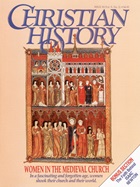










Inside the Convent


In the letters of Paul, we find that some women among the first generations of Christians renounced sexuality, marriage, and motherhood to consecrate themselves to the service of God and the Christian community.
Their commitment represented a social revolution.
In the ancient world, women were not recognized as having any identity outside the family context. Even the handful of virgins who served the goddess Vesta at Rome were entered by their fathers and generally married when they retired from service. Yet the Christian virgin (or widow, as the case might be), made for herself a recognized and respected place within the fledgling church.
Front-Lines Soldiers
During the centuries when the church suffered intermittent persecution by secular authority, these consecrated women played a vital role in Christianity’s preservation and spread. They turned their homes into shelters for wandering preachers, presided over religious meetings of an indeterminate nature, and performed charitable works—distributing alms, nursing the sick, and visiting prisoners. When martyrdom became inescapable, women were in the front lines of the soldiers of Christ. The second and third-century apocryphal gospels indicate that a common cause of Christian women’s execution was their refusal to obey the Roman law of obligatory marriage.
This “virginity” movement was not an ascetic movement. Some Christian Fathers of the third century criticized consecrated women for their worldly dress and social activities. Tertullian, in particular, rebuked their claim that renunciating sex entitled them to preach and act publicly as freely as men. He maintained that consecrated women had not escaped the boundaries limiting the public activity of women. Rather, by making themselves brides of Christ, they had subjected themselves to the most demanding and powerful of all husbands. Later, medieval clergy claimed the right to supervise nuns, the spiritual brides of the Lord, since they acted as his vicars.
Virgins, Not Ascetics
In the third century, men took the initiative in asceticism, the practice of physical self-mortification that included sexual renunciation, severe fasting, sleeplessness, and other practices. Consecrated women, however, soon emulated this new fashion. The first monastic community was organized in the Egyptian desert (c. 320) by Pachomius and his sister, who took charge of a segregated female group on the opposite side of the river from the monks. Thereafter, women are consistently referred to as partners in monastic ventures. Antony, Ambrose, Augustine, Basil, John Cassian, and Benedict of Nursia (to note only a few of the giants associated with the growth of monasticism) all had sisters who practiced the consecrated life. Many more women of the late Roman nobility experimented with the new lifestyle. When Jerome came to Rome in the middle of the fourth century, he found a wide circle of wealthy women, led by Paula and Marcella, who had consecrated their widowhood or virginity to religion.
From Consecration to Monasticism
During the dangerous centuries that followed, the consecrated life became identified more exclusively with monasticism. Nuns and monks clustered in large houses organized according to a variety of rules that emphasized discipline and routine. The day was divided into segments for sleeping, eating together, performing manual labor, and always, chanting the office in a perennial outpouring of praise to God. Women responded in great numbers to the attraction of this life. They planted new communities on the frontiers of the Christian world, contributing to the process of converting barbarian tribes.
Queens and noble women who inherited great wealth, and could, according to the laws of the Germanic peoples, deploy that wealth as they saw fit, established houses for as many as two hundred women. Managing land and legally presiding over the inhabitants, these great abbesses were intrinsic components of the new feudal ruling class. They sent troops to war, held court, and enjoyed all the rights of noble men. Each monastery stood autonomous (though increasingly these became standardized under the Benedictine Rule). From the sixth through the tenth centuries, abbesses generally came from local ruling families, and they educated young women and helped to preserve the intellectual heritage of the ancient world. The original literary work of some of these nuns survives, most notably the histories, poetry, and drama of Hroswitha, a tenth-century Saxon nun whose learning may even have extended to some knowledge of Greek.
Why Nuns Lost Their Equality
During this early medieval period, monasticism was primarily a lay religious movement. With the late eleventh century, however, reformers moved aggressively to subject the clergy to celibacy and to reduce or exclude the influence of the laity in church government
In the course of this revolution, nuns were split away from monks. Monastic men increasingly accepted ordination, and they enlarged their influence by strengthening their international ties. Led by the Cistercians, they joined previously autonomous houses and communities into orders, bound together with a common constitution and annual meetings called chapters. The officials of the orders were empowered to maintain uniformity. Monks could move through the system at the discretion of the officers, pursuing a broader career in many directions.
Nuns lost their rough equality with monks in function and organization. Their exclusion from ordination forbade them to follow their male counterparts into new areas of service. Their need for priests to perform the sacraments, in this more clerically centered age, turned nuns from an asset into a burden in the eyes of many clergymen. In every order, the nuns were segregated, enclosed, and ultimately separated as far as possible from the monks. (One intriguing exception to the trend were the Fontevrists, who maintained a mixed-sex community under the direction of the abbess of the mother house.)
The care of nuns became a distasteful responsibility that monks resisted in favor of more rewarding commitments. Only strong papal insistence throughout the thirteenth and fourteenth centuries held various orders to include a minimum number of nuns. Despite this, women continued to flock to the monastic life in everincreasing numbers.
Ordered to the Cloister
In the thirteenth century, urban populations needed charitable operations. The church needed preachers to keep the population from heresy. These twin impulses gave rise to the mendicant orders: friars not attached to a monastery, who supported themselves by begging. Their preaching and acts of charity quickly spread the orders. Women enthusiastically responded; nuns set up convents to support the wandering preachers of the Dominican order.
But after the first generation, women began to experience the distancing that had already isolated their twelfth-century sisters. Clare of Assisi accepted the cloistering of her convent, but she fought throughout her long life to maintain her privilege of Franciscan poverty. Hers was the only rule by a woman and for women that was approved by the medieval papacy. By the end of the thirteenth century, Boniface VIII decreed that all religious women, of whatever order or connection, should be cloistered.
The norms of religious life for high medieval women, therefore, were the silence and meditative practices of the cloister. Women interested in more public service had to avoid taking the formal vows of a nun. Despite the formal strictures of their rules, however, most medieval convents were open to frequent visitors seeking counsel or charity. Nuns continued to be involved with their families and communities, and they undertook social services of various sorts within the convent walls.
Convents varied in austerity. Some acquired a reputation for the sanctity of the nuns and the miracles that attended their daily lives. A few gained reputations for worldliness and even moral laxity.
Most convents undertook some economic enterprises, running estates donated to them and/or producing fine embroidery, candies, or ointments. In all, the life of a nun was useful and generally pleasant, though frequently punctuated by internal quarrels or interrupted by natural disasters or political upheavals.
Why Did Women Enter Convents?
Economic realities were such that no convent could support itself without the financial support of relatives. Consequently, only women of some economic resources could choose the religious life. Women of lower-class backgrounds could enter convents, however, as conversae, consecrated women who served the nuns without sharing their full religious duties.
Principally, then, the religious life provided upper-class medieval women with an alternative to marriage and a respected place in widowhood. And it provided lower-class women with dignified employment and charitable assistance.
The lives of saints insist that many of them defied their parents and great social pressures toward marriage and motherhood in order to live consecrated lives. Other evidence indicates, however, that some women were forced into convents because their parents preferred to pay the cheaper dowry demanded by the religious life.
Most nuns, whether they had entered of their own volition or in obedience to their parents’ choice, settled into their lives as other women settled into marriage.
Dr. Jo Ann McNamara is Professor of History at Hunter College, City University of New York, and author of Women and the Structures of Society (Duke, 1984).
Copyright © 1991 by the author or Christianity Today/Christian History magazine.
Click here for reprint information on Christian History.

Support Our Work
Subscribe to CT for less than $4.25/month