The Mystics


All this blessed teaching of our Lord was shown to me in three parts, that is, by bodily vision and by words formed in my understanding and by spiritual vision. But 1 may not and cannot show the spiritual visions to you as plainly and fully as I should wish; but I trust in our Lord God Almighty that he will, out of his goodness and for love of you, make you accept it more spiritually and more sweetly than I can or may tell it to you. Julian of Norwich
Mysticism has been called “the science of the love of God,” and “the life which aims at union with God.” Mystics may be found in every religious tradition, sometimes as central participants but often on the periphery of accepted practice, for they map out new experiences of the divine.
There is no identifiable mystical type (although scholars at times have tried to identify one). Mystics may be women or men, educated or uneducated, from wealthy or deprived backgrounds. Mystical experiences may be primarily visual or auditory, or so abstract as to elude any verbal formulation. The mystical path may be based either upon developing love or on the growth of the intellect. Mystical experiences can occur spontaneously, unexpectedly, at any time and place; yet many religions endorse ascetic practices and modes of prayer that encourage the development of mystical experience in some people. All traditions seem to agree that mysticism is a speciai gift, not fully under the control of the recipient.
Why Mysticism Flourished
During some historical periods, mysticism seems more prevalent and more authoritative, and mystics are more needed by their communities. Valerie Marie Lagorio, in her essay, “The Medieval Continental Women Mystics,” quotes Evelyn Underhill in support of the idea that mysticism not only seems to intensify in certain periods, but is itself richly creative: “The great periods of mystical activity tend to correspond with the great periods of artistic, material, and intellectual civilization.… It is always as if [the mystics] were humanity’s finest flower; the product at which each great creative period of the race had aimed.”
One such period was the High Middle Ages in Europe (1100–1450), a time of great social change as the feudal system gave way to capitalism, cities, and a new middle class. We think of the Middle Ages as the age of faith, and so it was, but it was also an age of crisis. In such a context, mysticism was not a retreat from the negative aspects of reality, but a creative marshaling of energy in order to transform reality and one’s perception of it.
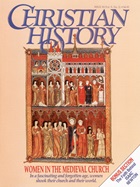
Mystics were the teachers of the age, inspired leaders who synthesized Christian tradition and proposed new models for the Christian community. We know some of the men—Bernard of Clairvaux, Francis of Assisi, Thomas Aquinas—but we are not as familiar with the women, although they were actually more numerous. Hildegard of Bingen, Clare of Assisi, Beatrijs of Nazareth, Angela of Foligno, Julian of Norwich, and other women mystics drew on their experience of the divine to provide spiritual guidance for others. Such women became highly respected leaders of the faithful. Their role as prophets and healers was the one exception to women’s presumed inferiority in medieval society.
What Female Mystics Experienced
Medieval mysticism was primarily visual and affective; the mystic saw and felt truth, saw God or Christ or the saints, and was flooded with love for what she saw. So powerful was this love that she felt compelled to share it with others.
Indeed, perhaps the only voice women heard that told them to do something was God’s voice in visions. But God’s voice was the only one that was really necessary, for with divine permission and guidance, anything was possible. As Dame Julian of Norwich said in her Showings: “ … God forbid that you should say or assume that I am a teacher … for I am a woman, ignorant, weak and frail. But I know very well that what I am saying I have received by the revelation of him who is the sovereign teacher … because I am a woman, ought I therefore to believe that I should not tell you of the goodness of God, when I saw at that same time that it is his will that it be known?”
We should not think of medieval women mystics primarily as hermits withdrawn into a private world of prayer and meditation. These active women had completed a lengthy apprenticeship in the religious life, and they were capable of being spiritually responsible for large numbers of people.
Although medieval women mystics came from different classes, in different parts of Europe, and experienced spiritual awakenings at different ages, many of them did not become great teachers until they reached middle age. As children they were marked by precocious piety, and their rebellion often took the form of asceticism. From adolescence through their thirties they often lived withdrawn or secluded lives; if they were married, they were absorbed in family responsibilities and childbearing. All this changed, however, around their fortieth year, when they had the freedom to be visible as active leaders and effectively offer spiritual advice to others.
Why Women Were Leaders
Unlike other periods of mystical revival, medieval mysticism was largely female. No one knows exactly why, but we can speculate on some of the factors involved.
Medieval men with religious vocations and leadership ability had a number of choices—they could be active or contemplative, priests, friars, monks, or hermits. Women who felt called to a religious life had one main option—to join a convent or a community of pious lay women. Thus, the primary approved form of religious life available to women was contemplative and enclosed. Medieval society believed women must be protected from violence and from their own sexuality, and women were thought to be “naturally” passive, meditative, and receptive.
Some aspects of convent life probably encouraged the development of mystical and leadership abilities. Until the fourteenth century, a religious community was the only place in which a woman would find a library, other scholars, and the opportunity to read and write. It was also the only place a woman had any privacy. The vow of celibacy exempted women from pregnancy and childbirth, and thus granted them much longer lives than those of married women. Convents also provided opportunities for leadership and teaching, whether in keeping accounts, tending the sick, or instructing children.
In late medieval Europe, women outnumbered men for the first time. Women found creative responses to this situation, and new religious movements of women began. The beguines in northern Europe, and Franciscan or Dominican tertiaries in southern Europe, lived in groups, supported themselves by manual labor, and devoted their lives to serving others and growing spiritually. Many famous medieval mystical writers belonged to these informal communities—Hadewijch of Antwerp, Mechthild of Magdeburg, Angela of Foligno, Catherine of Siena.
Finally, the spiritual practices recommended to medieval women (and possibly invented by them) encouraged the kind of growth and mental concentration that often led to visions and mystical experiences. We know that women’s practice of asceticism was more austere than men’s. Further, men in religious communities had a more intellectual education; the kind of meditation taught to women was visual and creative, not intellectual or abstract.
Four Great Mystics
The lives of the great women mystics are highly individualized, although there are some common themes in their writings.
The Benedictine abbess Hildegard of Bingen (1098–1179) began her religious life at age 7 or 8, when she joined her aunt Jutta, who was a recluse. Later their retreat was opened and turned into a convent, where Hildegard made her profession as a nun at age 14. Although she was unable to write German, and diffident about the correctness of her Latin, her dictated writings exhibit wide learning. While she claimed that all her knowledge came from a mystical source, she was familiar with the Scriptures, natural science, classical Latin literature, and neo-Platonic philosophy. She was taken seriously as a prophet by everyone, from Bernard of Clairvaux and the pope down to the humblest laborers. She began the Scivias, her major visionary and autobiographical work, when she was 42, but she had been having visions since she was 5. She insisted she saw her vision in spiritual and psychological wholeness, when she was fully conscious and aware of her surroundings. She distinguished between two grades of spiritual vision, her ecstatic awareness of “the Living Light” in which she could see nothing and, as Underhill writes, a “more diffused radiance which she calls the Shade of the Living Light, and within which her great allegorical visions were seen.”
Hadewijch of Antwerp was a Flemish beguine of the first part of the thirteenth century. We know almost nothing of her external life, but we have three books by her: Poems in Stanzas and Poems in Couplets; letters on the spiritual life known as Letters to a Young Beguine; and a book of visions. A brilliant poet who wrote in Dutch, she knew the latest poetry in Latin, Old French, and Provençal as well. As a mystic she believed that the soul, created by God in his own image, longs to be one with divine love again, “to become God with God,” as she put it.
Mechthild of Magdeburg (c. 1212–1282), the most famous of the German beguines and author of The Flowing Light of the Godhead, decided at 22 to devote her life to God. She went to Magdeburg, where she knew no one, to become a beguine. In 1270 she came to the convent of Helfta, perhaps advised to make such a retreat because of her outspoken criticism of corruption in the church. There are seven books of her autobiographical Flowing Light, written at different stages of her life, and utilizing all the poetic and narrative resources of her time—lyric poetry, dialogue, courtly allegory, even homely folk wisdom. The first page of The Flowing Light announces the danger to which Mechthild is exposed because she is a mystic: “I have been put on my guard about this book, and certain people have warned me that, unless I have it buried, it will be burnt. Yet,” she continues, “I in my weakness have written it, because I dared not hide the gift that is in it.”
The Franciscan mystic Angela of Foligno (1248–1309) joined the Third Order for worldly prestige, but when her mother, her husband, and her children died suddenly, her attachment to St. Francis and his order became more profound. She underwent a powerful conversion experience in 1285, and in 1291, when she was 43, she had a vision of God’s love for her as she was walking on a pilgrimage to the shrine of St. Francis of Assisi. Since she was illiterate, she dictated her experiences. The Book of the Experience of the Truly Faithful was read immediately and widely copied and circulated.
Message from the Mystics
We too are living in a time of rapid and unpredictable social and economic change. We can certainly take as a model the balance of isolation and community, of reflection and action, that we find in these medieval women. We can use their emphasis on the spiritual life as a progressive climb—sometimes a steep and arduous one. In the writings of these women, God always teaches through love and always stresses the self-worth of the human. We need that love badly, and we need to extend it to others.
Dr. Elizabeth Alvilda Petroff is Professor of Comparative Literature at the University of Massachusetts, Amherst, and author of Medieval Women's Visionary Literature (Oxford, 1986).
Copyright © 1991 by the author or Christianity Today/Christian History magazine.
Click here for reprint information on Christian History.

Support Our Work
Subscribe to CT for less than $4.25/month