The Accidental Revolutionary


An adviser to sixteenth-century tourists remarked that people who return from their travels without having seen Martin Luther and the pope “have seen nothing.” This man later became a bishop of the Holy Roman Catholic Church and one of Luther’s opponents.
Another person read Luther’s works and declared, “The church has never seen a greater heretic!” But upon reflection he exclaimed, “He alone is right!” This man became a reformer, and Luther regularly made private confession to him.
How could one friar and professor evoke such conflicting reactions?
The answer is simplicity itself. This man, who continues to speak after half a millennium, either taught the core of the Christian faith correctly or is still leading souls astray. As he himself put it, “Others before me have contested practice. But to contest doctrine, that is to grab the goose by the neck!”
Unspectacular Childhood
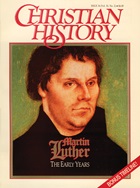
Contrary to some romantic speculations, Luther’s childhood had almost nothing to do with his becoming a revolutionary theologian. He was born almost in transit on November 10, 1483, at Eisleben (about 120 miles southwest of modern Berlin), where both parents may have worked as domestic servants.
Within the year, the family moved to Mansfeld, where his father, Hans Luder (as it was locally pronounced), found work in the local copper mines. Hans quickly climbed, perhaps with the help of relatives, to ownership or part-ownership of several mines and smelters. He even became a member of the city council. Cranach’s painting of the elderly Luder shows him in a fine woven coat with a fur collar.
Luther remembered his childhood in part for (in today’s terms) its physical abuse. He was beaten by both his mother and father in truly frightening ways. He became so estranged from his father on one occasion that Hans sought his forgiveness. But Hans did come to his son. As Luther also remembered, “He meant well by me.” Perhaps the strict discipline reflected no more than a family that willed to be successful, and was so. There was certainly nothing unusual about it.
There is also no evidence of anything unusual or rebellious about the family’s piety. Margaretha, Luther’s mother, shared the common superstitions of the time. For example, she blamed the death of one of her sons on a neighbor, whom she regarded as a witch. Hans joined in seeking a special indulgence for the local parish church. As a youngster, Luther imbibed a religion in which one had to strive for future salvation just as one had to work for material survival.
A Far-Sighted Decision
In this setting, two unspectacular matters set Luther apart.
First, Hans (who could have satisfied himself with having the lad learn to read, write, and cipher, and then go into the family business) sent the boy to Latin school and finally on to the University of Erfurt. In making this farsighted decision, Hans was ambitious not just for his son, but also for the entire family. If he succeeded, young Luther would become a lawyer, who, whether in the church or at court, could then provide handsomely for both parents and siblings.
Second, the youth who left home before his fourteenth birthday proved to be extraordinarily intelligent. He earned both his baccalaureate and master’s degrees in the shortest time allowed by the statutes of the University of Erfurt. He proceeded directly to the faculty of law. He proved so adept at disputations (public debates that were the principal means of learning and teaching) that he earned the nickname “The Philosopher.” Hans was so pleased that he gave his son the costly gift of the central text for legal studies at the time, the Corpus Juris Civilis.
From Law to Legalism
Unfortunately for Hans’s plans, the fledgling law student began to have doubts about the status of his soul and, with them, the career his father had securely set before him. In 1505, when Luther was not yet 22, he took an officially sanctioned, yet unexplained, leave from the university. He visited his family to seek, it appears, their advice about his future. On his return to Erfurt, as Luther fought his way through a severe thunderstorm, a bolt of lightning struck the ground near him.
“Help me, St. Anne!” Luther screamed. “I will become a monk!”
After his vow to St. Anne, the familiar patroness of miners, Luther spent several weeks discussing his decision with friends. Then, in July 1505, as was the requirement upon entering monastic life, he gave away all his possessions—his lute, on which he was proficient; his many books, including the “Corpus Juris Civilis”; his clothing and eating utensils—and entered the Black Cloister of the Observant Augustinians. As was customary, he endured more than a month of examining his conscience and being interrogated by the appropriate authorities before proceeding to the novitiate (a further year of scrutiny before becoming a friar).
By all evidence, Luther was extraordinarily successful (“impeccable” was a later description) as an Observant Augustinian, just as he had been as a student. He did not simply engage in prayer, fasts, and ascetic practices (such as going without sleep, enduring bone-chilling cold without a blanket, and flagellating himself), he pursued them earnestly. As he later commented, “If anyone could have earned heaven by the life of a monk, it was I.”
He became a priest within fewer than two years of entering the Black Cloister. He was sent to Rome as the traveling companion for a senior brother on crucial business for the Observants in Germany. In addition, his superiors ordered him to undertake the study of theology so he could become one of the order’s teachers.
Worthy of Study
At this moment Luther began to be someone worthy of study in his own right. The fears and anxieties that drove him into the Black Cloister left him during his first year or so there, but then they intensified. Although he sought to love God with all his heart, soul, mind, and strength, he found no consolation. He was increasingly terrified of the wrath of God: “When it is touched by this passing inundation of the eternal the soul feels and drinks nothing but eternal punishment.”
The command to study academic theology meant he could investigate his struggles intellectually. He later commented that he went “where my temptations took me,” meaning that he dared to investigate the issues that most troubled him. But it was slow going: “I did not learn my theology all at once....but like Augustine through much study, teaching, and writing.”
In the process, Luther’s attacks of doubt about his salvation became objective realities that he studied—almost in the manner that a mathematician puzzles over a difficult problem.
The Horns of Luther’s Dilemma
As a beginning theology student, Luther was taught the prevailing orthodoxy, and parts of his early lectures as a professor show he believed it.
His teachers, following the Bible, taught that God demanded absolute righteousness, as in the passage “Be perfect, even as your Father in heaven is perfect.” People needed to love God absolutely and their neighbors as themselves. They should have the unshakable faith of Abraham, who was willing to sacrifice his son.
Furthermore, when they were not perfect, people were to repent in a fully contrite manner, not for the selfish purpose of saving themselves. And where the individual couldn’t be absolutely righteous, the church would step in with the grace of the sacraments.
Luther later remarked, “I was so drunk, nay, submerged in the doctrines of the pope that I could have happily killed (or cooperated with anyone who killed) whoever took but a syllable of obedience away from him.”
Luther, however, was plagued by one problem, and it eventually drove him away from what he had been taught. Human beings were incapable of the selfless acts and states of mind the Scriptures required. The most crushing to Luther was the perfectly scriptural obligation to be contrite, to repent.
In the late Middle Ages, repentance most commonly occurred in the course of sacramental confession and penance, according to which the sinner confessed, was forgiven, and then performed penitential acts that completed the process. But Luther knew that in the midst of this most crucial act, he was at his most selfish. He was confessing his sins and performing his penance out of the intensely human instinct to save his own skin. Yet because of the human tendency to sin, one could hardly confess enough.
This critical issue remained vivid in Luther’s mind. He commented later, “If one were to confess his sins in a timely manner, he would have [had] to carry a confessor in his pocket!” As his teachers knew, this fact could lead to despair (or as it was believed then, the sin against the Holy Spirit). In Luther’s case it occasionally did.
Who Could Be Righteous?
During his early years, whenever Luther came to the famous “Reformation text”—Romans 1:17—his eyes were drawn not to the word faith, but to the word righteous. Who, after all, could “live by faith”? Only those who were already righteous. The text was clear on the matter: “the righteous shall live by faith.”
Luther remarked, “I hated that word, ‘the righteousness of God,’ by which I had been taught according to the custom and use of all teachers ... [that] God is righteous and punishes the unrighteous sinner.” The young Luther could not live by faith because he was not righteous—and he knew it. During this turmoil, Luther often approached Johann von Staupitz, his superior, about his doubts, sins, and outright hatred of a righteous God. He came so often that Staupitz once commanded him to go and commit a real sin: “You want to be without sin, but you don’t have any real sins anyway ... the murder of one’s parents, public vices, blasphemy, adultery, and the like. These are sins. ... You must not inflate your halting, artificial sins out of proportion!”
But Luther wasn’t comforted: “Yet my conscience would never give me assurance, but I was always doubting and said, ‘You did not perform that correctly. You were not contrite enough. You left that out of your confession.’”
Contradicting Everything
The critical moment (or rather, moments) in Luther’s life resulted from a decision by his superiors. They, and Staupitz in particular, ordered him to take his doctorate and become a professor of the Bible at Wittenberg University. Depending upon one’s point of view, this was either one of the most brilliant or stupid decisions in the history of Latin Christianity.
Luther resisted the call, saying, “It will be the death of me!” but he finally relented. He soon acquired his mature self-identity as a professor or doctor ecclesiae (teacher of the church), behind which he frequently took refuge, even to the point of commonly signing his name, D. Martinus Lutherus.
More important, the revolution in his theological thinking occurred in the professor’s lecture hall and study from 1513 to 1519. Luther began by reinterpreting the righteousness of God and then extended this interpretation to the central issues in Christian theology.
About late 1513 or early 1514, when he arrived at Psalm 72, he explained to his students, “This is what is called the judgment of God: like the righteousness or strength or wisdom of God, it is that with which we are wise, just, and humble, or by which we are judged.”
This is a remarkable sentence. The last clause is what Luther was taught; it was the prevailing orthodoxy: God judges by his righteousness. But the first clause—God gives us righteousness—he would teach increasingly. In fact, a little later during these very lectures, he utterly rejected the common doctrine and asserted instead that all the attributes of God—“truth, wisdom, salvation, justice”—were “the things with which he makes us strong, saved, just, wise.”
On the heels of this change came others. The church was no longer the institution that boasted apostolic succession; instead it was the community of those who had been given faith. Salvation came not by the sacraments as such but by their role in nurturing faith. The idea that human beings had a spark of goodness (enough to seek out God) was not a foundation of theology but was taught only by “fools” and “pig theologians.” Humility was no longer a virtue that earned grace but a necessary response to the gift of grace. Faith no longer consisted of assenting to the church’s teachings but of trusting the promises of God and the merits of Christ.
In short, Luther worked a revolution that contradicted everything he had been taught. Like certain revolutions in our own time, it lay there, ready to explode, and even the principal was unaware of its potential.
Chain Reaction
In fact, what happened was more like a long but powerful chain reaction than a sudden explosion. It started on All Saints’ Eve, 1517, when Luther formally objected to the way the short, dumpy Johann Tetzel was preaching a plenary indulgence.
Indulgences were documents prepared by the church and bought by individuals either for themselves or on behalf of the dead. As a result, the living purchaser or the deceased would be released from purgatory for a certain number of years. In the second instance, a plenary, or total, indulgence would release a person altogether and was seldom offered. In any case, the money from indulgence sales was used to support church projects, such as, in the case of Tetzel’s sales, the rebuilding of St. Peter’s Basilica in Rome.
Tetzel carefully orchestrated his appearances to excite public interest. He crafted his sermons to delight and persuade, often ending with the now famous, “Once the coin into the coffer clings, a soul from purgatory heavenward springs!”
Luther simply wanted to question the church’s trafficking in indulgences. He challenged all comers to debate the practice in proper academic fashion. But events snatched the matter from his hands.
His 95 Theses were translated into the common language and spread across Germany within two weeks. Luther was asked to debate the underlying theological issues at Heidelberg, during the Augustinians’ regular meeting in spring 1518. He then underwent an excruciating interview with Cardinal Cajetan in Augsburg that fall. It was so painful, as Luther recalled it, that he could not even ride a horse, because his bowels ran freely from morning to night.
Faceoff over Authority
Luther had good reason to be anxious. The issue quickly became not indulgences, or even Tetzel’s indulgences (which were extraordinary by any estimate), but the authority of the church: Did the pope have the right to issue indulgences?
The substance of the original matter—whether humans could draw on the treasury of Christ’s merits, deposited with the church, to alter their standing with God—was of little concern to Luther’s opponents. In fact, they were repeatedly forbidden to debate it with him. The question was instead whether the church could declare that it was so and rightly expect obedience.
The core issue became public at the Leipzig Debate in late June 1519, a magnificent occasion. Students from Wittenberg came armed with staffs. The local bishop tried to forbid the debate, and Duke George of Saxony, who sponsored it, set out an armed guard to guarantee it would proceed in an orderly fashion. In the end, it became apparent Luther was working a revolution that struck the church itself.
In brief, Luther declared that “a simple layman armed with the Scriptures” was superior to both pope and councils without them. Luther thus richly merited the bull [papal document] threatening excommunication that came in mid-1520. He responded by burning both the bull and the canon law.
His Three Most Important Essays
Luther then spelled out the practical consequences of his theology. That summer he wrote what are arguably his three most important treatises: The Address to the Christian Nobility, The Babylonian Captivity of the Church, and On the Freedom of a Christian. With these three essays he set himself and his (by now) many sympathizers in opposition to nearly all the theology and practice of late medieval Christendom.
In the first, he urged rulers to take the necessary reform of the church into their own hands, while arguing that all Christians were priests.
In the second, he reduced the seven sacraments first to three (baptism, the Lord’s Supper, and penance), then to two, while radically altering their character.
In the third, he told Christians they were free from the law (in particular the laws of the church), while they were bound in love to their neighbors.
“I Will Not Recant”
The Diet of Worms, held in the spring of 1521, was thus in one sense little more than the backwash from a ship that had already set to sea. The Holy Roman emperor Charles V (who was also Charles I of Spain) had never been in Germany. He called the Diet, or meeting, in order to meet the German princes, whom he scarcely knew by name and desperately needed to court. But this friar by the name of Luther also needed to be addressed.
Luther left Wittenberg to attend the Diet convinced he would finally get the hearing he had requested in 1517. As he was ushered into the Diet, Luther was awed to see Emperor Charles V himself. He was surrounded by his advisers and representatives of Rome, Spanish troops decked out in their parade best, electors, bishops, territorial princes, and representatives of great cities. In the midst of this august assembly sat a table with a pile of books.
Luther was asked if he had written the books, and if there was a part of them he wished to recant. He was taken aback; this was not going to be a debate but a judicial hearing. Luther became confused, stumbled, and begged for another day: “This touches God and his Word. This affects the salvation of souls. ... I beg you, give me time.”
He was given one day, and back in his quarters he wrote, “So long as Christ is merciful, I will not recant a single jot or tittle.”
The next day’s business at the Diet delayed Luther’s return until evening. Candlelight flickered off the crowd of dignitaries jammed into the great hall.
He was asked again, “Will you defend these books all together, or do you wish to recant some of what you have said?” Luther replied with a short speech, which he repeated in Latin.
There were three kinds of books in the stack, he declared. Some were about the Christian faith and good works, and these he certainly wouldn’t retract. Some attacked the papacy and to retract these would be to encourage tyranny. Finally, in some he attacked individuals (and, Luther admitted, perhaps too harshly), but still these couldn’t be retracted because these people defended papal tyranny.
Surely, the reply came, one individual could not call into doubt the tradition of the entire church! Then the examiner declared, “You must give a simple, clear, and proper answer. ... Will you recant or not?”
Luther replied, “Unless I can be instructed and convinced with evidence from the Holy Scriptures or with open, clear, and distinct grounds of reasoning ... then I cannot and will not recant, because it is neither safe nor wise to act against conscience.”
Then he probably added, “Here I stand. I can do no other. God help me! Amen.”
Knight George
When negotiations over the next few days failed to reach any compromise, Luther was condemned. Still he was granted safe conduct, as he was promised before he came, but only for another twenty-one days.
But as Luther and his companions made their way back to Wittenberg, four or five armed horsemen plunged out of the forest, snatched Luther from his wagon, and dragged him off, half running and half stumbling. In short order, he was told that it was his own prince, Elector Frederick the Wise, who had abducted him to keep him safe. He soon arrived at the Wartburg, one of Frederick’s castles. Luther was an outlaw; anyone could kill him with out fearing reprisals from an imperial court of law.
Luther despised his enforced stay at the Wartburg. As “Knight George” (his new identity), he now ate like a nobleman, and his new diet upset his alimentary canal. He missed his friends in Wittenberg, and he hated being removed from the fray. He even made plans to seek a call to the University of Erfurt where he would be outside the elector’s jurisdiction. That failed, but he did manage to commandeer a horse and make a flying trip to Wittenberg, from which he returned much relieved at the course of events among his friends.
In spite of his complaints about enforced solitude and his own “laziness,” Luther’s ten months on ice were among the most productive of his life. The theological and scholarly works continued, with his touching and almost autobiographical Commentary on the Magnificat, the uncompleted Postillae, and the translation of the New Testament, of which he did a rough draft within eleven weeks.
But what began with his lectures and the 95 Theses was now turning into a popular movement. He felt obliged to respond to people’s practical questions. He did so in treatises such as On Confession: Whether the Pope Has the Authority to Require It,On the Abolition of Private Masses, and above all, On Monastic Vows.
The last stands as one of the most extraordinary works ever written by a public figure. Throughout Germany, and at Wittenberg in particular, monks and nuns were fleeing their monasteries and cloisters—some for reasons of conscience and some for the sake of convenience. To despise the religious was becoming commonplace. At the same time, defenders of the old church insisted upon the inviolability of monastic vows.
Fully consistent with his On the Freedom of a Christian, Luther took a middle road. The sole question was whether and how one could best serve the neighbor. If one did so in holy orders, then one should remain. On the other hand, monastic vows were not binding, and if one could serve the neighbor better outside the monastery or cloister, then one should live in the world. The freedom to serve thus became a hallmark of the Reformation in Lutheran Germany.
His Controversial Decisions
As his revolution expanded, Luther was increasingly thrust into the public arena. He openly returned to Wittenberg, in early spring of 1522, and without asking the elector’s permission, retook his pulpit and preached on the obligation to love the neighbor. The decision to return grew from his conviction that the inchoate reform movement there (some asserted that Christians must marry and the monks and nuns must become laypeople) was not respecting Christian freedom or weak consciences.
In time Luther was forced to make further decisions, many of which are still controversial.
When unrest resulted in the Peasants’ War of 1524–1525, he first condemned the princes and then exhorted them to crush the revolt.
When Erasmus, the famous humanist scholar, doubted that the truth could be known about whether humans had free will, Luther replied that “the Holy Spirit is not a skeptic” and accused Erasmus of being no Christian at all.
When the Swiss reformers Zwingli and Oecolampadius questioned whether Christ’s body and blood were really in the elements of the Lord’s Supper, Luther replied, “Mere physics!” and helped inflame the controversy that ultimately divided the Lutheran and Reformed churches.
His Promethean effort to create a new clergy and reformed church also brought the civil authorities more directly into the daily governance of the church.
His decision to marry a runaway nun, Katharina von Bora, scandalized many. For Luther, the shock was waking up in the morning with “pigtails on the pillow next to me.”
Of the continuing efforts to create the German Bible, he said, “If God had wanted me to die thinking I was a clever fellow, he would not have gotten me into the business of translating the Bible.”
Throughout these decisions and actions, Luther exhibited amazing consistency. The hallmark of his life is the way he joined his forceful personality and his forceful doctrine. For him, doctrine was never a merely intellectual or scholarly matter. Instead, it was life itself. In the preface to the Large Catechism, he urged Christians to read and reread their catechisms, for “in such reading, conversation, and meditation the Holy Spirit is present and bestows ever new and greater light and fervor.” He wanted all Christians to become people taught by God.
Dr. James M. Kittelson is professor of history at The Ohio State University, Columbus, Ohio, and author of Luther the Reformer (Augsburg, 1986).
Copyright © 1992 by the author or Christianity Today/Christian History magazine.
Click here for reprint information on Christian History.

Support Our Work
Subscribe to CT for less than $4.25/month