








Was Luther Anti-Semitic?
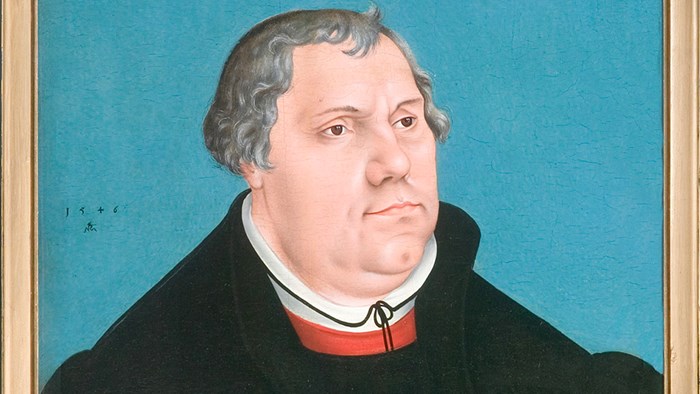


“Set fire to their synagogues or schools,” Martin Luther recommended in On the Jews and Their Lies. Jewish houses should “be razed and destroyed,” and Jewish “prayer books and Talmudic writings, in which such idolatry, lies, cursing, and blasphemy are taught, [should] be taken from them.” In addition, “their rabbis [should] be forbidden to teach on pain of loss of life and limb.” Still, this wasn’t enough.
Luther also urged that “safe-conduct on the highways be abolished completely for the Jews,” and that “all cash and treasure of silver and gold be taken from them.” What Jews could do was to have “a flail, an ax, a hoe, a spade” put into their hands so “young, strong Jews and Jewesses” could “earn their bread in the sweat of their brow.”
These fierce comments have puzzled and embarrassed Christians who otherwise admire the Reformer. And they have led to charges that Luther was “one of the ‘church fathers’ of anti-Semitism.” More seriously, Luther’s attacks have been seen as paving the way for Hitler.
Was Luther anti-Semitic? How should we understand his words?
“Receive Jews Cordially”
In 1523, Luther accused Catholics of being unfair to Jews and treating them “as if they were dogs,” thus making it difficult for Jews to convert. “I would request and advise that one deal gently with them [the Jews],” he wrote. “ … If we really want to help them, we must be guided in our dealings with them not by papal law but by the law of Christian love. We must receive them cordially, and permit them to trade and work with us, hear our Christian teaching, and witness our Christian life. If some of them should prove stiff-necked, what of it? After all, we ourselves are not all good Christians either.”
Why God Deserted Them
Fifteen years later, however, rumors of Jewish efforts to convert Christians upset him, and he wrote a treatise venting his frustration. In it, Luther concluded that converting Jews had become hopeless.
It seemed to him that God had deserted the Jews, leaving them to wander homeless without a land or temple of their own. And if this was God’s attitude, then one might with good conscience ignore the Jews. Why would God desert his own people if he did not despair of them? He had rejected them and turned his attention to the “new Israel,” the Christian church. Luther thus accepted the existing notion that the promise given to Jews was now transferred to Christians.
Measures of “Sharp Mercy”
By 1543, Luther was ready lo go one step further. He had become utterly frustrated by the Jews’ refusal to convert to Christianity: “A Jewish heart is as hard as a stick, a stone, as iron, as a devil.”
Luther did not, however, hold Jews responsible for the death of Christ. As he wrote in a hymn, “We dare not blame … the band of Jews; ours is the shame.” And he felt that at least a few Jews might be won for Christ.
Yet rabbinic teaching was madness and blindness that blasphemed Christ, Mary, and the Holy Trinity. Luther could not “have any fellowship or patience with obstinate [Jewish] blasphemers and those who defame this dear Savior.” Blasphemy was a civil crime. To allow it to continue, Luther feared, meant Christians would share in the guilt for it.
Thus, Luther now proposed seven measures of “sharp mercy” that German princes could take against Jews: (1) burn their schools and synagogues; (2) transfer Jews to community settlements; (3) confiscate all Jewish literature, which was blasphemous; (4) prohibit rabbis to teach, on pain of death; (5) deny Jews safe-conduct, so as to prevent the spread of Judaism; (6) appropriate their wealth and use it to support converts and to prevent the lewd practice of usury; (7) assign Jews to manual labor as a form of penance.
Luther advised clergy, their congregations, and all government officials to help carry out these measures. Since most Jews had been expelled from Germany before 1536, Luther’s counsel was implemented by few officials. Yet a harsh anti-Jewish measure in 1543 mentioned Luther’s On the Jews and Their Lies.
Both Luther’s friends and his foes criticized him for proposing these measures. His best friends begged him to stop his anti-Jewish raving, but Luther continued his attacks in other treatises. He repeated as true the worst anti-Semitic charges from medieval literature. Jews killed Christian babies; they murdered Christ over and over again by stabbing Eucharistic hosts; they poisoned wells.
Luther now thought what he had accused Catholics of thinking in 1523: Jews were dogs. “We are at fault for not slaying them,” he fumed shortly before his death.
Violating His Own Method
As a biblical theologian, Martin Luther struggled with the relationship between Jewish (Old Testament) and Christian (New Testament) Scriptures—a struggle not yet resolved. But when Luther concluded that God had rejected the people of Israel, he violated his own theological method.
The Wittenberg professor had taught his students that one cannot and should not speculate about the will of the hidden God, for what God has not revealed cannot be known. A student once asked Luther, “What did God do before he created the world?” Luther responded, “He created hell for people who ask this question.” Yet when the question was “Why do Jews refuse to convert to Christianity?” Luther’s response was, “Because God hardened their hearts and deserted them because of their stubbornness.”
Luther was not an anti-Semite in the racist sense. His arguments against Jews were theological, not biological. Not until a French cultural anthropologist in the nineteenth century held that humankind consisted of “Semites” and “Aryans,” were Semites considered inferior.
Alfonse de Gobineau’s views were quickly adopted by European intellectuals and politicians, and Jews became the scapegoats of a snobbish colonialist society in England, France, and Germany. The rest is history—including the Jewish holocaust perpetrated by Adolf Hitler and his regime. National Socialists used Luther to support their racist anti-Semitism, calling him a genuine German who had hated non-Nordic races.
Luther was but a frustrated biblical scholar who fell victim to what his friend Philipp Melanchthon called the “rabies of theologians”: drawing conclusions based on speculations about the hidden will of God. Luther erred because he presumed to know God’s will.
Dr. Eric W. Gritsch is Maryland Synod Professor of Church History at Lutheran Theological Seminary in Gettysburg, Pennsylvania, and director of the Institute for Luther Studies.
Copyright © by the author or Christianity Today/Christian History magazine.
Click here for reprint information on Christian History.

Support Our Work
Subscribe to CT for less than $4.25/month