Allies or Enemies?


As the Protestant reformers began to construct their new order, it became apparent there were significant differences among them.
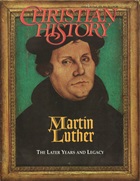
Martin Luther, founder of the new order, soon saw, in addition to his papal opponents on his right, a serious threat on his left: “false brethren.” These “fanatics,” as he also labeled them, held evangelical beliefs similar to Luther’s. But they differed with him on crucial issues, usually on the interpretation of the Lord’s Supper. To Luther, this group threatened the true reformation of the church.
The Reformers understood themselves to be, first and foremost, pastors and theologians; this was certainly true of Luther. What mattered to him most was doctrine, especially the doctrine of justification by faith in Christ alone.
Thus the key to unity and harmony among the various Reformers was not politics, social concern, or ethics, but sound doctrine. As Luther once wrote of radical reformer Thomas Munzer, “I am not so much offended by the unfruitfulness of the spirit of Munzer, as I am by his lying and his attempt to establish other doctrines.”
Luther fought like a tiger to preserve doctrine as he believed God had revealed it to him. This led him to clash with a number of Protestant reformers with whom seemingly he had much in common.
In, With, and Under
The sharpest clash came over the meaning of the Eucharist, or Lord’s Supper. Ulrich Zwingli, the reformer of Zurich, interpreted the scriptural phrase “This is my body” to mean “This represents my body.” He believed Christ was present— “according to his divine nature.” Zwingli agreed with Luther that the communicant received Christ’s blood, but only by faith.
Luther, however, insisted these words be taken literally. The body and blood of Christ were really present “in, with, and under the bread and wine.” He declared that the communicant received Christ’s true body and blood. Christ explicitly promised he would be present in this sacrament.
Many historians today regard the issue behind this “Sacramentarian Controversy” as trivial, or they simply cannot understand it. However, one’s beliefs about the Lord’s Supper had enormous practical consequences in the 1500s. Luther believed that Zwingli’s understanding of the Supper led to his followers’ violent rapid, changes in worship practices—acts of sedition. This controversy created the first great schism in the evangelical camp of the Reformation era.
Violent Visionaries
Behind the Sacramentarian Controversy lay the Karlstadt affair.
Andreas Karlstadt was Luther’s senior in both age and tenure as a professor at the University of Wittenberg. He promoted Luther to the doctorate in 1512 and later collaborated with Luther and Philipp Melanchthon in reforming Wittenberg’s curriculum.
Luther, however, soon overshadowed Karlstadt as a reformer. In 1522, Luther returned from seclusion in the Wartburg and repudiated what he charged were Karlstadt’s radical and ill-timed reforms. In 1523, the older man left town under pressure, and he soon resigned his academic and ecclesiastical appointments at Wittenberg.
On August 22,1524, after a heated exchange at the Black Bear Tavern, Luther tossed a guilder at Karlstadt as a sign of open feud and dared him to publish his works on the Lord’s Supper. Karlstadt accepted the challenge, even after authorities expelled him from his pulpit for disturbing the peace. A pamphlet war between the two men followed. Luther, in Against the Heavenly Prophets (1525), mocked Karlstadt. Karlstadt ultimately published thirteen treatises on his difficulties with Luther, and the meaning of Christ’s words of institution (“This is my body,” etc.) figured prominently in those pages.
Karlstadt anticipated many Anabaptist and Baptist ideas of the 1500s and 1600s. He rejected infant baptism, stressed the need for an adult conversion experience, declared the parity of laity and clergy, embraced congregational church polity, and viewed the Lord’s Supper as a memorial service. He wanted to return to the beliefs and practices of primitive Christianity.
Events in Wittenberg in 1521–1525 led Luther to regard Karlstadt, and all those who held radical views, as threats to an orderly reformation of the church. During those years the visionary “Zwickau Prophets” appeared, and revolutionary Thomas Münzer stirred up insurgent peasants in their war against landlords. Thus, Luther began to link Karlstadt, and those who held a memorial view of the Supper, with radical sectarians.
In the end, Münzer discredited himself and was hunted down like a dog and executed. The Zwickau Prophets were driven from Wittenberg, and they receded into historical oblivion. After 1525 (and especially after the ill-fated Munster uprising in 1534–1535), the Anabaptists were persecuted and killed. Karlstadt was hounded from place to place by the authorities, finally settling in Basel, where he died of the plague in 1541.
But in Luther’s mind, Karlstadt’s views of the Lord’s Supper were picked up by Zwingli and ultimately stimulated the Sacramentarian Controversy. (In later years, Luther would link Karlstadt and Zwingli as willful liars, “sect leaders,” and “novices in the sacred Scriptures.”)
In November 1524 Luther read a copy of a letter in which Zwingli said he admired Karlstadt’s boldness on the subject of the Eucharist. Zwingli agreed with Karlstadt that the bread and wine were symbols, and in March 1525, he published a Commentary on True and False Religion, declaring that Christ was not physically present in the bread and wine.
The Lutheran reformers soon responded, and the battle was joined.
“This Is My Body!”
The verbal missiles fired between the Lutherans and Zwinglians concerned the German lay leaders of Protestantism, especially prince Philip of Hesse. He invited the leaders of the German and Swiss factions to meet in the beautiful city of Marburg in the autumn of 1529 to resolve their differences. He wanted the Protestants to present a united front against the Catholics and against possible military action by the emperor. On October 1, 1529, most of the principal reformers of Germany and Switzerland met—Luther, Melanchthon, and Zwingli, as well as Martin Bucer and Johannes Oecolampadius.
This evangelical summit conference on doctrine lasted three days and made astonishing progress. Agreement was reached on fourteen of fifteen points proposed for discussion. But on the fifteenth and final question, the real bodily presence of Christ in the sacrament, the colloquy foundered.
When Ulrich Zwingli put forth his symbolic interpretation, Luther emphatically quoted from the Bible:
“Hoc est corpus meum!” (“This is my body!”) and wrote the words with chalk on the table top. He refused to accept any deviation from the literal meaning of these words.
Oecolampadius’s counter-text, “The Spirit gives life; the flesh counts for nothing” (John 6:63), made no impression on Luther. After further discussion, Luther declared in exasperation; “Again and again the body of Christ is eaten, for he himself commands us so. If he ordered me to eat dung, I would do it, since I would altogether know that it would be to my salvation.” Later, to Bucer he snapped, in words intended also for Zwingli: “It is evident that we do not have the same spirit.”
The fifteenth point of the Marburg Confession was worded carefully. Both sides denied the sacrificial nature of the Roman Mass, and both agreed communicants should receive both bread and wine. On the question of the real presence, the reformers agreed to disagree, but they asserted the sacrament was a divine gift of grace with a “spiritual benefit.” Each theologian present signed the Confession.
Soon after the colloquy, however, both sides were asserting that the other had yielded on the essential points. Luther proffered an olive branch in a definition describing Christ’s body as “essentially and substantively” but not “qualitatively, quantitatively, or locally” present in the Supper. Zwingli rejected this formula as still too close to the Roman Catholic view. Luther insisted that no political alliance was possible without complete doctrinal agreement. At this point, Melanchthon opposed any further concessions to the Zwinglians because it might prejudice discussions with the Catholics.
So the German and Swiss reformations continued their separate ways. Luther asserted, “One side in this controversy belongs to the Devil and is God’s enemy”—and he did not mean his party. To Luther, his opponents, like Erasmus, allowed human reason to intrude on the plain words of Scripture. They required Christians to bring something of their own to salvation. Each brought to mind exactly the struggles he found in the monastery. Therefore, Luther could see no reason to be more charitable with “the false brethren” than he was with enemies from Rome.
Zwingli, in particular, resented Luther’s condescending tone. He felt the Wittenberg reformer had treated him “like an ass.” On the other side, thirteen years after Marburg, Luther was still complaining about Ulrich Zwingli’s “Swiss dialect” and his pompous insistence on speaking Greek at every opportunity. Luther declared, “I’ve bitten into many a nut, believing it to be good, only to find it wormy. Zwingli and Erasmus are nothing but wormy nuts that taste like crap in one’s mouth!”
The bad blood between the two reformers set a pattern for Protestant non-cooperation that has lasted to today.
Anglicans and Anabaptists
Generally, Luther was hostile toward non-Lutheran reformers. One seeming exception were the Protestant reformers from England.
Luther spoke approvingly of several Anglicans: Robert Barnes, who was burned at the stake and fondly called by Luther “St. Robert”; Bishop Hugh Latimer, who later became one of the most celebrated victims of Queen Mary’s persecution; William Tyndale, whose theological works often roughly translated or paraphrased Luther’s writings; and Archbishop Thomas Cranmer, who traveled to Germany in 1532 and there married the niece of Lutheran reformer Andreas Osiander. Cranmer shared many of Luther’s views on the Supper.
The Anabaptists were a different story. Luther, like most Protestant leaders of the sixteenth century, lumped all left-wing radicals into one category. Luther could routinely denounce Münzer, a mentally disturbed radical who was not an Anabaptist; Karlstadt, who was closer to a later Baptist than anything else; Melchior Hoffmann, a millenarian fanatic; the leaders of the ill-fated Munsterite Kingdom (1534–1535); and then connect them all with the peaceful followers of Menno Simons.
Luther frequently castigated Anabaptists as spiritual know-it-alls. As he put it in 1532, “The fanatics suppose that because they have read only one little book they know everything.” He added that “the Anabaptists have written nothing against me because they have no learned men nor any eminent men. They are only a seditious mob.”
But Luther understood Anabaptist theology only imperfectly. In 1532 he commented, “The Anabaptists reject baptism almost entirely. The pope, who distorts it, at least allows baptism to remain.” Linking them to the Catholics, he remarked, “The papists and the Anabaptists teach, ‘If only you wish to know Christ, try to be alone, don’t associate with men, become a separatist.’ This is plainly diabolical advice.”
How Luther felt the state should deal with Anabaptists changed over the years. In the beginning of the Reformation, Luther disapproved of Zwingli’s persecution of the Zurich Anabaptists. However, the appearance of many radicals and the peasant uprising of 1524–1525 alarmed Luther. When the Diet of Speyer in 1529 decreed death for Anabaptists throughout the Holy Roman Empire, Luther made no comment. By 1531, he countenanced death for blasphemy (under which he included “false teaching”).
In 1536, Melanchthon drafted a memorandum on the treatment of Anabaptists. In it he distinguished the peaceful from the revolutionary Anabaptist and demanded death for both, and Luther signed. Luther still held that only blasphemy and sedition should be punished, but he now interpreted as blasphemy a rejection of the Apostles’ Creed and as sedition a mere refusal to participate in war or to serve as a magistrate. Late in life, however, Luther returned to his earlier belief that banishment or imprisonment was sufficient penalty for these crimes.
Calvin’s Special Niche
Reformer John Calvin was not of Luther’s generation, and the two men never met, but they seemed to have respected each other. Calvin, though he did not fully agree with Luther, was deeply influenced by his theology.
Luther, for his part, was impressed with Calvin’s Institutes of the Christian Religion. He once wrote to Martin Bucer, “Will you pay my respects to Johann Sturm and John Calvin? I have read their little books with singular enjoyment.”
Shortly before his death, Luther made unusually cutting remarks about Protestants in Switzerland. But during the same period, he said he liked Calvin’s Brief Treatise on the Holy Supper. “I might have entrusted the whole affair of this controversy to him from the beginning,” Luther decided. “If my opponents had done the like, we should soon have been reconciled.” Calvin apparently had won a special niche in Luther’s heart.
Violent Physician
Luther’s last years were marked by restless activity, prodigious labor, and increasing crankiness. In 1537 he fell ill with kidney stones. From that time forward, overwhelmed with responsibilities, constantly apprehensive about the danger of war, and often sick, he became short-tempered and even harsh.
Yet Luther had always been willing to do battle for what he considered the truth. Luther’s opinion of the “false brethren” was more bitter than his view of Catholic opponents because he believed that, despite better knowledge, the “brethren” had betrayed the cause and undercut his prophetic role.
Thus, in the Sacramentarian Controversy, Luther charged that all of his opponents, ruled by the spirit of Satan, were bent on destroying the true church. With a monumental sense of certainty, he condemned as the devil’s false apostles and hypocrites people who, to all appearances, were sincerely searching for biblical truth.
With few exceptions, Luther’s evangelical opponents did not repay in the same coin. They acknowledged publicly that God had mightily used Luther to accomplish great things. They attacked his arguments, complained bitterly about his polemical style, and accused him of violating the canons of Christian charity, modesty, and decorum. But they still said they wished only to correct him where he had erred, not to reject his teaching entirely or to condemn his person outright.
Most of the other Reformers would have agreed with Calvinist Theodore Beza, who proclaimed in 1580 that Luther’s work “resulted in the cleansing of God’s sanctuary, delivering it from the clutches of the Antichrist at an opportune moment, and he used the Word of God as a means of returning it to the lordship of Christ … He was a man with faults and with turbulent disciples, but still a great man.”
Melanchthon, who took an occasional rebuke from the Saxon reformer, remained true to his leader. He delivered the great man’s funeral oration in 1546, saying, “Some by no means evil-minded persons have complained that Luther displayed too much severity. I will not deny this. But I answer in the language of Erasmus ‘Because of the magnitude of the disorders, God gave this age a violent physician.’”
Luther taught the heirs of the Protestant Reformation that doctrine is important—important enough to divide. Students of Christian history will have to look to the other Reformers for clues concerning how to maintain both sound doctrine and Christian unity. In the meantime, all genuine followers of Jesus Christ will sorrow for the chance for Protestant unity that was lost in the sixteenth century.
Dr. Robert D. Linder is professor of history at Kansas State University in Manhattan, Kansas. He is co-editor of The History of Christianity (Lion, 1990).
Copyright © 1993 by the author or Christianity Today/Christian History magazine.
Click here for reprint information on Christian History.

Support Our Work
Subscribe to CT for less than $4.25/month