Preacher of Revolution


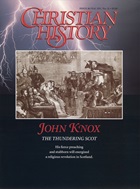
John Knox was a strange and rather frightening character. He was narrow-minded and intolerant. He lacked generosity of spirit and loved to hate. But he possessed immense courage and feared no one.
In the pulpit, he was at his most powerful. He mesmerized thousands of Scots, who were prepared to lay their lives down for Protestantism at his behest. By his preaching, he molded both nobility and ordinary folk into a formidable fighting force and thus left his stamp on the Protestantism of Scotland for centuries to come.
“Base” Beginnings
The man who was to lead this great religious revolt and challenge the authority of monarchs had humble, or as Knox put it, “base” beginnings. He was born, probably in 1514, at Haddington, a small town of some 1,500 inhabitants south of Edinburgh. We do not know whether his father, William, was a merchant or a craftsman. But Knox’s humble background gave him an instinctive ability to communicate effectively with ordinary people.
He was able to avail himself of a good education, and he probably mastered the rudiments of Latin at a school in Haddington. Around 1529 he entered the University of St. Andrews and went on to study theology under distinguished theologian John Major, who had both criticized Luther’s theology and condemned abuses in the Catholic church.
Knox was ordained in April 1536, but that did not lead to a parish appointment because there was an excess of priests in Scotland. Since Knox had studied law, he became a notary in the neighborhood around Haddington and then a tutor to the sons of local lairds (lower-ranking nobility).
Dramatic events were unfolding in Scotland during Knox’s youth. The constant sea traffic between Scotland and Europe allowed Lutheran literature to be easily smuggled into the country. The port of Dundee became an early center of Protestant activity. Church authorities became alarmed by the emergence of this “heresy,” and they tried to suppress it.
In February 1528, Patrick Hamilton, an outspoken Protestant convert, was burned at the stake in St. Andrews—the first Protestant martyr in Scotland. But people began to ask why Hamilton had been executed, and when his heresies were explained, according to Knox, “Many began to call in doubt that which before they held for a certain verity.”
The outlook for Scottish Protestants brightened in 1543 when the regent for the infant Mary Queen of Scots initiated a pro-English, and therefore Protestant, policy. He encouraged Bible reading and promoted preaching by reformers. He appointed Thomas Guilliame, a converted friar, and John Rough, a converted monk, as his chaplains. They engaged at once in preaching campaigns throughout central Scotland. The preaching of Guilliame had a dramatic influence on John Knox: it made a Protestant of him.
From Bodyguard to Preacher
In the mid-1540s, the authorities abandoned their Reformation policies and began threatening Protestants. Protestant preacher George Wishart nonetheless courageously proclaimed his convictions, traveling about the country. Impressed with what he heard about Wishart, Knox joined Wishart’s band, who acted as a kind of bodyguard for Wishart—Knox, in fact, armed himself with a two-handed sword.
For five weeks, he followed Wishart until it became clear the church authorities would soon arrest the preacher. Although Knox and his friends wished to accompany him at his arrest, Wishart sent them home and faced his accusers alone.
Cardinal David Beaton, archbishop of St. Andrews, the religious capital of Scotland, ordered Wishart’s arrest in January 1546. Wishart was tried, found guilty of heresy, strangled, and burned on March 1. For Knox, Wishart was the supreme hero—“a man of such graces as before him were never heard within this realm, yea, and are rare to be found yet in any man.”
The execution of Wishart aroused fury amongst his supporters, and they quickly resolved on a terrible revenge. Two months later, a party of sixteen nobles assassinated Beaton and mutilated and insulted his body in the most obscene manner. More than revenge, it was a revolutionary response to Beaton’s Catholic policy (Beaton favored a French-Scottish alliance intended to hold Protestant England at bay). The Castilians, as the leaders of the coup were called, holed up in St. Andrews Castle as a fleet of French ships lay siege to it.
Knox was not privy to the murder, but he approved of it wholeheartedly on the principle that God often allows evil men to mediate punishment. Now his own life was in jeopardy, and he moved from one laird’s house to another to avoid detection. Finally, during a break in the siege, he joined the Castilians at St. Andrews Castle.
Among the Castilians was one of the most powerful politicians in Scotland, Henry Balnaves. He and preacher John Rough were impressed by Knox’s abilities as they watched him teach students. They asked him to become the castle’s next chaplain, but Knox refused, saying they had no authority to grant him such a call.
Rough persisted, and as he preached on the election of ministers one Sunday, he publicly called upon Knox to undertake the office of preacher! He then asked the congregation to endorse his call, which it did with acclamation. Knox was overwhelmed and reduced to tears. At first he declined, but over the next few days, he realized that a call by a congregation was as valid a call as any.
One event in particular convinced him. As Knox was debating his call, he attended a service at the parish church. The dean of the church was defending Catholicism, doing so, he claimed, on the authority of the church, the bride of Christ.
Knox could take it no longer, and from his pew, he stood up and interrupted him saying that the Roman Church was no bride of Christ but a harlot! The congregation loudly demanded that Knox justify his remark in a sermon on the following Sunday—which he did. It was the commencement of the public career of one of the most powerful preachers of the Reformation era.
From Galley to Royal Court
Knox’s career, however, was suddenly interrupted. The French fleet again lay siege to St. Andrews Castle, which capitulated in July 1547. Its occupants were taken to Rouen in France. The more important prisoners were confined in neighboring castles, but the rest, which included Knox, were sent to the galleys.
Galleys were sailing ships, but if the wind dropped, they could be propelled by 25 oars with six men at each oar. The galleys sailed along the coast to Nantes, where they spent the winter. There is no direct evidence about conditions on these galleys at this time, but Knox admitted the prisoners were “miserably entreated.”
Apart from the heavy physical exertion involved in rowing, the prisoners were pressured to renounce Protestantism. The prisoners indulged in passive resistance, for example, putting on their caps when Catholic crew members sang hymns to the Virgin Mary.
Meanwhile the English government was taking a lively interest in the plight of the prisoners and in February 1549, possibly at the specific request of King Edward VI, Knox was released.
Knox spent the next five years in England as an honored guest. The political and religious authorities, anxious to secure Protestantism in England, were eager to take advantage of his abilities. After serving preaching stints in Berwick and Newcastle, in the autumn of 1551, he was appointed a royal chaplain, along with five others, an appointment that involved preaching before the king.
In that capacity, he contributed to the preparation of the second Book of Common Prayer (1552) (BCP). Knox sternly opposed kneeling to receive Holy Communion, which was required in the first BCP. Knox insisted that a rubric should be included explaining that kneeling did not imply accepting the doctrine of the bodily presence of Christ in the elements. This came to be known as the “black rubric.”
Knox was next invited to become Bishop of Rochester, and a few months later, vicar of the influential All Hallows Church, Bread Street, in London. He declined both positions (for reasons that are unclear.) Although the authorities found his intransigence trying, they still found places for him to preach.
Once again, political developments interrupted Knox’s career. On July 6, 1553, King Edward VI died. The future of English Protestantism looked gloomy. His successor, Mary Tudor, began her reign giving the impression she would tolerate Protestants, but it soon became clear she meant to reinstate Catholicism as the national religion.
Her first Protestant execution, of Bible translator John Rogers, occurred in February 1555, but the withdrawal of English Protestants to Europe had begun a year before. For Knox, Mary was the “wicked English Jezebel,” and he had no wish to become one of her victims. By January 1554, he was in France.
Curious Marriage
When Knox pastored at Berwick, he met Elizabeth Bowes, a woman of independent mind who studied her Bible assiduously and embraced the Protestant faith. Mrs. Bowes found in Knox a spiritual guide and confidant. Her letters to him reveal her constant need of spiritual comfort, mainly because of her doubts about her salvation.
When Knox came to know her, she was 45 years old and had borne 15 children. Of her ten daughters, the fifth was Marjory. Early in 1553, Knox made a solemn promise before witnesses to marry Marjory, but the formal marriage took place later, at a date now unknown (probably in 1555, when Knox returned briefly to Scotland). Marjory’s father, Richard, did not approve of the match.
The circumstances of the marriage were curious. When Knox and Marjory returned to Geneva in 1556, her mother joined them, having left her husband behind. Richard Bowes died two years later, and Elizabeth continued to live with Knox—even after the death of her daughter Marjory in 1560.
These arrangements provided ammunition for Knox’s critics. He was accused of indulging in an incestuous relationship with both mother and daughter. But there is nothing in his letters to Mrs. Bowes to suggest any sexual attraction between them. The letters do show the tender side of the reformer. He could be patient, kind, and gentle, despite the fact he occasionally found Mrs. Bowes trying.
Quarrels over Worship
After his arrival in France in 1554, Knox made his way to Geneva, where he met John Calvin, and then to Zurich, where he met Heinrich Bullinger. Eventually, he decided to settle in Frankfurt am Main, where Knox was plunged into distressing quarrels that had lasting implications for the Church of England and the Church of Scotland.
Frankfurt was a great commercial center and a free city of the Holy Roman Empire. It enjoyed a large measure of religious tolerance—as long as the suspicions of Catholic Emperor Charles V weren’t aroused. A group of exiles had been granted the use of the Church of White Ladies by Frankfurt authorities. They had asked Knox to be their pastor, and on the advice of Calvin, Knox agreed.
At once Knox was confronted with the question of what liturgy should be used. By now he had become critical of the 1552 Book of Common Prayer (BCP) and declined to use it. Nor was he happy about Calvin’s Genevan Order of Service, since some members of the congregation objected to it. As a compromise, they began using a service devised by William Whittingham. Still the BCP group objected.
During the winter of 1554–55, other English exiles arrived (some of whom would later be leaders in the Elizabethan church), who also favored the BCP. A group, which included Knox, drew up a new order of service in February 1555. It was a more significant liturgy than they imagined, because after the Scottish reformers had carried the day in 1560, it became the Book of Common Order, the official worship book of the Church of Scotland.
Nonetheless, in Frankfurt, it was rejected by a large minority. So yet another order of service had to be prepared and was used on an experimental basis.
At a meeting in late March, a split—which embodied the differences between the future Church of England and Church of Scotland—became apparent. The minority BCP group had become the majority and proposed Knox’s dismissal.
They convinced the city authorities to prohibit Knox from preaching. He obeyed, but when he entered church merely to worship, the BCP party walked out; they said they would not worship in the same building as Knox! City authorities were soon convinced to expel him. By that time, though, Knox had had enough and had left for Geneva.
Duty to Rebel
Back in Scotland, beginning in 1555, Protestants had redoubled their efforts. Protestant congregations were forming in Edinburgh, Dundee, St. Andrews, Brechin, Perth, and elsewhere. They adopted Protestant forms of worship, and some made use of the English Book of Common Prayer. At first these were clandestine meetings, but they soon became public again.
In December 1557, a group of nobles drew up a covenant to “set forward and establish the most blessed Word of God and his Congregation” and to renounce Catholicism and make Protestantism the official religion of the land. Their motives as a group were mixed: some sought political power and others economic gain. But many of the “Lords of the Congregation,” as they were called, were sincere believers. This group began playing a leading role in the Scottish Reformation.
One of their earlier decisions was to invite Knox to return to Scotland to inspire the reforming work. (By this time, Knox had left Frankfurt and was co-pastoring an English congregation in Geneva.) At their insistence, he returned in August 1555 and spent nine months preaching extensively and successfully. His popularity so alarmed the Catholic bishops, they summoned him to Edinburgh in May 1556 to face legal proceedings.
When the summons was canceled by Regent Mary of Guise, Knox wrote her, thanking her for her clemency and asking her to grant complete toleration to Protestants. She contemptuously dismissed the letter and became even less conciliatory in her policies. Knox was forced to return to Geneva, and it was from there that he published some of his most controversial tracts.
All during this period, Knox was gradually developing his justification of revolution. On his first sojourn to Geneva in 1554, he asked Calvin whether it was permissible to resist by force a monarch who was “idolatrous,” that is, who promoted Roman Catholicism. Calvin would have none of it. Knox visited all the congregations of Switzerland and put the same question to their pastors.
In his 1554 Admonition to England, he virulently attacked the leaders who had connived at the restoration of Catholicism under Queen Mary Tudor. Nor did he spare the queen: “Had she … been sent to Hell before these days, then should not their iniquity and cruelty so manifestly have appeared to the world.”
No wonder his critics accused him of advocating the assassination of the queen! William Tyndale had insisted that rulers were God’s representatives and, “Whosoever therefore resisteth them, resisteth God,” and religious leaders in England agreed with him.
But not Knox. He pondered whether a woman could be a legitimate ruler. If not, would revolution be justified? Though he failed to secure the support of men like Calvin, that did not deter him from publishing his most notorious tract, The First Blast of the Trumpet Against the Monstrous Regiment of Women (1558). (“Monstrous Regiment” means “unnatural government.”) It was aimed directly at Catholic Mary Tudor.
It is a ruthless assertion of male domination and an unsparing attack on women based on the Bible and quotations from early church fathers. He concluded no woman could be a legitimate ruler—certainly not a woman who persecuted Protestants. She is a rebel against God.
Knox concluded that those who have accepted offices “must acknowledge that the regiment of a woman is a thing most odious in the presence of God; they must refuse to be her officers because she is a traitoress and rebel against God; and finally, they must study to repress her inordinate pride and tyranny to the uttermost of their power.”
That was the message to the higher classes. Knox took the final step in his Appellations to the Nobility and Commonality of Scotland, in which he extended to ordinary people the right, and indeed the duty, to rebel.
Publishing The First Blast was a monumental political mistake. Calvin severely disapproved and banned its circulation in Geneva. In a matter of weeks after its publication, Protestant Elizabeth I suddenly ascended to the English throne, and when she saw the tract, she was so appalled that her hatred of Knox never abated. Knox himself had to admit, “My first Blast hath blown from me all my friends in England.” At a stroke, he had destroyed the links that had joined him to the Church of England.
Military Stand-Off
In Scotland affairs were moving toward a crisis. Knox left Geneva for the last time in January 1559 and arrived in Scotland in May. A trial of strength was developing between Mary of Guise and the supporters of reformation, and Knox deployed his formidable authority as a preacher to increase Protestant militancy.
Within days of his arrival, Knox preached at Perth, waxing fierce and eloquent against Catholic “idolatry.” When the service was over, a riot broke out. Altars were demolished, images smashed, religious houses destroyed.
The regent threatened to deploy her forces to restore order; the Lords of the Congregation militarily occupied Perth, Stirling, and St. Andrews. By the end of June, Knox and his supporters were in Edinburgh, and the inhabitants promptly elected him to be their minister. From that pulpit, Knox used his formidable preaching skills to exhort and inspire his Protestant listeners. On more than one occasion, he lifted their despondent spirits and roused them to action again.
Knox was convinced that only English intervention could save the day. His unpopularity with Queen Elizabeth precluded him from making a case to her personally, but the Lords of the Congregation were successful in drawing up the Treaty of Berwick in February 1560. By it England promised to provide military assistance to counter Mary of Guise and her French troops.
The treaty worked: on July 6, 1560, the French and the English both agreed to leave Scottish soil. Without French interference, the future of the Reformation in Scotland was assured.
Struggling Reformation
The Scottish Parliament met later that month, and Knox preached to this most distinguished congregation, at St. Giles’s in Edinburgh at a great thanksgiving service. The Parliament ordered Knox and five colleagues to write a Confession of Faith, which was quickly adopted. On August 17, acts were passed to abolish the Mass, repudiate papal jurisdiction, and rescind laws at variance with the Reformed faith.
The First Book of Discipline, drawn up by Knox and close colleagues, was submitted to the General Assembly (annual national church meeting) in December 1560. The unstable condition of the country, however, made its full implementation impossible for some years. Finally, first informally and then officially in 1564, “Knox’s Liturgy” from Frankfurt, now called the Book of Common Order, became the official worship book for Scotland.
This was only the beginning, of course. There now existed two churches in Scotland, the Roman Catholic and the Reformed. Much work remained to be done to establish efficient government in the Protestant church and to make adequate provision for its financial support. Knox continued to play an active role in all these developments, but real power rested with feuding and often murderous politicians.
From the beginning, these developments were complicated by the return of Mary Queen of Scots from France in August 1561—a devout Catholic ruling a now officially Protestant country.
Knox could make nothing of Mary, especially as her personal life moved on its tragic course. His hatred of her became more intense. Civil war played havoc with Scotland as Mary tried to suppress Protestantism. Crime and lawlessness were rife and government was near collapse.
By the middle 1560s, the hard years of fighting for reformation were taking their toll on Knox. In some respects, he became an embittered man, and his intolerance and spleen became more and more insufferable. At times, he possessed little of the milk of human kindness. It didn’t help that his health was deteriorating. Still he insisted on preaching even when he had to be carried into the pulpit and his voice had become too weak to reach any but the hearers nearest to him. He preached at St. Giles’s for the last time on November 9, 1572, and died five days later.
The Scottish Reformation would continue to establish itself in fits and starts over the coming decades, but it had gotten its footing in 1560, to a great degree because of the single-minded devotion and burning sincerity of the “thundering Scot.”
R. Tudur Jones is professor of history at Bangor University, Wales. He is author of The Great Reformation (1985).
Copyright © 1995 by the author or Christianity Today/Christian History magazine.
Click here for reprint information on Christian History.

Support Our Work
Subscribe to CT for less than $4.25/month