St. Patrick and Celtic Christianity: Did You Know?


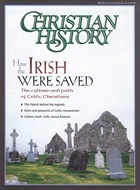
Things Celtic are the rage today, whether it's Celtic spirituality, Celtic music, or Celtic history. Celts have been trending for a number of years, in fact. A September 1998 search on Amazon.com turned up 1,200 books that have something to do with the word Celtic.
A search of "Jesus Christ" on Yahoo.com revealed only 896 web sites, but a search of "Celtic" turned up nearly a thousand (976).
The first Europeans
The original Celts were tribes that emerged from central Europe about 1000 B.C. and spread over much of Europe by 300 B.C. They shared a common language and, in large degree, a common culture—but not a common name. They were called Keltoi or Galatians by the Greeks and Gauls or the Galli by the Romans, who thought of them as a brutal, militaristic people.
Maybe that's because Rome, and Julius Caesar in particular, spent a lot of money and men repelling their incessant attacks (recorded in one of the most famous Latin works, Caesar's commentary on the Gallic Wars).
When the Romans finally proved victorious, the Celts retreated to what was then considered the edge of civilization: areas we now call England, Scotland, and Ireland.
"You foolish Celts!"
The Celts who defeated Greek armies in Asia Minor liked what they saw and settled down in an area that became Galatia. It is possible that some of the converts the apostle Paul scolds in his letter ("You foolish Galatians!") were descendants of Celts.
Peaceable kingdom
The Celts of Ireland were the first major people group to be evangelized successfully without violence. For a culture so reputedly bloodthirsty and "barbarian," this was some accomplishment.
Patrick paradoxes
Patrick, the Catholic patron saint of the Irish, was so designated as a result of popular devotion and long-standing custom, not an official canonization process. (The Roman Catholic church has made official designation of relatively few patrons.)
Also, Patrick wasn't Irish but came to Celtic Ireland as a British missionary. He so loved the Irish, though, by the end of his life, he often made himself one, saying "We have been born in Ireland."
Finally, did Patrick really use the shamrock to explain the Trinity to the Irish? It is impossible to know historically if he did or didn't.
Unidentified swimming objects
The Irish Celts are famous for their story telling, and that's partly because of the countless legends and fables that have arisen about their saints.
Surrounded as they were by water, many stories had to do with the sea and sea monsters.
Brendan the Navigator celebrated Mass on the back of a whale, which he thought was a small island until it swam away. Columba is said to have confronted Scotland's Loch Ness Monster, the first reported sighting in history.
Punishment to fit the sin
Celtic Christianity is renowned for its monasticism, and its monasticism for its rigorous asceticism, which resulted in, among other things, "The Penitentials." These were handy guides for abbots and pastors to determine the appropriate spiritual discipline for various offenses. Correct punishments for thievery, sorcery, lying, etc., were all detailed.
Close to a third of the Irish penitentials covered sexual infractions. For example, a cleric who lustfully dreamed of a woman had to live on bread and water for seven days—but it was six years of the diet for impregnating a nun.
Boston Keltics?
Today Celtic language and culture are still alive in such places as Wales, Ireland, and Scotland. But confusion, at least about how to pronounce the name, persists. The French call them selts, Italians prefer chelts, whereas most of the English speaking world (except basketball fans from Boston) says kelts.
The CH Timeline: Celtic Christianity
390 B.C. Celtic tribes (called the "Gauls") sack Rome
58-50 B.C. Julius Caesar is victorious in Gallic Wars. Surviving Celts retreat to British Isles
415 Patrick born in Roman Britain's northern frontier
430/31 Irish slavers capture Patrick
431 Pope Celestine I sends Palladius to Ireland
437 Patrick escapes, returning to Britain in the 440s
460/61 Patrick arrives in Ireland as a bishop and missionary
492/93 Patrick dies
c. 500 Brigit founds Kildare
557 Columba leaves Ireland for Iona
c. 590 Columbanus begins mission to the Continent
597 Augustine, on a mission from Rome, arrives in Britain
635 Aidan begins mission to the English at Lindisfarne
664 Synod of Whitby: Celtic Christians agree to abide by Roman traditions.
793 Vikings attack Lindisfarne, one of their earliest raids
1014 Irish defeat Vikings at Clontarf
1170 Anglo-Norman invasion of Ireland.
Patrick dates are the estimates of Liam de Paor, Saint Patrick's World (Notre Dame, 1993)
"Interminable Fun"
Irish monks belie the notion of monasticism as a joyless life separate from creation. In fact, Irish monks enjoyed both the created world and their scholarly task, as indicated in a poem written around A.D. 800:
Myself and White Pangur are each at his own trade; he has his mind on hunting, my mind is on my own task.
Better than any fame I prefer peace with my book, pursuing knowledge; White Pangur does not envy me, he loves his own childish trade.
A tale without boredom when we are at home alone, we have—interminable fun—something on which to exercise our skill …
The job he does every day is the one for which he is fit; I am competent at my own job, bringing darkness to light.
Copyright © 1998 by the author or Christianity Today/Christian History magazine.
Click here for reprint information on Christian History.

Support Our Work
Subscribe to CT for less than $4.25/month