


Understanding Tolkien: Recommended Resources


Books on the man
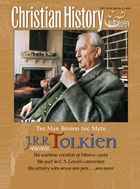
The standard Tolkien biography is Humphrey Carpenter's authorized Tolkien (George Allen & Unwin, 1977). Both this book and Carpenter's The Inklings (George Allen & Unwin, 1978) provide intimate, detailed portraits of Tolkien and his circle, liberally sprinkled with unexpected insights. A recent biography that explores Tolkien's faith and its impact on his work is Joseph Pearce, Tolkien: Man and Myth (Ignatius: 1998).
For a warm portrait of the man and his work, see Clyde Kilby, Tolkien and the Silmarillion (Harold Shaw, 1976). It is in part a record of Kilby's attempt to assist Tolkien in finishing The Silmarillion, but its lasting value lies in the many interesting personal and professional details it provides about Tolkien, as Kilby gently relates in anecdotal detail the Oxford author's working habits, his convictions, and his foibles.
In The Tolkien Family Album (Houghton Mifflin, 1992), an easily accessible "photo-biography," John and Priscilla Tolkien chronicle memories of their father. Containing many rare pictures of Tolkien, his family, and the places they lived over the years, along with affectionate reminiscences illuminating his life and times, the book is a treat for fans.
Books on his books
An invaluable reference work covering every aspect of Tolkien's imaginative world is Colin Duriez, The J. R. R. Tolkien Handbook (Baker, 1992). This also contains a valuable short bibliography of books by and about Tolkien.
Professor Tom Shippey has produced an outstanding literary analysis of Tolkien's work in J. R. R. Tolkien: Author of the Century (Houghton Mifflin, 2002). Shippey's grasp of Nordic and Celtic myth makes for some penetrating insights into how Tolkien constructed Middle-earth. Readers will especially appreciate Shippey's reflections on the concept of evil as developed in The Lord of the Rings. For more on Tolkien's myth, check out Shippey's classic The Road to Middle Earth (George Allen & Unwin, 1982).
A thorough and insightful inquiry into the Christian convictions at the heart of Tolkien's mythic world, including in its first chapter a delightful mini-biography, is Bradley J. Birzer, J. R. R. Tolkien's Sanctifying Myth: Understanding Middle-earth (ISI Books, 2002).
For a quick, enjoyable tour of the moral world of Tolkien's writings, pick up Mark Eddy Smith's Tolkien's Ordinary Virtues (InterVarsity Press, 2002). Smith takes almost a devotional tack by exploring, one by one, a set of virtues exemplified in Tolkien's characters. These include generosity, friendship, hospitality, courage, hope, and faith.
A perceptive study relating Tolkien's work to that of other Christian imaginative writers, past and present, is Rolland Hein, Christian Mythmakers (second edition, Cornerstone, 2002). The book provides a revealing, theologically sensitive account of the literary techniques of "mythmaking" employed by such classic authors as Dante Alighieri and John Bunyan, and such modern-day writers as Madeleine L'Engle and Walter Wangerin.
Joseph Pearce, Tolkien: A Celebration (Ignatius Press, 1999), provides a set of essays that focus on the author's work, values, and legacy, along with recollections by two authors who knew Tolkien personally, George Sayer and Walter Hooper.
Finally, a classic study dealing with Tolkien's debt to Owen Barfield's linguistic theory of the fragmentation of meaning is Verlyn Flieger, Splintered Light: Logos and Language in Tolkien's World (revised edition, Kent State University Press, 2002; first published by Eerdmans in 1983).
For fun
No book better captures Tolkien's flair for illustration than Wayne G. Hammond and Christina Scull's J. R. R. Tolkien: Artist & Illustrator (Houghton Mifflin, 1995). Beginning with his early sketches of nature, Hammond and Scull follow Tolkien's work chronologically to The Lord of the Rings, reinforcing the art with running commentary and description.
Fans of The Hobbit and The Lord of the Rings will enjoy an unexpected but delightful romp in Tolkien's Letters from Father Christmas (Houghton Mifflin, 1999). Displaying every one of Tolkien's illustrated Christmas letters to his children from 1920 to 1943, this book celebrates both the author's imaginative genius and his energetic love for his family.
Douglas A. Anderson, The Annotated Hobbit (Houghton Mifflin, 2002; revised and expanded) provides the complete text of Tolkien's classic children's tale, along with illustrations from many of the book's numerous international translations. Handsomely produced, the book's introduction alone, relating how Tolkien wrote and published his famous story, makes this one worth picking up.
Websites
Tolkien scholars and fans alike will want to check out The Tolkien Society's website, http://www.tolkiensociety.org/. In addition to finding a superb index of archival resources, enthusiasts can read breaking news on new Tolkien art and scholarship, and locate information on events the Society is sponsoring.
For an unusual look into Tolkien's life, browse the websites of the parishes formative to the man. The Birmingham Oratory at http://www.birmingham-oratory.org.uk/tolkien has a succinct biography covering the author's youth, while the Oxford Oratory (formerly St. Aloysius) at http://www.oxfordoratory. org.uk/ offers readers a virtual tour of the church at which Tolkien worshipped for many years.
For a dive in the deep end of Tolkien and Inklings studies, visit the Marion E. Wade Center in Wheaton, Illinois ( http://www.wheaton.edu/learnres/wade/). The Wade Center houses thousands of manuscripts relating to seven authors: G. K. Chesterton, Dorothy Sayers, C. S. Lewis, J. R. R. Tolkien, Charles Williams, Owen Barfield, and George MacDonald. The Center also produces the annual scholarly literary review Seven.
Copyright © 2003 by the author or Christianity Today/Christian History magazine.
Click here for reprint information on Christian History.

Support Our Work
Subscribe to CT for less than $4.25/month