







Life and Religion Are One


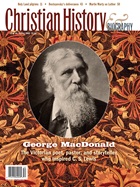
According to one American reader, fans raved about George MacDonald's novels as if they were "a new gospel." A huge public, she insisted, was "greedy" for more. It was not MacDonald's gospel that was new, however, but his fresh presentation of the gospel's relevance to life. MacDonald had once said, "The life, thoughts, deeds, aims, beliefs of Jesus have to be fresh expounded every age, for all the depth of eternity lies in them, and they have to be seen into more profoundly every new era of the world's spiritual history." Through his writing, he had found a way to do just that.
"Life and religion are one, or neither is anything," he insisted. Incensed by seeing professing Christians intellectually assent to Christian doctrine while still adhering to secular attitudes and patterns of life, he dedicated his ministry to demonstrating that Christian truth is at the very heart of life. Life itself is constantly trying to teach that unity. "The same God who is in us … also is all about us—inside, the Spirit; outside, the Word," he remarked, "and the two are ever trying to meet in us." That is, every aspect of the created universe and of human experience comes from God. Rightly received, all of life is a vehicle of grace.
A storyteller for the ages
Stories, MacDonald discovered, are an ideal means for showing people the sacramental character of life. A prolific writer, he composed poetry, novels, and fairy tales for both children and adults, as well as sermons, essays, and works of literary criticism—over 50 books in all. A shrewd and discerning student of his own life's experiences, both those of joy and those of grief, he portrayed the truths he discovered in his large gallery of characters. He was careful to teach nothing that his own life did not exemplify.
MacDonald's popularity in his own century was based largely upon his novels, and such titles as Sir Gibbie, Robert Falconer, and Thomas Wingfold, Curate remain highly readable today to all who are interested in the wedding of Christian truth to human experience. It is in the mythic reaches of his fairy tales, however, that his literary reputation largely endures. They stand not only in their own right but as the forerunners of many such writings by G. K. Chesterton, C. S. Lewis, Charles Williams, J. R. R. Tolkien, and Madeleine L'Engle.
Chesterton and Lewis, perhaps the two most influential Christian writers of the 20th century, both hailed him as pivotal in shaping their thought. Chesterton dubbed him "St. Francis of Aberdeen" and said that MacDonald's The Princess and the Goblin, which had been read to him in the nursery, was a book that "made a difference to my whole existence, which helped me to see things in a certain way from the start." Lewis saluted MacDonald as his "master," affirming that he had never written a book that did not bear the stamp of MacDonald's influence. What most affected Lewis was MacDonald's portrayal of "holiness": "The quality which had enchanted me in his imaginative works turned out to be the quality of the real universe, the divine, magical, terrifying and ecstatic reality in which we all live."
Earthly father and heavenly Father
George MacDonald's discernment of the "real universe" began in his childhood. He was born in 1824 in Huntly, a town in the north of Scotland whose inhabitants held to a stern and unwavering form of Calvinism. His deep need for love was frustrated by the death of his mother from tuberculosis when he was eight. His Calvinist father, who was both a stern disciplinarian and an understanding, loving parent, undertook to be both father and mother to his family of boys.
George MacDonald Sr. was indeed a man of legendary proportions. His grandson Greville, writing the family history, tells how as a strict teetotaler he refused the recommended whiskey sedative and watched without protest while his tubercular leg was being amputated at the knee, the operation taking place on the living room table. On the other hand, he gave loving attention to his growing sons, entertaining them with many stories lifted from both the Old Testament and Gaelic mythology.
A thoughtful and sensitive child who took churchgoing very seriously, MacDonald nevertheless began to question such teachings as unconditional election and limited atonement. He wondered how the heavenly Father who created the universe and all people in it could be less loving and tender than his earthly father. Surely God was as interested in fairness as any good person was.
The God of the Beautiful
Although sorely pressed for funds, George MacDonald, Sr., recognizing in his son unusual intellectual abilities, found a way to send him to King's College, Aberdeen. A fellow student at King's described the young MacDonald as "studious, quiet, sensitive, imaginative, frank, open, speaking freely what he thought. His love of truth was intense, only equaled by his scorn of meanness, his purity and his moral courage." Love of truth and morality characterized his entire life.
At King's, MacDonald discovered in such German Romantic writers as Novalis and E. T. A. Hoffmann a form of Christianity radically different from the Calvinism of his youth. In sharp contrast to the impersonal and highly intellectualized teachings of the Shorter Catechism—from which as a youth he had been taught Christian doctrine—here was a deeply personal, mystical, and imaginative faith that resonated with MacDonald's own longings. These writings saved him from jettisoning his faith as did so many of his fellow Victorian writers.
Upon graduating, he was for two years employed as a tutor for a merchant's family in London. He saw in their lives, together with those of the Christians in the evangelical church he attended, the same discrepancies between professed belief and behavior that he had seen in Scotland. The only difference was their overriding concern with material gain. Feeling his faith severely challenged, he delved afresh into the gospel accounts of Christ's life and ministry. There he saw that the attitudes Christ confronted in his day were not unlike those he was seeing around him. Studying Christ's teachings for himself, he was deeply moved by the beauty of their moral qualities.
In the gospels he saw that fusion of life and truth for which his soul longed. "One of my greatest difficulties in considering to think of religion," he wrote to his father, "was that I thought I should have to give up my beautiful thoughts and my love for the things God had made. But I find that the happiness springing from all things not in themselves sinful is much increased by religion. God is the God of the beautiful, Religion the love of the Beautiful, & Heaven the House of the Beautiful—nature is tenfold brighter in the sun of righteousness, and my love of nature is more intense since I became a Christian."
Wisdom through suffering
After graduating from Highbury Theological Seminary, a Congregational institution, he married Louisa Powell, daughter of a London leather merchant, and together they took a church in Arundel, a town near the south coast of Sussex. Seeing in his flock the same neglect of Christian living and preoccupation with materialistic pursuits that had repulsed him in London, he began earnestly to commend to them the importance of applying the teachings of Christ to everyday life.
Displeased with such emphasis in their young pastor, the leaders in the congregation reduced his salary by two-thirds and complained that he was influenced by "German theology" and that he expressed a hope that all people will learn to be righteous, here or hereafter. The MacDonalds were not averse to living in poverty if that were necessary, but when MacDonald saw his presence was splitting the church, he left. Later, he imaginatively presented his pastoral experiences in his novel Annals of a Quiet Neighborhood. Moving to Manchester, he tried to establish a church of his own and also to lecture on English literature.
Throughout this period of frustration and soul-searching he had confided his questions and frustrations with his father, who had earnestly tried to sympathize and counsel. MacDonald was deeply impressed that his own father bore, on an earthly plane, a dim resemblance to the heavenly Father in whom Christ had explicit trust. The ideal human relation of father to son became the cornerstone of his theology. "It is impossible to know God as he is and not desire him," MacDonald concluded.
As his own father's love and counsel could be counted upon to see him through hardship, so could that of God the Father. MacDonald became deeply convinced that the hardships and adversities of life are expressions of God's love necessary to strengthen and refine the soul. "So sure am I that many things which illness has led me to see are true, that I would endlessly rather never be well than lose sight of them," he later wrote in his novel Paul Faber, Surgeon. His fantasy At the Back of the North Wind gives memorable imaginative expression to these convictions.
MacDonald's own hardships were manifold. When he was a young man, frequent nose-bleeds led him to suspect tuberculosis, the dread disease that beset his family and took several of his siblings. In 1855 he nearly died of an attack, saved only by the desperate measures of a homeopathic doctor from his Manchester congregation. MacDonald was utterly weakened and bedridden for many weeks.
Amidst extreme poverty and almost continuous ill health, however, the family saw their needs amazingly met, often at the last minute. Although MacDonald was always determined not to accept a dole, his friends and admirers nevertheless found ways to help. Being deeply moved by MacDonald's early dramatic poem Within and Without, Lady Byron, widow of the Romantic poet Lord Byron, determined to locate the author. Finding him at Manchester in dire straits, she succeeded in convincing him she would be "the obliged person" if she were allowed to help. They accepted her offer of an expense-paid sojourn in Algiers. Their nine-month residence in the dry atmosphere and intense sunshine there was healing and restorative. It turned his health around.
Such events established MacDonald's deep sense of trust in the faithfulness of God. Life was not an affair of chance with a few divine interventions, but rather one continuous providence in which God was doing his best for every person. Wisdom came from listening carefully to what life taught.
Success and heartbreak
Returning to England from Africa, the family took residence in Hastings, a resort community on the south coast. There he published Phantastes, his first attempt at Christian fantasy, in 1858. His purpose was to combine his own Christian vision with the mythic power he felt in the fantasy writing of the German Romantic authors and in such fairy tales as those of the Grimm brothers and Hans Christian Andersen.
This fantasy for adults sold poorly, however, and publishers were wary of sponsoring any more such works. Earlier, when he was a struggling young preacher and lecturer on English literature, a publisher had told him that the public cared for nothing but novels. But after attempting to write one, he discovered no publisher cared for his. Then, an inspiration struck. While attending a literary dinner, he overheard a journalist jokingly tell of a Scottish epitaph he had seen:
Here lie I, Martin Elginbrodde;
Have mercy o' my soul, Lord God;
As I wad do, were I Lord God,
An' ye war Martin Elginbrodde.
The epitaph suggested to MacDonald the deep desire of the human heart for God to be as considerate in judgment as a fair-minded person would be. Fondly recalling the gentle even-handedness of his stern yet loving Scottish father—recently deceased—he undertook to memorialize him in a story set in his beloved Scotland.
The result was David Elginbrod, a novel both publisher and public did care for. Sales were strong and the publisher wanted more. MacDonald had discovered his gift for capturing the nature of Scottish peasant life and accurately transcribing the quaint lilt of the Scottish dialect. More importantly to him, he now had a vehicle for giving fresh expression to Christian truth for his age, the novel being a comparatively new literary type. Writing authentic and plausible narratives acted as a discipline that kept his preaching relevant to human experience. He was soon producing novels at the rate of almost one a year. These works are remarkable for MacDonald's ability to embody true goodness in memorable characters, making godly living believable and attractive. They remain astute explorations of the practical relation of Christian conduct to life.
By 1867, he was able to purchase the Retreat, a home situated along the banks of the Thames in Hammersmith, west London. There, while MacDonald wrote and lectured, Louisa began adapting fairy tales for their family—now numbering 11 children—to act out. Acting became a family ministry. The MacDonalds were close friends of John Ruskin and Octavia Hill, pioneers in making livable housing available for the working poor. MacDonald did some preaching in their housing developments, and soon many of the inhabitants were being invited to the Retreat for Sunday afternoon entertainments.
Now in demand both as a lecturer and novelist, MacDonald together with Louisa and their oldest son Greville made a nine-month lecture tour of the United States in 1872-73. They traveled a circuit throughout New England and westward as far as St. Louis and Chicago, making a foray into Canada as well. Many of his American fans thanked him with tears of gratitude for the faith his novels had instilled in them.
His popularity in the United States was a mixed blessing, however. Unscrupulous publishers began pirating his books, paying him nothing. The lack of international copyright laws left MacDonald helpless. He also found his income at home greatly reduced, as English publishers were now forced by the competition to pay appreciably less for new manuscripts.
The family faced a yet more devastating experience when their second daughter Mary, engaged to a promising young artist, contracted tuberculosis. Desperate to defeat the disease, they set out for the Mediterranean, lacking both sufficient money and a definite destination but trusting God to provide. At Nervi near Genoa on the Italian coast they found temporary quarters in a commodious villa, but Mary died there in 1878. The family, whose emotional ties were especially strong, was crushed with grief.
The house of courage
Finding the climate a great benefit to MacDonald's precarious health, and discovering they could live more cheaply in Italy than England, they again took temporary quarters near the coastal town of Portofino. But early in 1879 their 15-year old son Maurice, stricken with severe cough and fever, died suddenly. Insult was added to grief when the local parish refused his burial in their graveyard, he not being of the Catholic faith. The family had no choice but to inter his remains on a rocky, unkempt hillside beyond the cemetery walls.
In 1880, on the strength of a generous purse taken by several friends, the MacDonalds had a very large and commodious home built in Bordighera, naming it Casa Coraggio. They used the extra room to give temporary lodging to people in dire straits who needed short-term help. So common was the family's practice of hospitality that a stranger once came to Bordighera inquiring for the location of the MacDonald "sanatorium." The ample space also allowed the daughters to receive pupils, as well as accommodating MacDonald as he preached weekly in his quiet, intimate manner to all who attended.
MacDonald was to know more deep heartaches, however. Another daughter Grace died of tuberculosis in 1884, as did their highly talented firstborn, Lilia, in 1891. Her death leant breadth and depth to his final adult fantasy, Lilith, which he published in 1895. A complex and intricate myth imaginatively exploring the afterlife, it stands as both a tribute and a response to Dante's The Divine Comedy. When MacDonald died in 1905, his ashes were placed in Louisa's grave in Bordighera.
Throughout his life, MacDonald maintained his conviction that each event came from the hand of his heavenly Father for his good. His quiet and persistent optimism triumphed over the many reversals of his life, not because Christian faith shielded from hardship, but because he believed that hardships and trials were the chief means by which a loving God could perfect his children. "What we call evil, is the only and best shape, which, for the person and his condition at the time, could be assumed by the best good," he concluded in Phantastes.
A Book of Strife in the form of the diary of an old soul, a long devotional poem composed after the deaths of Mary and Maurice, is a poignant testament to his sacramental faith. It suggests something of that holiness which C. S. Lewis felt in his writings:
But thou art making me, I thank thee, sire.
What thou hast done and doest thou know'st well,
And I will help thee: gently in thy fire
I will lie burning; on thy potter's wheel
I will whirl patient, though my brain should reel.
Thy grace shall be enough the grief to quell,
And growing strength perfect through weakness dire.
Rolland Hein is professor of English emeritus at Wheaton College.
The Pilgrims' Progress
For the MacDonald family, life and drama blended together.The writer Katherine Moor has quipped that when Louisa MacDonald stopped producing babies she started producing plays. With a family of 11 children and their friends, there was no shortage of actors with sufficient artistic talent, not only to act but also to produce sets, props and music.
Louisa's Chamber Dramas was published in 1870 and included plays—such as "Cinderella," "Beauty and the Beast," and "Snowdrop"—performed by the MacDonald family for their own amusement, for friends, and for the tenants of Octavia Hill's housing schemes. So successful were these performances that both their audience and their repertoire widened. Performances of Shakespeare's Macbeth and Twelfth Night and two comedies, Obstinacy and Domestic Economy, followed.
The turning point came when Louisa realized that her ailing family needed a change of air. As Louisa dramatized the second part of John Bunyan's The Pilgrim's Progress, in which Christiana follows her husband Christian on the Pilgrim's journey, the MacDonald family entered a new phase. Their lives gradually blended with the drama as their seasonal migration to Italy began.
Louisa overcame obstacles of social prejudice against religious drama by the simplicity of her adaptation of Bunyan's work and by her belief that its production was her God-given mission. Victorian Christians generally associated theater with the pursuit of pleasure and regarded it as a potentially corrupting influence. Religious drama was looked upon as irreverent. One stern Scottish character in MacDonald's novel Malcolm calls the theater "the hoose o' ineequity" (the house of iniquity). Just how innovative the MacDonalds were can be gauged from the entry for George MacDonald in the 1912 Dictionary of National Biography, which comments that Louisa's adaptation of The Pilgrim's Progress "led the way for later revival of old miracle plays."
Despite such controversy, the play, performed between 1877 and 1889 in both Britain and Italy, proved to be a great success. Audiences were full and though reviews were mixed, the negative comments turned upon the uneven talents of the players rather than the content of the play.
After Lilia, the eldest daughter and most talented actor, died in 1891, the heart went out of the theatrical performances and the magnificent painted backdrops for Progress were put to other purposes. Friends continued to address family members by the names of characters they played, however … a confirmation of the MacDonalds' sense of life as a pilgrimage.
—Rachel Johnson
Copyright © 2005 by the author or Christianity Today/Christian History & Biography magazine.
Click here for reprint information on Christian History & Biography.

Support Our Work
Subscribe to CT for less than $4.25/month