







Physicians of the Soul


Though J. I. Packer has earned the nickname "The Last Puritan," his many decades of Puritan-focused scholarship, teaching, and writing have helped to create a new generation of Puritan protégées. His 1990 book, A Quest for Godliness, has been especially influential. As he recounts in his "Changed Lives" article in this issue (p. 50), Dr. Packer also owes a deep personal debt to the Puritans. Currently Board of Governors Professor of Theology at Regent College in Vancouver, British Columbia, Dr. Packer spoke with Christian History & Biography recently about the nature of Puritanism and its continuing legacy.
What kind of movement was Puritanism?
Puritanism in England was a holiness movement—seeking holiness in church, family, and community, as well as in personal life. It started around 1564 when certain clergy began campaigning for more holiness in the Prayer Book liturgy of the Church of England. They complained that the Book of Common Prayer still contained "Romish rags" and offensive rituals. Other concerns soon surfaced, and it became clear that Puritanism was at heart a movement to raise standards of Christian life in England, with the conversion of England as the final goal.
It wasn't that the Puritan clergy or the members of Parliament who supported them set out to create a party. It was rather that a party of like-minded people emerged. Puritan clergy gathered laypeople around them. They found the most support in the towns, where there were godly people who were prepared to take seriously the fact that Bible religion was something they were not very good at and needed to become better at. And the movement swelled, developed, and became a constituency.
In the 1580s William Perkins began producing little books on personal religion that became the headwaters of a flood by 1640. Puritan pastors insisted that part of being a good Christian was to read Puritan devotional books, and so a common literature bound the constituency together.
What did the perfect church and the perfect society look like to the Puritans? What was their dream?
Their dream was holiness in their own lives and in the lives of those around them. The Puritans didn't talk about the "state"; they simply talked about conducting all of life in a way that honored God and respected other people. That was their idea of community. The perfect church was a church containing families that practiced holiness and worshipped with a purged liturgy under the leadership of a minister who was a powerful preacher of the Bible.
The Puritans hoped that England would one day be converted. As a Christian country, it would be the paragon of a truly godly nation that would become the envy of the rest of the world. People would line up and say, "Please tell us what your secret is, please tell us how we can become like you." The Puritan clergy and the lay-people who followed them were impressed by the fact that in England there had never been a war over religion—which was not the case anywhere else where the Reformation had gone. That was a marvelous gift of God to England. The sense that England had a unique mission was reinforced by the ruin of the Spanish Armada. God had fought for England. That meant that God had a special vocation for England.
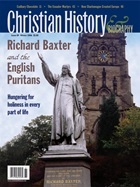
This shaped the prayers of the Puritans from that time on. They believed that doing everything they could to advance the kingdom of God in England was tremendously important for the welfare of the world. When Oliver Cromwell invited the Jews to settle in England, it was because he believed that the day was coming when the world would be blessed through the conversion of the Jews. It would be part of the fulfillment of England's vocation. Looking back on the Cromwell era, Richard Baxter wrote that there never was a time in recorded memory when the word of God brought so many people to faith as during those years, and if the Commonwealth conditions had continued for a quarter of a century more, England would have become a kingdom of saints and a wonder of the world.
That's what they all wanted. Because of the Restoration of the monarchy and the ejections of Puritan ministers in 1662, it never happened. But they did extraordinarily well considering how much was stacked against them from the start.
Why did some Puritans leave England to go to continental Europe or the New World, while others stayed?
Those who left England mostly did so under a cloud. James I, a Presbyterian, came down from Scotland to be king of England in 1603. He had said of the nonconforming Puritans—the Puritans who wouldn't use the bits of the Prayer Book that they didn't like—that they would have to conform or he would "harry them out of the land, or else do worse." Puritans knew that they were back in a similar situation to Christians in the Roman Empire in the second century A.D. They were practicing religion in a way that involved technical lawbreaking. There was no police force, of course, but every local magistrate had his own posse of soldiers whom he would send out to arrest the nonconforming clergymen and would then report them to the bishop, who was the disciplinarian for each diocese.
Some Puritans decided they could conform under protest and sufferance, simply stressing that they didn't like these rituals. They didn't believe they sinned in using them. But other Puritans did.
I think it's fair to say that the people who left England were the clergy and laity who felt most strongly about the inadequacies of religion in England. The Prayer Book offended them because these ceremonies were still in there. The clergy, knowing that James I thought that conformity to Prayer Book order was very important, felt themselves to be under threat from the authorities if they stepped out of line. So they had a new idea: If they started a colony in the New World, New England would be out of reach of the restrictive powers that were crippling them in old England, and so they could realize their ideal of the godly community and be a beacon for the world. England's vocation under God was stirring their minds, but they had given up hope of achieving it at home.
Those who stayed in England believed that patient suffering under pressure was part of the Christian vocation, and they were prepared to do that. The majority of these Puritan clergy became lecturers—people hired by a parish to preach sermons once a week (usually on Thursday) to make up for the fact that the rector who took services in church on Sundays wasn't a preaching man. The Puritans believed that the Word is the prime means of grace, so it was important to have lecturers where no good preaching was going on.
What key ideas characterized the Puritan view of the Christian life?
Everybody is a sinner, and the Puritans spent a lot of time and energy establishing that fact. God in his grace has sent his Son to save us through his death, which is the basis of our justification. Now he gives a covenant promise to those who have faith. Faith is committing yourself to the God of the promises, and specifically to Jesus Christ the living Lord. You become his penitent, obedient disciple.
As a Christian, you must believe that you are accepted through Christ, you are adopted into God's family, you are an heir of glory, and you are now a pilgrim on the way to heaven. Every day of your life must be reshaped. That's discipleship. The Puritans made good use of the category of "duty," meaning simply what is due to God from us who by his grace have been saved from sin. The Puritans were very strong on moral teaching, but they weren't legalists: Duty is done out of gratitude to the God who has saved you. This is sanctification, and it required that you put not only your personal life but your family life in order. The Puritans had a clear idea of God-fearing family life and a very strong and humane doctrine of marriage as a partnership in the Lord.
When it came to Christian character, the Puritans stressed humility before God, submission to Scripture, and integrity—that is, honesty, truth telling, being a man or a woman of your word—in all relationships. You should also be a philanthropist, generous in giving to the poor.
The Puritans insisted on keeping the Sabbath holy. This meant that from the time you get up in the morning to the time you go to bed at night, you should be doing things that honor God and nourish the soul. Baxter says that for the godly, Sabbaths are joyful days—there's nothing else that they'd rather be doing.
The Puritans were robust in their view of life. To be a Puritan was to look forward to the glory that is to come and to prepare for a good death—that would be the last act of a life of good and faithful discipleship.
The Puritans called themselves "physicians of the soul." What did they mean by this?
A physician's business is to check, restore, and maintain the health of those who commit themselves to his care. In the same way, the minister should get to know the people in his church and encourage them to consult him as their soul-doctor. If there is any kind of spiritual problem, uncertainty, bewilderment, or distress, they are to go to the minister and tell him, and the minister needs to know enough to give them health-giving advice. That's the Puritan ideal.
Just as a physician must know physiology, the Christian minister must know what spiritual health is. It's pure knowledge of the will of God, the true gospel of God. It's regular praise and regular prayer. It's acceptance of responsibility in the family, in the church, and in the larger community where you do business. That's spiritual health. And falling short of that calls for intervention, rebuke, correction, and instruction in righteousness.
Puritans believed that an educated conscience is absolutely necessary to spiritual health. This meant knowing the moral requirements of God so that your conscience supports you when you are doing right and condemns you when you are doing wrong.
Did this emphasis foster a special relationship between a Puritan pastor and his congregation?
Yes. Of course, this varied from clergyman to clergyman. Richard Baxter leads the pack here. Baxter said that, just as you go to your physician for a check-up from time to time, so you should go regularly to your pastor for a spiritual check-up. And you should always be ready to hear humbling guidance, direction, redirection about the Christian life. Counseling people for spiritual diseases was a distinctive Puritan emphasis, and it indicates the closeness of commitment to the flock which the Puritan pastor thought ideal. I don't think that their mastery of this field of spiritual ministry, with all the principles of correction taken from Scripture itself, has ever been surpassed.
What false stereotypes do people have about the Puritans?
H. L. Mencken once said, "Puritanism is the haunting fear that someone, somewhere, may be happy." That is nonsense. The Puritans were in fact pleasant people, cheerful people. Many of them had a teasing wit and the capacity to laugh and make others laugh. It's not the case, either, that all of them dressed in black and made themselves stand out as if they were going to a funeral. John Owen, when he was Oxford's vice-chancellor, was much criticized for being a natty dresser!
How were the Puritans innovative?
They introduced the Christian Sabbath to England. They also introduced the Christian family to England, in the sense that they thoroughly worked out the responsibilities of father and mother inside the home, the pattern for family prayers twice a day, how everybody should be taught the Bible and taught to pray on their own, both adults and kids. Thus they took the idea of the godly home further than it had ever been taken before.
They also devised a style of preaching that England had never experienced before. It was expository, but it was plain and searching, whereas the preaching of Anglican divines was more often than not a way of showing off their learning. Here is what the Puritans did best—preaching the Bible, preaching the gospel.
What aspects of the modern world or modern Christianity have their roots in the Puritan movement?
Ever since the Puritan era ended, people in the West have been trying to ensure that we don't slip back into anything that would recall the Puritans. But the idea of the Christian family as American evangelicals maintain it in some form of family religion, family prayers and the responsibility of the father as the spiritual leader—this was a Puritan ideal. Also, the Western ideal, on both sides of the Atlantic, of integrity in public life is something which the Puritans established and which we still hope for, because we know it's right. When moral lapses take place, we think it scandalous. That is a Puritan reaction.
Until the mid-19th century, nearly every serious Christian read Puritan literature. Since then, it seems that the Puritans have fallen into disrepute. Why?
In the middle of the 19th century, a great deal of new devotional literature began to be produced, and it was quite simply easier to buy and read those little books than the large, antiquated Puritan volumes. Evangelical piety had become more superficial and simplistic than had been the case before. Puritans were fairly demanding. The only bit of the Puritan literary heritage that went on being printed, sold, and read was Bunyan's Pilgrim's Progress, which is an amazing piece of work. It's brilliant from a literary as well as from a spiritual standpoint.
From the middle of the 19th century on, popular devotion became man-centered, and the Puritan way of being God-centered (doxological) has been marginalized. The Puritans wrote about the challenges of living to God in a conflicted age like ours, in which there are spiritual battles to be fought. They were thorough in their Christianity in a way that few since their time have matched.
But there has been a modern resurgence of interest in the Puritans. Their books have become available again and have found a public. Seminaries have courses on Puritan theology and devotion. In its own way, Puritanism is now once again quite a power in the evangelical world. Christians have become disenchanted with the sort of devotional literature that was abroad when I was a young believer. They want something with more backbone.
Reformed enough?
Many aspects of the Anglican Book of Common Prayer came under criticism from Puritans from the late 16th century onwards. All Puritans agreed that four ceremonial requirements in particular were unbiblical and revealed lingering Catholic influence:
Vestments. Clergy were required to wear a white surplice during public worship. The Puritans objected that these vestments were too associated with the Catholic priesthood in the minds of laypeople. A special uniform implied that the clergy were holier and closer to God than other people, thus denying the priesthood of all believers.
Kneeling at the communion table. The Prayer Book required communicants to kneel as they received the bread and wine. But the Puritans argued that this invited people to believe in transubstantiation—the Roman Catholic doctrine that the substance of the bread and wine changed into the body and blood of Christ—and to venerate the elements. The Puritans preferred to sit at a table and pass the bread and wine to each other, as it was done in Reformed churches in other countries.
The sign of the cross in baptism. According to Prayer Book specifications, the priest poured water on the head of the child being baptized and then made the sign of the cross on the child's forehead. The Puritans believed that the essence of baptism was the water symbolizing new life in Christ; the sign of the cross was an unbiblical human addition.
Wedding rings. In pre-Reformation days, marriage was regarded as a sacrament; the ring given by the bridegroom to the bride was the outward and visible sign of this invisible grace. According to the Anglican Articles, marriage was not a sacrament but a human partnership blessed by God. A ring, said the Puritans, was thus unnecessary.
Copyright © 2006 by the author or Christianity Today/Christian History & Biography magazine.
Click here for reprint information on Christian History & Biography.

Support Our Work
Subscribe to CT for less than $4.25/month