



The Starving Body of Christ


In recent years, believers from all segments of the Christian community have begun to recover the social dimensions of the gospel. In the Catholic church, the legendary luminaries have been Pope John Paul II and Mother Teresa. In the Orthodox tradition, Archbishop Anastasios Yannoulatos is helping to rebuild Albania after years of domination by the world's most oppressive communist regime. Evangelical endeavors have included Ronald Sider's book Rich Christians in an Age of Hunger and Rick Warren's "Five Year P.E.A.C.E. Plan"—a massive effort to mobilize one billion Christians to rid the world of poverty, illiteracy, and other social ills. These trends will surely grow in the years to come. But unless we are guided by others wiser than ourselves, we may build our ministries on sinking sand.
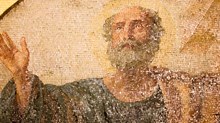
In the history of Christianity, John Chrysostom is mostly remembered as a great preacher. The epithet "Chrysostom" means "golden-mouthed." His name came to be identified with the liturgy that is now celebrated nearly every Sunday in the Eastern Orthodox Church. The greatest medieval Catholic theologian, Thomas Aquinas, said that if he could choose only one book to read outside of Scripture it would be John Chrysostom's commentary on the Gospel of Matthew. The Protestant reformer John Calvin adopted Chrysostom's method of preaching through the Bible book by book—a method still widely used in pulpits today.
Even outside the Christian world, John's influence has been great. After World War II, Charles Malik, a Lebanese Christian philosopher and board member of Harvard university, proposed that the social teachings of John Chrysostom be adopted as policy for the founding charter of the united Nations.
John's world was like ours—full of tensions, social injustices, love of money, and a "me first" mentality guiding every decision. In response to that world, he emphasized a Christian philanthropy that was rooted in the church's worship, the incarnation of Christ, and the Bible's command to love others. He believed that as we love and serve one another—especially the poor—we grow in the image and likeness of Christ. John's views on wealth and poverty have great potential to guide and challenge the church today.
Preacher, not people pleaser
John was born in Antioch, Syria, and trained in classical rhetoric and the literal interpretation of the Bible. While still a student, he decided to become a monk and gave up his possessions to serve God in the desert. For six years he subjected himself to such extreme forms of asceticism that he permanently injured his health. He returned to Antioch and soon became a priest. Most of his 600 sermons that survive were delivered there.
The city of Antioch was a great cultural center of the Roman Empire. John estimated that one-tenth of the population was rich, one-tenth was poverty stricken, and the rest were somewhere in between. He often preached against worldliness and neglect of the poor. In one sermon he asked the rich, "You say you have not sinned yourselves. But are you sure you are not benefiting from the previous crimes and thefts of others?"
His fame soon spread to Constantinople, the eastern capital of the Roman Empire. In 398, John was kidnapped and elevated, against his will, to the honored status of bishop of Constantinople (head pastor of the capital). Once again the "golden-mouthed" preacher found himself in a worldly cosmopolitan city. The luxurious perks that accompanied the life of an imperial bishop did not sit well with his monastic spirit. As soon as he arrived, he began reforming the church. Despite his love for liturgy, he was critical of the ornate decorations in the Church of the Holy Wisdom where he ministered. On one occasion, he sold the golden chalices in order to give the proceeds to the poor. He declared, "You make golden vessels, but Christ himself is starving. You make golden chalices, but fail to offer cups of cold water to the needy. Christ, as a homeless stranger, is wandering around and begging, and instead of receiving Him you make decorations."
Eventually, John had a falling out with the Christian empress Eudoxia over her public display of vanity (she erected a statue of herself and placed it across the street from John's church). When Eudoxia exiled him in 407, John became one of those he cared most about—a homeless prisoner ignored and forgotten by the world. Forced to walk 400 miles, he slowly died in exile. His last words were, "Glory be to God for all things!"
Love, liturgy, and incarnation
The source of John's vision of the gospel was his love for Scripture. Jesus taught that treasures are to be stored in heaven, not on earth (Matt. 6:19-20). The apostle Paul wrote, "The love of money is the root of all evil" (1 Tim. 6:10). Thus John concluded, "A love for wealth is abnormal." He feared that possessions kept for selfish purposes were, in a sense, stolen from the poor. One cannot be rich without keeping others poor. "So destructive a passion is avarice that to grow rich without injustice is impossible," John argued; "The root and origin of riches must have been injustice."
For this reason, he envisioned a just society based on equality for all. Because all people are made in the image of God, John sought to defend human dignity regardless of social status. No private property should exist. Everything belongs to God and is given to us for our common use. Material things are not inherently evil. But injustice occurs when some people use material things for profit while others are starving.
John pointed to the book of Acts as a model of true community: "Observe the increase of piety," he said. "They cast away their riches, and rejoiced and had great gladness for greater were the riches they received without labor. None reproached, none envied, none grudged—no pride, no contempt. No talk of 'mine' and 'yours' … Neither did they consider their brother's property foreign to themselves. It was property of the Master. Nor again did they consider anything all their own, for all was the brethren's."
Was John preaching communism? It's easy to conclude that if we only look at the statements above. But it's important to realize that John's concern for the poor was inseparable from his view of worship. He believed that the body of Christ in the Eucharist—the center of the church's worship—is vital, but it is not the only place where we see Christ embodied. All human beings (Christians and pagans alike) mirror God's image, but the poor, the suffering—those whom John could see "lying everywhere, both in alley ways and market places"—do so in a special way because they reflect the humility of his incarnation. When God became human, he took upon himself all the conditions of our fallen state, except sin. John's social theory flowed from this emphasis on the Incarnation.
Indifference to the poor, therefore, reveals poor worship. "You honor the altar at church," John says, "because the body of Christ rests upon it. But those who are themselves the very body of Christ you treat with contempt and you remain indifferent when you see them perishing." No person can grow in godliness unless he serves his brethren. It is not enough to worship at the altars of the church. The true altars are the physical bodies of real men and women.
A teacher for the ages
John Chrysostom can guide the church in the coming century in five ways. First, he admonishes us to root our work in the gospel as revealed supremely in Scripture. Second, he reminds us that the kingdom of God is not of this world, so we should share our time, talents, and treasures with others, especially the poor and downtrodden. In so doing we should strive for equality as faithful stewards of God's creation.
Third, John appeals to the church, not political structures, as an agent of social change. Only the gospel can get to the heart of the cure. The transformation of the individual and the transformation of society are only possible through the incarnation, death, and resurrection of Christ. Fourth, the gospel addresses both body and soul. We must keep in balance the need for personal conversion as well as social and economic justice.
Finally, all of this flows from love for others who are made in the image of Christ. That love is ultimately derived from a Christ-centered, Trinitarian faith focused on the Eucharist and publicly proclaimed in worship. There is a liturgy after the liturgy: The worship of God through loving service to the poor is an outgrowth of the public worship of the church.
Bradley Nassif is professor of biblical and theological studies at North Park university in Chicago.
Copyright © 2007 by the author or Christianity Today/Christian History & Biography magazine.
Click here for reprint information on Christian History & Biography.

Support Our Work
Subscribe to CT for less than $4.25/month