Johann Sebastian Bach


In the 16th century, a baker named Veit Bach fled Hungary because of his Lutheran beliefs. He settled in the small town of Wechmar in Thuringia in central Germany. His descendants survived the Thirty Years' War and spread throughout Thuringia over the next century. They became so prevalent in musical positions in towns and churches that the name "Bach" came to be synonymous with "musician."
In a genealogy compiled in 1735, one of those descendants wrote with a mixture of loving amusement and pride about Veit: "He found his greatest pleasure in a little cittern [a wire-strung plucked instrument], which he took with him even into the mill and played upon while the grinding was going on. (How pretty it must have sounded together! Yet in this way he had a chance to have time drilled into him.) And this was, as it were, the beginning of a musical inclination in his descendants."
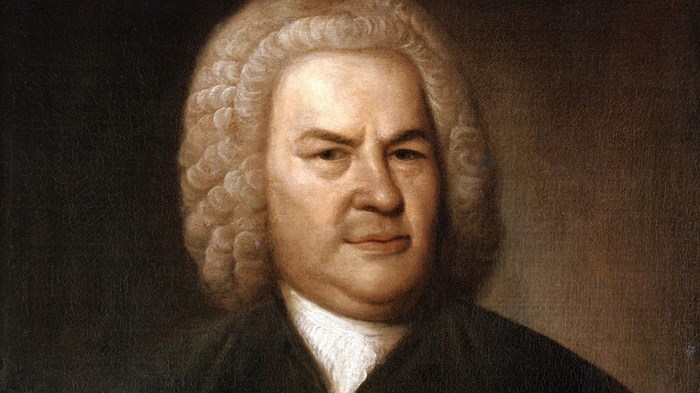
The great-great-grandson who wrote those words was none other than Johann Sebastian Bach, arguably the greatest composer in the history of Western music and a man whose staunch Lutheran faith informed his life, his career, and his view of music. He believed that music was a "refreshment of spirit," as some of the title pages of his works stated. He believed that music was a powerful tool for the proclamation of the gospel, as his cantatas, Passions, organ chorales, and other compositions clearly show. And ultimately, he believed that music brought glory to God, as the initials SDG (Soli Deo Gloria, "To God alone be glory") at the end of most of his scores bear witness.
Johann Sebastian Bach was born on March 21, 1685, in the small town of Eisenach in western Thuringia. He was the eighth and last child of Johann Ambrosius Bach, Eisenach's town piper. At the top of a hill overlooking the town is Wartburg Castle, where Frederick the Wise gave refuge to Martin Luther after Pope Leo X excommunicated the reformer in 1521. During his time there, Luther translated the New Testament into German. At the foot of the hill is St. George's Church. Luther preached there while traveling to and from the Diet of Worms, where he was called by Emperor Charles V to answer the charge of heresy. 164 years later, Bach was baptized there. Luther had attended the Latin School in Eisenach as a child, and Bach attended the same school nearly two centuries later. Almost literally from cradle to grave, Bach lived and worked in a part of the world where, as James R. Gaines put it, "Luther was a great deal more compelling than gravity."
Bach's childhood home was busy and crowded. In addition to seven siblings, there were two orphaned cousins, some of Ambrosius's apprentices, and other relatives from time to time. The environment was saturated with music. Bach probably studied violin with his father and perhaps got his initial organ training from his uncle Johann Christoph, who was the town and court organist. In the family genealogy, Bach described him as "the profound composer."
Bach's first biographer Johann Nicholas Forkel described the family gatherings: "[T]he first thing they did … was to sing a chorale. From this pious commencement they proceeded to drolleries which often made a very great contrast with it. For now they sang popular songs, the contents of which were partly comic and partly naughty, all together and extempore, but in such a manner that the several parts thus extemporized made a kind of harmony together, the words, however, in every part being different."
Bach's life in Eisenach was brief. Before he was ten years old, his parents died within a year of each other. For the next seven years, the orphaned boy lived first in Ohrdruf in the home of an older brother, Johann Christoph, and then in Luneburg at St. Michael's School, where as a choirboy he received free tuition, room, and board plus a small stipend. In Ohrdruf and Luneburg, Bach completed the general education he had begun in Eisenach. His studies in Lutheran theology laid a firm foundation for his later work as a composer of music for worship.
Ohrdruf and Luneburg also provided ample opportunity for musical growth. In Ohrdruf, Bach studied organ with his brother, the organist at St. Michael's Church. Christoph owned a manuscript of keyboard music by some of the most notable organists of the day, including his teacher Pachelbel. Bach would get up at night, slip his hand through the grate of the locked cabinet, pull out the prized manuscript, and copy the music by moonlight. But when Christoph discovered the copy, he confiscated it.
Luneburg offered Bach opportunities to absorb a wider range of musical influences, including performances by great organists and even French music from the ducal court of Celle. But as a boy chorister, the center of his musical world shifted toward choral music, not only because of the daily rehearsals and services, but also because of the excellent library of music by leading composers of both Latin and German church music dating back to the 16th century.
Moving up the scale
After finishing school in 1702, Bach was ready for the "real world." All we know about his first job in Weimar is that the treasury register reports six months' payment "To the Lackey Baach." But in 1703 he was appointed organist in Arnstadt—an indication that already in his late teens he was a highly accomplished organist in an area full of accomplished organists.
The Arnstadt position carried a relatively light workload that left him plenty of time for practicing and studying the works of famous composers. But Bach's time there was beset with problems. He got into a street brawl with a student bassoonist and overstayed his leave to hear the great organist Dietrich Buxtehude in Lubeck. He had asked for four weeks leave; he stayed almost three months!
Given the troubles in Arnstadt it is not surprising that, when the organist of St. Blasius's Church in Muhlhausen died in 1707, Bach applied for and obtained the job. He went into his new position with enthusiasm. In addition to playing and composing music, he supervised the renovation of the organ. He also upgraded the church choir and orchestra and collected a large library of choral church music. The few cantatas he composed (for example, Cantatas 4 and 106) show that he had already attained exceptional musical and theological acumen and a surpassing ability to join the two.
Despite his initial enthusiasm and a good relationship with his employers, Bach was not long satisfied with the position. One year later he wrote a letter requesting dismissal so that he could accept an appointment as Court Organist to the Duke of Weimar. The letter said that the Weimar position would offer a better opportunity for "the achievement of my goal of a well-regulated church music"—that is, a series of cantatas for all the Sundays and feast days of the church year. His duties at Weimar did not at first include composing church music on a regular basis. However after six years he was promoted to Konzertmeister, a position that included the responsibility of composing a new cantata every month.
But in Weimar, too, Bach experienced difficulties. This time it was court intrigues and being snubbed for a promotion that prompted him to seek work elsewhere. In 1717 he received an invitation to become Kapellmeister in the court of Prince Leopold of Anhalt-Cöthen, but the duke rejected his request to leave Weimar. Bach was arrested when he tried to leave secretly. After four weeks he was released with an unfavorable discharge.
Prince Leopold was a Calvinist. There was a Lutheran church in Cöthen where Bach and his family worshiped and where he could play the organ, but he was not responsible for the worship music. So during this time he composed mainly instrumental music, including at least some of his well-known Brandenburg Concertos. The prince maintained a good orchestra. Bach wrote in a letter: "There I had a gracious prince as master, who knew music as well as loved it, and I had hoped to remain in his service until the end of my life."
Harmonious marriages
Bach sometimes accompanied the prince on his travels. He returned once to find that his wife Maria Barbara, whom he had married in Muhlhausen, had unexpectedly became ill, died, and was buried while he was gone. During 13 years of happy marriage, she had given birth to seven children.
A year and a half after this tragedy, Bach married Anna Magdalena Wilke, a singer at the prince's court and daughter of the court trumpeter at Weissenfells. This too was a happy marriage. Anna Magdalena bore 13 children, bringing the total of Bach's children to 20. The large number of births increased the number of deaths that the Bach family experienced. Two of Maria Barbara's seven children, twins, died within the first year, and one died at age 24. Of Anna Magdalena's 13 children, five died in the first year and three died between three and five years.
Anna Magdalena must have been a remarkable woman. In addition to caring for a busy household, she continued to sing and helped her husband by copying scores and parts. Eventually her handwriting became so much like her husband's that it is sometimes difficult to tell them apart.
Picking up the tempo
A few days after Bach's marriage to Anna Magdalena, Prince Leopold also married. Leopold's new wife was not enthusiastic about music. This, along with the memory of his first wife's death, may have made Bach think of looking elsewhere for work. When the post of cantor at Leipzig became vacant in 1722, Bach applied. He was only the third choice among several applicants. The first turned down the offer, and the second could not obtain release from his employer. One of the Leipzig town councilors infamously said, "As the best are not available, I suppose we must take one of the second-rate men."
The Leipzig position gave Bach the opportunity to return to his goal of a well-regulated church music, and he pursued it with unimaginable energy. Scholars once assumed that Bach wrote his more than 150 surviving Leipzig cantatas gradually over the 27 years he worked there until he died in 1750. But in fact, he composed a new cantata for virtually every Sunday and Feast Day during his first two years—approximately 60 per year. He did this even though his duties included teaching at St. Thomas's School as well as providing music for St. Thomas's and St. Nicolaus's Churches. And composing these 15- to 30-minute works for choir, soloists, and orchestra was only the beginning. Parts had to be copied (his family and students helped with this), and the technically demanding music needed to be rehearsed.
This work also involved discussion of the cantata texts with the pastors. An inventory of Bach's personal library strongly suggests that he came to those discussions well prepared. It included 80 volumes (52 titles), all of them theological. At the top of the list is the three-volume "Calov Bible"—Luther's translation of the Bible with parallel commentary selected from Luther's works by Abraham Calov—followed by two sets of the complete works of Luther.
Dealing with dissonance
After these first two years, Bach's cantata output slowed down and by 1727 it virtually stopped. Not surprisingly, even Bach's enormous energy was reaching its limits. He had achieved his goal of a well-regulated church music—with at least three yearly cycles of cantatas to draw from—and troubles with unappreciative church and school authorities were mounting.
In August 1730, Bach wrote a "Short But Most Necessary Draft for a Well-Appointed Church Music" to the Leipzig town council complaining about the lack of support and the insufficient number and quality of performers available. A few months later he wrote to a friend, "The authorities are odd and little interested in music, so that I must live amid almost continual vexation, envy, and persecution."
A passage marked by Bach in his Calov Bible commentary perhaps relates to his strained relationship with his Leipzig employers. Next to Luther's commentary on Matthew 5:26, Bach wrote "NB" (note well) and underlined this passage: "As far as your person is concerned, you must not get angry with anyone regardless of the injury he may have done to you. But where your office requires it, there you must get angry, even though no injury has been done to you personally." It is not far-fetched to see here a frustrated church musician whose ideals have been thwarted by his superiors.
Tuned to a higher key
A well-regulated church music was not the whole of Bach's vocation. His larger calling was writing music to the glory of God and the edification of his neighbor. This, as the historian Jaroslav Pelikan wrote, "bespeaks the conviction of Luther and the Reformers that the performance of any God-pleasing vocation was the service of God, even if it did not lead to the performance of chorales. The Bach of the Peasant Cantata, the partitas, and the concertos was not 'too secular.' These were, rather, the expression of a unitary … world view, in which all beauty … was sacred because God was one, both Creator and Redeemer."
The period following his intense initial activity at Leipzig is perhaps most representative of that worldview. While continuing to direct cantatas and Passions in the Leipzig churches, he also directed the Collegium Musicum performances at Zimmermann's coffee house. And side by side with such great "secular" works as the Goldberg Variations, Book II of the Well-tempered Clavier, Musical Offering, and The Art of Fugue, we find him putting the finishing touches on his great Passions and chorale preludes, composing the Catechism Chorales of ClavierÜbung III, and completing the B Minor Mass.
Bach knew that the times were changing. In these later works, he was erecting monuments upholding the high view of music bequeathed to him by his ancestors: music as a "refreshment of spirit" for his neighbor, a tool for the proclamation of the gospel, and a way of giving glory to God. In the world around him, that view was rapidly giving way to a lower view of music spawned by the Enlightenment, which defined it as "the art of pleasing … an innocent luxury … a gratification of the sense of hearing" (Charles Burney), or an art that "merely plays with sensations" (Immanuel Kant).
Bach could not subscribe to such a view. The B Minor Mass was his last and greatest tribute to the venerable art of music and to the highest purposes for which that art could be used.
Calvin R. Stapert is professor emeritus of music at Calvin College in Grand Rapids, Michigan.
Copyright © by the author or Christianity Today/Christian History & Biography magazine.
Click here for reprint information on Christian History & Biography.

Support Our Work
Subscribe to CT for less than $4.25/month