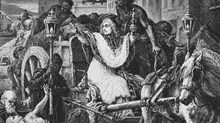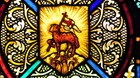
Along with Gabriel's Annunciation to Mary (Luke 1:26-38), her Visitation to Elizabeth (1:39-56), and Jesus' birth and infancy (2:7,16; Matthew 2:11), one other biblical scene depicting the mother of Jesus is especially prominent in the history of Christian ...
Only in the Holy Land can you celebrate Jesus' death and resurrection in the place where it happened. The fourth-century pilgrim Egeria described the Holy Week services in Jerusalem: "What I admire and value most is that all the hymns and antiphons and readings, and all the prayers that the bishops say, are always relevant to the day which is being observed and to the place in which they are used." Today, much like in Egeria's era, thousands of Christians observe Good Friday by following the "Via Dolorosa"—the traditional route Jesus walked on the way to his crucifixion—from the Mount of Olives to the Church of the Holy Sepulchre. The route and rituals have changed over the centuries, but the devotion has not. Jerusalem Christians' celebration of Easter influenced Christian worship around the world. The practice of following the "stations of the cross" is one example.
You can learn more about the Holy Land in our archives.
As Christians from all branches of the church today rediscover the ancient traditions of Christian spirituality, the literature of early Christian monasticism is a welcome voice in our conversation with the saints. Many sources are now available in accessible English translations, so enter into the world of men and women who forsook the expectations of their society to pray in the deserts of Palestine and Egypt. Primary sources predominate on the list below, but each translation is accompanied by useful introductions and commentaries by top scholars. Enjoy!
Take the quiz ... then explore the history. In addition to the Holidays section of our archives, you can find Easter-related content in several past issues of Christian History & Biography: Issue 97: The Holy Land, Issue 83: Mary in the Imagination of the Church, and Issue 59: The Life & Times of Jesus of Nazareth
February 12, 1663: Congregational minister Cotton Mather is born in Boston. The most celebrated New England writer of his day, he was a scientist (whose work included early studies of inoculation), one of the founders of Yale University, and pastor of Boston's Second Church (just as his father, Increase Mather, had been). He also wrote Wonders of the Invisible World, a description of the Salem witch trials(see issue 41: American Puritans).
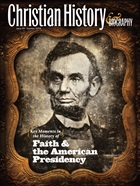
February 12, 1809: Abraham Lincoln, the sixteenth president of the United States and author of the Emancipation Proclamation, is born near Hodgenville, Kentucky (see issue 33: Christianity and the Civil War).
February 12, 1834: German theologian and philosopher Friedrich Schleiermacher dies. He made religion a matter of the will, defining it as feeling an absolute dependence on God in works including On Religion: Speeches to Its Cultured Despisers (1799).
February 12, 1865: Presbyterian minister and militant abolitionist Henry Highland Garnet becomes the first African-American to address the U.S. House of Representatives (see issue 62: Bound For Canaan).
February 12, 1915: Blind hymnwriter Fanny Crosby dies at age 95 after writing more than 8,000 texts.
Let no one grieve at his poverty,
for the universal kingdom has been revealed.
Let no one mourn that he has fallen again and again;
for forgiveness has risen from the grave.
Let no one fear death, for the Death of our Savior has set us free.
He has destroyed it by enduring it.
—John Chrysostom, bishop of Constantinople; sermon, ca. 400