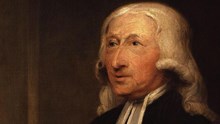
Where Wesley's Followers Went Awry


"As good a church, as can be found,
Their doctrine is so pure and sound,
One reason which I give for this,
The Devil hates the Methodist.
If Satan could them all destroy,
The troops of hell would shout for joy;
I'll pray that God would them increase
And fill the world with Methodists."
For much of the 19th century, particularly in the United States, it seemed that the prayer voiced in this early Methodist hymn was well on its way to becoming reality. Numerous, prolific in publishing, and missionary-minded, Methodists may not have controlled the nation's elite discourse but they could be found at the heart of the nation's evangelical popular culture. Yet in their success could be found seeds of their pending destruction.
David Hempton's Methodism: Empire of the Spirit (Yale, 2005) outlines how a countercultural movement became a thoroughly cultural church. A native of Great Britain now teaching at Boston University, Hempton approaches the story of Methodism's 18th-century origin and 19-century dominance in two distinctive ways. He keeps the story of British Methodism in view as he narrates the American story, and he organizes the book not chronologically but topically.
Each chapter focuses on a different set of complementary forces that characterized the Methodist ethos and drove its expansion: competition and symbiosis (or mutual benefit), enlightenment and enthusiasm, opposition and conflict, money and power, medium and message, boundaries and margins, mapping and mission. The result is an energetic and breathless tour through a movement constantly in tension between the "authoritarian ecclesiology" of its top-down government and the "noisy, populist, and eclectic" lived experience of its adherents. Along the way, it collected over 9 million members worldwide by the early 20th century.
In the 20th century, Methodism did not escape the decline afflicting mainline Protestantism as a whole. Hempton rejects simplistic explanations of that decline—whether the jeremiads of insiders lamenting lost golden spiritual ages, or the "religion-inevitably-fades" narrative of secularization theory. But the decline was real, and he notes how Methodists collaborated with culture throughout the 19th century until the profoundly countercultural gap between "the ideals of scriptural holiness defined internally by the movement and achieved externally in the wider society" narrowed "to quite respectable proportions." Most powerful when most in tension with its surroundings, Methodism could not long survive harmony with a secularizing culture. Conquering the world was left to its heirs, the holiness and Pentecostal movements.
That contrast between "early" and "late" Methodism appears starkly in two other recent books, Lester Ruth's Early Methodist Life and Spirituality: A Reader (Kingswood, 2005) and Russell Richey's Marks of Methodism: Theology in Ecclesial Practice (Abingdon, 2005). (Both Ruth and Richey are professors at seminaries in the Methodist tradition—Ruth at Asbury Theological Seminary and Richey at Candler School of Theology at Emory University, where he also serves as dean.) Ruth edits and presents excerpts (including the above hymn) from poetry, journal entries, hymnody, sermons, letters, and histories of the first generation of American Methodists (1770s-1810s). He prefaces them with introductory essays that paint a vivid picture of an assertive faith characterized by "emotionalism, ecstasy, rigorousness, exuberance, and evangelism." Ruth's Methodists are energetic, disciplined, consumed by their message, and fully confident that they "pray, they sing, they preach the best."
By contrast, Richey's book—the concluding volume of a five-volume denominational self-study, "United Methodism and American Culture"—looks inward in institutional self-analysis and paints a mixed picture of the results (occasionally in terminology most comprehensible to insiders). Richey identifies Methodism's most distinguishing ecclesiological marks as connectionalism, discipline, catholicism, and itinerancy (the Methodist practice of bishops sending pastors to churches, rather than churches calling pastors), but he notes that these characteristics, once held closely together in Wesley's ideal of the movement, no longer "cohere as marks, or collectively as a vision of the church." Rather than means to spreading scriptural holiness, they often become bureaucratic ends in themselves. Methodists still believe that they pray and sing and preach the best, but they are less confident what, why, and how.
All of these books make it clear that the American religious tradition is incomprehensible without understanding the Methodist witness, whether that witness was countering the cultural message or carrying it. (This is a point argued more and more firmly by American religious historians in the last few decades; see Gregory Schneider, The Way of the Cross Leads Home [Indiana University, 1993] and John Wigger, Taking Heaven by Storm [Oxford, 1998]). These books also capture Methodism's initial world-conquering energy—against which the modern era inevitably suffers by comparison. The question left open is the direction—perhaps even the possibility—of current reform. Richey ends with a plea that Methodists think theologically as well as pragmatically about changes in their policy and structure. His plea is not for Methodist ears alone.
Jennifer Woodruff Tait is Methodist Librarian at Drew University, Madison, NJ, and a Ph.D. candidate in American church history at Duke University, Durham, NC.
Copyright © 2005 Christianity Today. Click for reprint information.

Support Our Work
Subscribe to CT for less than $4.25/month