Nearly every Wednesday evening, Anba Shenouda III, the one-hundred-seventeenthpope of Alexandria and patriarch of the See of Saint Mark of Egypt, the NearEast, and All Africa, conducts one of the Middle East's largest ChristianBible studies for about 5,000 Orthodox followers who crowd into Saint Mark's,the ornate Coptic cathedral near the center of Cairo.
During one session on a cool spring evening, Shenouda, whose 5 million CopticOrthodox believers make up the largest group of Christians in the MiddleEast, sat at a large table near the cathedral's altar and taught from Psalm119:11, "I have hidden your Word in my heart." He explained: "God loves thatwe store good things in our hearts. Store in your heart and mind and spiritwhat will be good for you. We forget our promises to God. Store them in yourheart. Write them down." Later, during a question-and-answer session, Shenoudadispensed fatherly advice, telling one wife-seeking young Egyptian, "Notevery girl you love you propose to."
After the two-hour session, the 74-year-old patriarch, who began his ministryin 1939 as a Sunday-school teacher, gathered his flowing black robes andprocessed out a side door with more than a dozen bishops in his wake. Thecrowd surged forward, expressing their deep affection for Shenouda by touchinganything he had touched and then kissing their own hands.
MONASTIC REVIVAL: Egypt's Copts, representing at best 8 to 10 percentof the country's 64.8 million people, are gaining a higher visibilityinternationally as an endangered religious group. But far less attentionhas been focused on the revival, renewal, and new growth under way not onlyin the Orthodox church, but also among Coptic Catholics and Coptic evangelicals.
Although Christians in the Middle East have been hard hit by emigration ofbelievers and intermarriage with Muslims, growth does occur. Among Christiansin Egypt, Methodists, Presbyterians, Pentecostals, and Orthodox are attractingsignificantly more members and starting new churches.
Speaking of ministry opportunities in Egypt, Menes Abdul Noor, a leadingPresbyterian pastor, said, "I think God always defeats our lack of faith.God wants to do something great, and we're not as fast as he's planning forus."
The most visible evidence of the Coptic church's emergent vitality is foundin its most ancient setting, the desert monasteries, especially in Wadi Natrun,a large oasis 60 miles northwest of Cairo.
Birthed in the harsh deserts, Egyptian monasticism reached its zenith inthe seventh century when monks numbered about 5,000. The monasteries begana slow decline largely due to Arab-Islamic rule, starting with the conquestin 642. By the 1970s, only about 200 monks and 150 nuns remained. Yet underShenouda's leadership, the decline has been reversed.
In September 1981, then President Anwar Sadat launched a crackdown on religiousfanaticism, arresting radical Muslims and deposing Pope Shenouda, who wasbanished under house arrest to the monastery of Saint Bishoy for three anda half years. During confinement, he set about restoring the monasteriesand advancing a revival of monastic vocations, which began under Coptic PopeKyrillos.
Today, about 1,110 monks and 800 nuns populate the monasteries. Other monasterieshave been planted in Australia, and one also exists in California's MojaveDesert. An overflow of initiates is causing church leaders to be more selective.Monks today are taking their vows of poverty, chastity, and obedience, leavingbehind prosperous careers. But they then use their skills in accounting,engineering, finance, or medicine to help the monasteries become self-supporting.
During an interview at Saint Bishoy's extensive papal compound that is lushwith tall date palms, Shenouda said he places great value on the Coptic church'slegacy to Christianity. "Those monks of the fourth century were the lifeof spirituality for the whole world," he said. "The Coptic church is verysuccessful in its spiritual life. The Copts are a conservative church. Wedidn't change anything." Indeed, Monks often conduct their services usingancient Coptic, the extant language closest to that of Pharaonic Egypt, andpriests still employ many elaborate ancient rituals. For example, duringbaptism, candidates may be immersed three times in water and their bodiesanointed with holy oil in three dozen places.
As the monasteries have been repopulated, they also have recovered theirhistoric role as retreat centers and pilgrimage sites. During school holidays,Coptic youth often are sent to Wadi Natrun monasteries for education andspiritual development. In addition, the monasteries are developing into aninternational resource. Four months ago, Evangelicals for Middle EasternUnderstanding, an American group, held a three-day conference on Copticspirituality at Saint Bishoy.
POTENT LIMITATIONS: Yet, as Coptic churches have grown, they havecome up against two powerful limitations: the country's radical Muslim militantsand certain long-standing Egyptian government restrictions. Both of theselimitations have created difficulties as churches expand their ministries.They reinforce a hostile climate in which Christians are treated as second-classcitizens.
Article continues below
On three occasions earlier this year, armed Muslim extremists killed Copticbelievers (CT, April 28, 1997, p. 78).In February, terrorists with automatic weapons slaughtered 10 Coptic youthinside their church in Abu Qurqas, a village 125 miles south of Cairo. Twodays later, three Christian farmers were killed in their fields in the samevicinity. In March, armed attackers, some posing as police, killed 13 people,mostly Christians, in several sugar cane villages 300 miles up the Nile southof Cairo.
Since 1991, more than 1,100 people, including at least 110 Christians, havebeen killed in such violence. The radical Islamic group Gama'a al-Islamyiais widely regarded as responsible for the deaths. Their aim is the overthrowof President Hosni Mubarak's moderate government, and they advocate theinstallation of a strictly Islamic state. In recent weeks, Egyptian securityforces have killed several suspects in village shootouts, but few Egyptiansexpect the violence to cease.
In Upper Egypt, the poor rural area between Cairo and the Aswan Dam, Christianspopulate the Asyut and Minya provinces in far greater concentrations thanin Cairo or Alexandria on the Mediterranean. Terrorists have concentratedrecent attacks in Upper Egypt. Although some Coptic leaders consider Christiansa "target of convenience" for violent Muslims, there are many instances inwhich Muslim mullahs, or teachers, actively promote a negative view of Christiansand churches. The Egyptian Ministry of Religious Affairs admits that as manyas one-half of the country's 70,000 mosques are outside its control. Suchmosques are under the spiritual leadership of independent Islamic imams,some of whom have stirred up local Muslims against their Christian neighbors.In February 1996, a church in the Kafr Damyan village came under fire froma local official for allegedly constructing "a synagogue." In the riotingthat resulted, 90 Christian homes were burned or damaged.
RELIGIOUS INTOLERANCE: Anti-Christian propaganda is circulated, oftenby cassette tape, in Cairo and other urban areas. One such recording, "Newsfrom the Church from Within," is the supposed confession of a Coptic priestwho converted to Islam. He notes his involvement in adulterous sexual encountersduring midnight Christmas services and states that one Orthodox monasterykeeps 26 lions from the United States that are fed captive Islamicfundamentalists. Such taped reports are often given credence because manyMuslims have never had direct contact with the Christian minority, and literacyin some areas of the country is less than 30 percent.
Article continues below
Religious intolerance and hostile rhetoric about Christians is not limitedto the poor and uneducated. In April, Mustafa Mashour, the leading figurein the outlawed Muslim Brotherhood, an influential Islamic group in Egyptiansociety, publicly called for the military to purge all Christians from itsranks. Such a task could be easily accomplished because Egyptians carry identitycards that indicate their religion, and many Copts have a small, dark bluecross tattooed on the inside of their right arms. Mashour questioned theloyalty of Christians and accused them of being a national security threat.He called on the state to re-establish a religious tax, or protection money,once assessed against all Christians and Jews in Muslim countries. Afterextensive public outcry, Mashour retracted his comments, saying he had beenmisquoted.
Nevertheless, Coptic farmers in Upper Egypt have repeatedly alleged thatMuslim extremists have demanded such protection money from them. In somecases, farmers have resisted paying and have been killed. Others have fledto Cairo and sometimes end up living in the city's garbage dumps. (See"Trash-Collector Church Salvages CairoVillage," p. 46.)
Islamic militants have failed to gain widespread popular support for theircause in part because most Muslims in Egypt are Sunni moderates. Cairo'sAl Azhar University, the world's oldest institution of higher education foundedin the tenth century, functions as a global intellectual center of Islam.Ahmed Abdel Khaik, a spokesperson for the grand sheik of Al Azhar, toldChristianity Today, "We at Al Azhar believe thatthose fanatical individuals are not representing Islam at all. They misunderstandour religion. They do this [violence] to pressure the government. It is away of revenge, not religion." While affirming "respect" for Christianity,he also acknowledged support for the Islamic prohibition on Muslims becomingChristians.
The Muslim-dominated news media on occasion will publish a sensationalizedaccount of a Muslim's conversion to Christianity. Mohammed Wajdi Dura wentinto hiding in May 1996 after a Cairo newspaper published the article "MohammedBecomes Michael." Police later arrested Dura on charges of spreading Christianpropaganda, and he spent two months in jail.
Article continues below
UNSTABLE BALANCE: The Egyptian government has often worked at crosspurposes with itself in interacting with its Coptic minority. While theantiquities office is laboring to preserve historic Coptic buildings, oneEgyptian army unit has been accused of destroying an expanding Coptic ministry.
Still, the Mubarak government does offer some visible protection for Copts.Worshipers on their way to church services usually see rifle-toting militaryguards stationed at church entrances. And this spring, for the first time,the government offered a financial settlement to the families of terroristvictims. Families in the Abu Qurqas attacks received about $900 for eachmurdered relative. Muslim authorities also paid a total of $13,000 to familiesfor their losses.
In addition, Christian leaders are applauding the government's Council ofAntiquities for setting aside at least $7 million for the restoration ofthe Hanging Church, which dates to the fifth century, and the nearby CopticMuseum, one of the world's largest repositories of sacred Coptic art. Locatedin the Old Cairo neighborhood, the church had been structurally damaged byan earthquake in 1992, and its foundation is being weakened by the high watertable in the vicinity.
In other parts of Egypt, Coptic buildings may be subject to a far differentfate. In December 1996, and in January this year, soldiers at an army campused trucks and bulldozers to destroy several buildings and stone fencesat a Coptic Orthodox farm and home for mentally handicapped children 15 milesfrom Cairo. Bishop Botros, who started the Cheerful Heart Center project,said army officers "saw deaconesses living on the land to help the handicappedand working in agriculture. I was frequently visiting. [They] thought I wasplanning to build a monastery, which is absolutely not true." The army tookaction after an agricultural department official, under pressure, abruptlycanceled the project's building permit. More than $20,000 in damage resulted,and work stopped at the development.
Disputes over Coptic building permits are among the most antagonistic andlitigious in Egypt. The still-enforced 1856 Hamayouni decree by the Ottomansthat non-Muslims must acquire a ruler's permission to repair or constructa worship place has presented a stiff barrier to new church construction.The U.S. State Department reports that the government has relaxed somewhatin issuing permits, but in 1995, Christians were arrested for making repairsto a church restroom in Alexandria.
Article continues below
Copts also report that the Egyptian educational system works against them.According to Pastor Noor, Islamic doctrine is reinforced in schools becausethe Qur'an is widely used in Arabic lessons.
INTERNATIONAL PRESSURE: Although the violence this year may not surpassthe 1995 death toll of 373 people, political pressure from human-rights groupsand religious-freedom advocates has intensified efforts to require the Egyptiangovernment to protect its citizens and minority groups more effectively.
As the government has cracked down on militants, more human-rights abuseshave been documented, including five cases of torturing Muslim detainees.Since Sadat's assassination in 1981, the country has been ruled under "emergencylaw," allowing the use of military law. The combined impact of human-rightsabuses and religious discrimination has resulted in Egypt receiving widespreadcriticism for its poor human-rights record.
Since the Egypt-Israeli peace treaty in 1979, the U.S. government annuallyhas granted about $2 billion in foreign aid to Egypt, an amount second onlyto aid for Israel. New efforts at curtailing foreign aid for Egypt are underway. The American Coptic Association, based in Jersey City, New Jersey, isadvocating that American foreign aid to Egypt be conditioned on improvementsin "respect" for Copts. Last month, a Senate appropriations subcommitteeproposed fully eliminating the $2 billion in requested aid for Egypt. Also,the Freedom from Religious Persecution Act (see p. 61) targets in particularSudan, Egypt, Saudi Arabia, China, and Pakistan and recommends unilaterallyimposing economic sanctions against governments allowing religious persecution.In addition, the New York City Council is considering a move to bar municipalcontracts with firms doing business with countries that persecute Christians.Egypt is among the countries named.
Within Egypt, the proposed foreign aid cuts have been roundly criticized.Coptic Orthodox Bishop Thomas, founder of Ibis, an organization that studiesMuslim-Christian relations, told ct, "Christians of Egypt are part of society.They are the most sensitive group in this economy. [Aid cuts] will be verymuch used against the Copts in Egypt by the Muslim fundamentalists."
Abdel Monem Sa'id, director of Al-Ahram Institute for Strategic Studies,a leading think tank in Cairo, told CT, "We don't expect U.S.aid to go on forever. The discussion about aid to Egypt is not new. If Egypt'srelations with Israel are smooth, there are no discussions. If relationsare not so smooth, you hear arguments against providing aid to Egypt."
Article continues below
In spite of American efforts to aid the plight of the Copts, Shenouda, theOrthodox patriarch, purposefully avoids confrontation with Muslims or theMubarak government. Violence needs to be answered with love, he believes.Shenouda has reinvigorated the Coptic identity as the "church of the martyrs."During Roman rule of Egypt, Copts were among the first non-Jewish Christiansto be martyred. "Christianity without the cross is no Christianity," Shenoudasaid. "The church living in ease may not enjoy the crown of the cross. Wetry to deepen the faith of the people. Only in that way we can confront theenemy and difficulties raised by those fanatic groups."
THE BIG HOPE: Perhaps the most sensitive concern between moderateMuslims and Copts is the subject of religious conversion and evangelisticoutreach.
The World Churches Handbook, an updated database from missiologistPatrick Johnstone, indicates that Christian growth in Egypt is less thanthe overall population growth rate of 2.1 percent annually.
But that low rate of growth does not dampen the evangelistic enthusiasm ofsome Christian pastors. Menes Abdul Noor, senior pastor of First PresbyterianChurch in Cairo, is an irrepressible, unapologetic evangelist. "We love toevangelize," he told CT. "There is no use for a church tobe a club." His church, in a prosperous section of the city near the AmericanUniversity, holds revival meetings twice a year, often using what they callthe "Andrew paper" method, in which church members pencil in the names offour individuals they hope to reach for Christ. During a week of meetingsthis year, 700 people made Christian commitments.
Noor's church was among the few in the Middle East to participate in a videohookup with evangelist Billy Graham's 1995 Global Mission in San Juan, PuertoRico. Church members manned the satellite downlink and produced 350 copiesfor churches from Alexandria to Luxor to use in special services.
"We think of the Christian in Egypt as the burning bush," Noor said. "Themore it burns—the more it becomes green. The more we feel we need Christ.I think there is a lack of hope in this part of the world. I see hope. Thebig hope."

















 While we pray for peace, we need moral clarity about this war.
 As my doubts about his teachings grew, so did a secret fascination with Jesus.
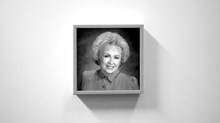 The founder of Concerned Women for America was credited by President Ronald Reagan with “changing the face of American politics.”






