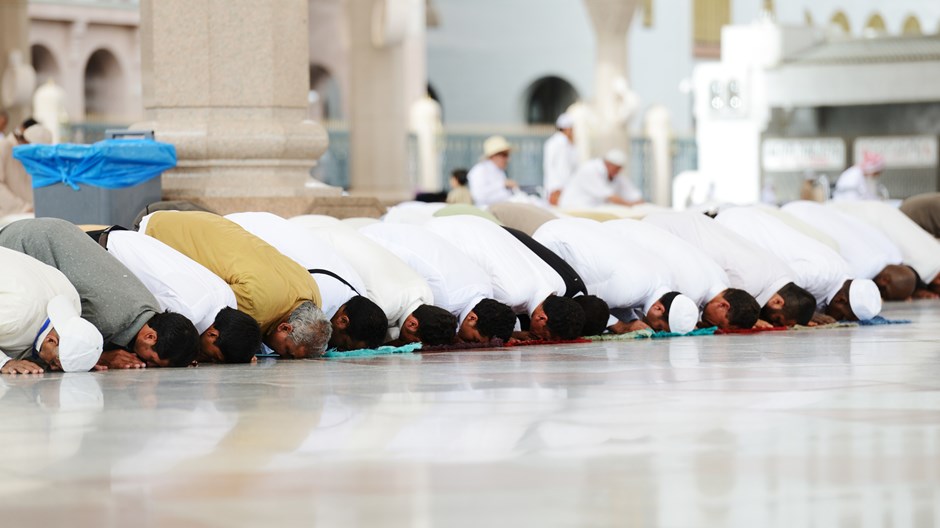
All of us are much more aware of Islam since September 11. If we did not know it before, we know now that more than 1 billion people on Earth, about one of every six people, are Muslims. In the United States alone, according to Muslim leaders, there are more than 6 million Muslims, a little less than half the size of our nation's largest Protestant denomination, the Southern Baptist Convention (at 15 million). Social scientists who count religious adherents, however, place the number of American Muslims much lower, somewhere between 1.8 million and 2.8 million. This more realistic figure falls in the same range as the Assemblies of God or the Lutheran Church-Missouri Synod. In any case, the faith is growing exponentially in some parts of the country. Today in my hometown of Birmingham, Alabama, which some call the buckle of the Bible belt, there are several mosques and a thriving Muslim community.
We've also been reminded that Islam, along with Judaism and Christianity, is one of the three monotheistic faiths. Some take that fact and assume that all three faiths are just one great religion, or three equally valid pathways to the same God.
But at this historical moment, when Islam is in our consciousness as never before, we need to look at that claim more closely, especially in regard to Islam. One of the better ways to get at an answer is to focus the question like this: Is the Father of Jesus the God of Muhammad? And what difference does the answer make?
What We Share
These three great religions share a number of important traits not shared, for example, by Eastern religions such as Buddhism, Confucianism, Hinduism, and Taoism. Even within these agreements, however, we find significant differences.
First, Christianity, Judaism, and Islam are historical religions. Each claims that God has acted decisively in human history. When they say this divine action occurred varies significantly. In Judaism it is the Exodus, God's delivery of his people from slavery in Egypt ("Let my people go"). For Christianity it is the Incarnation ("the Word was made flesh and dwelt among us"). For Islam it is the beginning of the latest and final revelation, as Muslims see it, with the prophet Muhammad, who was born in 570 in the city of Mecca and died in 632. Furthermore, Islam adopts essential historical figures from both Judaism and Christianity. Moses was a prophet of God, Muslims say, who gave the law of God. Jesus was a friend of God. But when Jesus referred to the Father sending another Counselor, "who will teach you all things and will remind you of everything I have said to you" (John 14:26), Muslims believe Jesus was talking not about the Holy Spirit but about Muhammad.
Second, these three religions are textual (we might say scriptural). They have holy books. In Judaism it is the Hebrew Bible, consisting of the Law, the Prophets, and the Writings. For Christianity it is the Bible, both the Old and New Testaments. For Islam it's the Qur'an. But the way in which the Qur'an functions in Islam is radically different from the way the Bible functions in Christianity.
The Qur'an was given, so Muslims believe, by the angel Gabriel to the prophet Muhammad over a period of 23 years. It was revealed in Arabic, a direct, divine transcript of a book in heaven. Thus the Qur'an is a divine book. In fact, in some ways, Muslims view the Qur'an as Christians see Jesus Christ: the express image of God, the Word of God. This fact is so important that early Muslims believed, and orthodox Muslim scholars still believe, that the Qur'an cannot be translated. It has been translated, of course, but those translations are not considered authoritative. It must remain in the language of revelation, the language in which it was given, to remain a true revelation for Muslims.
Certain Christian groups throughout history have made a similar claim about the Bible. The Greek Orthodox say that the Septuagint, the Greek version, is the only divinely inspired translation of the Word of God. For many centuries, Roman Catholics held that only the Bible in Latin had that kind of authority. That's no longer true for Roman Catholics. And indeed, some conservative Protestants say only the King James Version has authority.
But all three of these are distortions of the Christian understanding of Holy Scripture. Christians believe that the Bible can be translated into any human language. Why? Because the gospel itself is culture-permeable. The Bible, as the revealed Word, has come to us in Greek and Hebrew, the privileged languages of inspiration. But we can translate and transmit it to all people groups, no matter their language, because Christianity says that the gospel we proclaim is world-embracing, as limitless as the gracious love of the Creator.
Finally, these three great religions are all teleological. They have a purpose, a goal. They are headed somewhere. They do not say that life is cyclical, going over and over the same experiences we have known. They do not accept reincarnation. History had a beginning, and God intervened in it in a certain way and guides it toward an appointed climax. Naturally, each has its own understanding of what that future will look like, but all agree that a divine future awaits us.
Article continues below
No Easy Ecumenism
In this post-September 11 world, when we yearn more than ever for the unity of all peoples, we need to think about what we hold in common. We can cooperate with Muslims and Jews in many crucial areas, especially regarding issues that touch on the dignity of human life and the sanctity of the family (British Muslims, for example, were the first religious people to publicly protest abortion on demand in England). But we must not be lulled into an easygoing ecumenism that would amalgamate all faiths into a homogenized whole. The two problems with such amalgamation are these: (1) It is a distortion; we simply do not share the most essential things. (2) It is a sign of disrespect; it fails to take seriously what each religion claims to be ultimate truth.
Among the many distinctive truths Christians proclaim, and one that sets us apart from Islam, is this: God, the Father of our Lord Jesus Christ, is a God who has forever known himself as the Father, the Son, and the Holy Spirit. This is the doctrine of the Holy Trinity. This is something that all orthodox Christians believe—Greek Orthodox Christians, Roman Catholic Christians, evangelical Protestant Christians, and many others. It is at the heart of the distinctive message we proclaim and what sets us apart most dramatically from Islam.
Sadly, the doctrine of the Trinity may be the most neglected doctrine we hold. We are baptized in the name of the Father and the Son and the Holy Spirit. We often hear that wonderful Pauline benediction at the end of 2 Corinthians, "May the grace of the Lord Jesus Christ, and the love of God, and the fellowship of the Holy Spirit be with you all." The Trinity is essential to our statements of faith, our creeds, and our confessions. Yet we neglect it.
Why? Partly because we cannot understand it or explain it. Partly because we forget why it's important. It's one of those things we have to check off on our list of beliefs, but it doesn't deeply inform our faith. It's not something that we wake up every day and go to our knees with in prayer. And so we tend to shove it to the side—until we find ourselves in a discussion with a Muslim who says to us, "Oh, you Christians claim to believe in one God, but really you believe in three gods."
Article continues below
In fact, the Qur'an itself declares in Surah 5:73 (see also 4:171) that Christians believe in three gods, and that this is blasphemy against Allah. Islam arose in the Christian era, when theologians and laity still hotly debated the great Trinitarian formulas. Some Christians were teaching heretical notions of the Trinity in Mecca, where Muhammad lived. One such heresy claimed something like this: God has a wife named Mary, with whom he had intercourse, resulting in Jesus.
This is the distortion of the doctrine of the Trinity that Muhammad heard. He assumed, as do many others who call Christians "tri-theists," that this is what we believe and teach. He may have rejected a distortion, but Muslims reject the orthodox doctrine of the Trinity as well. And with that, they forsake Christians' conceptual framework for understanding the story of Jesus as the story of God. What does the Bible teach about this matter that we say is such a dividing point with Islam?
One God
We begin with the confession that God is One. This goes back to Deuteronomy 6:4, the famous Shema: "Hear, O Israel, the Lord our God, the Lord is one." It is repeated throughout the Old Testament. Jesus quotes it in the New Testament as the first and greatest of all the commandments in Mark 12:29: "You shall love the Lord your God; the Lord is One. Love the Lord with all your heart and with all your soul and with all your mind and with all your strength." Jesus believed that. He taught that. It is foundational to the Christian faith.
How did this belief arise within the faith of Israel? It arose over against polytheism, which was rampant in the ancient world. It was a world in which nature—animals, trees, rivers—was regarded as divine or at least inhabited by divinities. Out of this arose the tradition of idolatry, against which the Old Testament prophets blasted again and again with furious power. (Muhammad too was moved by a similar concern when he destroyed the idols of Mecca, and taught his followers, "There is no God but Allah.")
At the same time, there are already hints in the Old Testament that God is more complex. Just as we have foreshadowing of the Messiah, so too in the Old Testament we have foreshadowing of the Holy Trinity.
It is there at the Creation. In the beginning, God created by speaking his word. Genesis 1:2 also notes that the ruach, the Spirit of God, hovered over the face of the waters. When Christians read that passage in the light of Jesus Christ, they see there a hint of the Trinity. It is not spelled out in clarity and fullness. It took time in God's unfolding of revelation to achieve that clarity. Not until Jesus Christ himself came, in fact, were we able to understand it. But it is foreshadowed there nonetheless.
Article continues below
Or take another example, from Proverbs. Again and again, it speaks about God's wisdom. It says that wisdom created all things (Prov. 3:19), treating wisdom as a personification of God himself. In the New Testament, we find that Wisdom is one of the proper names of Jesus Christ. Jesus has been "made unto us wisdom" (1 Cor. 1:30, KJV).
Then there are all those amazing theophanies and Christophanies. Jacob wrestled all night with an angel, and he said the next day as he limped along the river Jabbok, "I have seen the face of God" (Gen. 32:30, KJV). It was not an incarnation but a revelation of the true God. Or consider Nebuchadnezzar looking into the fiery furnace. He sees a fourth man along with the three Hebrew children walking loose in the flames, one who "looks like a son of the gods" (Dan. 3:25, NIV; the KJV is more directly Christological, translating it as "as though he were the Son of God"). These are foreshadowings in the Old Testament, but none of them compromise the fundamental unity of God.
Christians, like Muslims, affirm the oneness of God, but they understand that oneness not in mathematical terms (as a unit) but in interpersonal terms (as a unity of relationship).
Allah Became Flesh?
This distinction leads us to the most basic and distinctive Christian belief: Jesus is Lord. The Old Testament confession is "God is one." The New Testament affirmation is "Jesus is Lord," declaring the deity of Jesus Christ. It's not a coincidence that two key books of the Bible start by using the same phrase:
Genesis 1:1: "In the beginning God created. … " God spoke, and worlds that were not came into being.
John 1:1: "In the beginning was the Word, and the Word was with God, the Word was God. He was with God in the beginning." This beginning antedates the Incarnation. It goes beyond and before even the Creation. It is a beginning before all other beginnings. The Greek is simple: en arche, in the primordial first principle of all things and all times, in the beginning that we can speak of as eternity—in this beginning was the Word, and the Word was with God, and (literally) "God was the Word." In Greek that expression is pros ton theon (face to face with God).
Article continues below
In John 1:18, which closes John's prologue, we read, "No one has ever seen God, but God, the One and Only, who is at the Father's side, has made him known" (NIV). That translation is just too weak. Here the KJV gets closest to the original sense when it says Jesus was "in the bosom of the Father."
"At the Father's side"? You can go to a ball game, and somebody sits alongside you. That's a chum, that's a friend. This is not the phrase used here. The one "who is in the bosom of the Father"—that connotes an intimacy, a relationship, a unity that "alongside of" comes nowhere close to. This God, the One who was with God, face to face with God, in the bosom of the Father from all eternity—this One has made him known to us.
In verse 14 is the linchpin of this whole passage. This one verse, more than any other, summarizes the Christian faith. The Word that was in the beginning with God, that was face to face with God, that was in the bosom of the Father, this "Word was made flesh and dwelt among us (and we beheld his glory, the glory as of the only begotten of the Father), full of grace and full of truth" (KJV).
This is what Christianity teaches: God Almighty, the one and only Allah (Allah is simply the Arabic word for "God"), took upon himself humanity. But not just humanity. Some translations read, "And the Word became a human being." That's too weak. It's not deep or strong enough. No, the Word became flesh.
Flesh is different from human being. Flesh is that part of our human reality that is most vulnerable, that gets sick. It gets tired. It experiences decay and death. But this is the stupendous claim the Bible makes, and if you don't feel the absolute horrible force of this statement, you'll never understand why orthodox Islam finds Christianity so abhorrent: Allah became flesh. This is a blasphemous thought to orthodox Muslims. But it's a remarkable claim that Christianity makes.
How does this relate to the Trinity? People ask why God made the world. Some believe he was lonely and decided that he needed something to love, so he created the world. Some people preach that, and it's well meant, but it is heretical.
Article continues below
God was never lonely. The doctrine of the Trinity says that within the being of God from all eternity there has always existed this bond of relationship—Father and Son and Holy Spirit, the bond of love and unity—so God never was lonely. There has always been in the being of God a reciprocity, a mutuality, and a dynamism of relationship, of community, of love.
Several radical implications proceed from this. One of them—a rather humbling one—is that we are not necessary. We are utterly unessential. God could get along quite well without us. It doesn't boost our self-esteem to say that, but it's true. If God had never created the world, or indeed, if God had never redeemed the world, God would not be any less God. He does not need us to fulfill some inner inadequacy in his own being.
Paradoxically, this truth makes the Good News good. God has chosen to love us, out of his own free will. He decided deliberately not to remain a divine cocoon within himself. Instead, he chose to make a world apart from himself, to become a part of it and take upon himself the burden of loving it back to himself—because he wanted to, not because he lacked something in himself.
This is the Gospel of the Lord Jesus Christ. This is the Good News that we have to proclaim: the God and Father of our Lord Jesus Christ is not a unit. The God and Father of our Lord Jesus Christ is not a monad, a sterile one-thing that exists apart from a relationship, but has a dynamic relationship of love and reciprocity within his own being—and that as a relational being he has reached out to us in love.
Many are familiar with George Eliot's character, Silas Marner. Everybody thought he was poor, but he was rich. He was a miser. He kept gold coins in a chest under his bed. And every night, before he went to sleep, he'd take out his gold coins, count them, stroke them, and admire them. Then he'd put them back under his bed. He never spent one. Some people think of God that way: He hoards all his power, all his might. He's a miser god—a Silas Marner god. This is not the God of the Bible. The God of the Bible is a God of utter graciousness and love, who chooses to come into our world and to experience what we have experienced—our alienation and estrangement—and do everything necessary to redeem and love that world back to himself.
Article continues below
Personal Spirit
Some people think that in the Old Testament we have God the Father, in the New Testament God puts on the mask of the Son, and now, in the age of the church, we have the Holy Spirit. The technical name for that heresy is modalism, and it's widespread among Christian believers. No, the Trinity is not three different masks that God wears at different times in salvation history. From all eternity, before there was a world, before there was anything else, God, the Father, Son, and Holy Spirit, was—is—in a bond of love and unity and reciprocity and community that exceeds our ability to comprehend and describe.
These first two Christian affirmations—God is one, and Jesus is Lord—have been denied and doubted and fought over by Christian theologians. In the second century, a heretic named Marcion was excommunicated from the church. Marcion said, in effect, I like the God of Jesus. He's a God of love; he's a God of mercy, a God of tenderness. But I don't like the God of the Old Testament. He's a mean God. He's a mad God. He's a God of war and violence. So Marcion cut the Old Testament out of the Bible. But the church said, No, we're not going down that road. It was perhaps the single most important decision made in the history of Christian doctrine—to say that the God and Father of our Lord Jesus Christ is the God of Israel, the God of the Old Testament, to affirm that there is a fundamental connection between creation and redemption.
The divine lordship and the deity of Jesus Christ were denied in the fourth century by a man named Arius. He was sincere. He was well read. He did not deny that the Bible was true. But he said, Jesus Christ is a creature. He's higher than any other creature. But he is not God. Arius denied that Jesus was the same essence, the same fundamental reality, as God. At the Council of Nicea, the church had to say, No, we can't go that way either. The one we adore and worship and love in Jesus our Redeemer is of the same essence as the Father. We're not talking about two different gods. We're talking about the one God, but the one God who has forever known himself as Father, Son, and Holy Spirit. This says to us that the fundamental reality of God is relationship—it's community. If we can ever grasp that, we'll understand what our fundamental differences are with Islam.
The third central Christian affirmation is that the Holy Spirit is personal. This affirmation also has had a divisive history. About 70 years after the Council of Nicea, some people said they would go along with God the Father and God the Son, but they could not affirm that the Holy Spirit is God—that was just too much for them. They claimed that the Holy Spirit is a force, an energy, a power, but not God. Over against these people, who were known as the Spirit-fighters (because they fought against the deity of the Holy Spirit), the church declared that God is one in essence, and three in person—Father, Son, and Holy Spirit.
Article continues below
The Bible speaks of the Holy Spirit as a person. He baptizes (1 Cor. 12); he can be grieved (Eph. 4); he groans (Rom. 8). These are things a person does, and the Holy Spirit is a person and in relation to the Father and Son—yet one God, forever and ever.
Space constraints preclude saying much more about the place of the Holy Spirit in the Trinity. The larger point here is simply this: God does not exist alone—"the alone with the alone" as Arius referred to his god—but rather exists in community, in love, in reciprocity and mutuality. It is this God who has, of his own free will, opened his heart to this world he has made, and who invites us to know him, to love him, and to respond to him. He is a relational God.
Affirming The Mystery
Ultimately, we have to admit that the Trinity is a mystery. Even in eternity, we will never comprehend it. But we are called to affirm it and believe it. And we are called to hold it without compromise in a world of religious pluralism.
Let's go back to our question: Is the Father of Jesus the God of Muhammad? The answer is surely Yes and No. Yes, in the sense that the Father of Jesus is the only God there is. He is the Creator and Sovereign Lord of Muhammad, Buddha, Confucius, of every person who has ever lived. He is the one before whom all shall one day bow (Phil. 2:5-11). Christians and Muslims can together affirm many important truths about this great God—his oneness, eternity, power, majesty. As the Qur'an puts it, he is "the Living, the Everlasting, the All-High, the All-Glorious" (2:256).
But the answer is also No, for Muslim theology rejects the divinity of Christ and the personhood of the Holy Spirit—both essential components of the Christian understanding of God. No devout Muslim can call the God of Muhammad "Father," for this, to their mind, would compromise divine transcendence. But no faithful Christian can refuse to confess, with joy and confidence, "I believe in God the Father. … Almighty!" Apart from the Incarnation and the Trinity, it is possible to know that God is, but not who God is.
Article continues below
Long ago, Gregory of Nyssa put it this way: "It is not the vastness of the heavens and the bright shining of the constellations, the order of the universe, and the unbroken administration over all existence, that so manifestly displays the transcendent power of God as his condescension to the weakness of our human nature, in the way sublimity is seen in lowliness."
This does not mean that we should condemn every Muslim believer as an idolater (see "Does God Hear Muslims' Prayers?"). And we are wise to remember that sometimes the best way to address these issues is to move from theological abstraction to story. I've found one story from Richard Selzer's Mortal Lessons, as good as any:
I stand by the bed where a young woman lies, her face postoperative, her mouth twisted in palsy, clownish. A tiny twig of the facial nerve, the one to the muscles of the mouth, has been severed. She will be thus from now on. The surgeon had followed with religious fervor the curve of her flesh; I promise you that. Nevertheless, to remove the tumor in her cheek, I had to cut that little nerve.
Her young husband is in the room. He stands on the opposite side of the bed, and together they seem to dwell in the evening lamplight, isolated from me. Who are they, I ask myself, he and this wry-mouth that I have made, who gaze at and touch each other so generously, greedily? The young woman speaks.
"Will my mouth always be like this?" she asks. "Yes," I say, "it will. It is because the nerve was cut."
She nods, and is silent. But the young man smiles. "I like it," he says. "It is kind of cute."
All at once, I know who he is. I understand, and I lower my gaze. One is not bold in an encounter with a god. Unmindful, he bends to kiss her crooked mouth, and I [am] so close I can see how he twists his own lips to accommodate to hers, to show her that their kiss still works.
Isn't that what the Christian God is about? God was in Christ, reaching out to us in love, accommodating himself to our condition, to save us.
This is what we are about as ambassadors of Christ and his gospel: to go into the world, into the prisons, into the barrios and the ghettos and wherever it is that human beings exist in alienation and separation from God, and to tell them that the relational God is reaching out to us, and that the kiss still works.
Article continues below
Timothy George is a CT executive editor and dean of Beeson Divinity School at Samford University. This article is adapted from his forthcoming book Is the Father of Jesus the God of Muhammad? (Zondervan, Spring 2002).
A ready-to-download Bible Study on this article is available at ChristianBibleStudies.com. These unique Bible studies use articles from current issues of Christianity Today to prompt thought-provoking discussions in adult Sunday school classes or small groups.
Adherents.com is the place to go for geographical breakdowns and other statistics related to the adherents of any religion.
In a recent column for Christianity Today, Philip Yancey reprinted a letter from a Muslim. Written shortly after the September 11 attacks, the letter read: "I read some books about the prophet Muhammad and the Islamic faith by Western scholars. I was shocked to learn a lot of things about my religion that I never knew."
In the 1998 article, "Is Islam the enemy?," Sojourners magazine said that the navigation of the road ahead for Christians and Muslims would have profound consequences for both communities—and for the world.
A version of this article also appears at Breakpoint.org. It is adapted from a speech George gave at the October 2001 retreat and meeting of the Board of Directors of Prison Fellowship Ministries.
Have something to add about this? See something we missed? Share your feedback here.
Our digital archives are a work in progress. Let us know if corrections need to be made.















 While we pray for peace, we need moral clarity about this war.
 As my doubts about his teachings grew, so did a secret fascination with Jesus.
 We must always be people of the Word, but we’ll have to reimagine deep engagement with Scripture.






