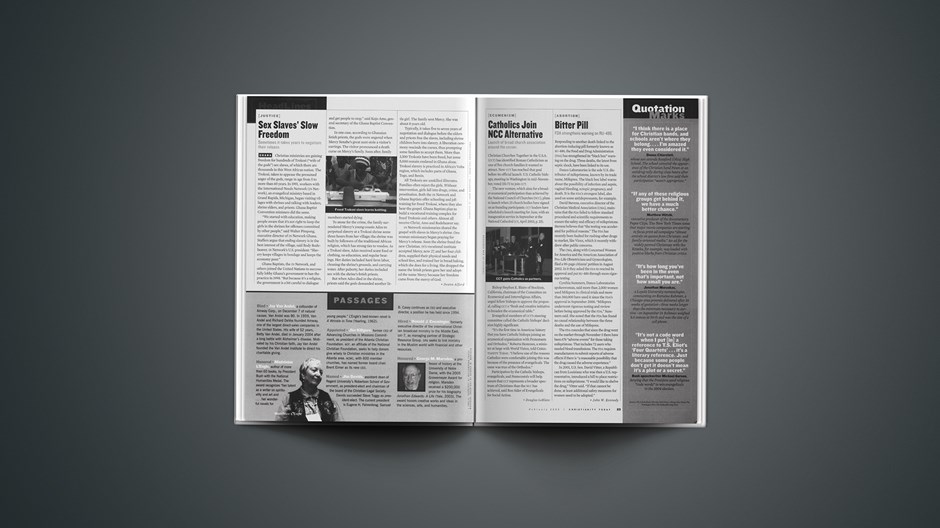
Christian ministries are gaining freedom for hundreds of Trokosi ("wife of the gods") sex slaves, of which there are thousands in this West African nation. The Trokosi, taken to appease the presumed anger of the gods, range in age from 5 to more than 60 years. In 1991, workers with the International Needs Network (IN Network), an evangelical ministry based in Grand Rapids, Michigan, began visiting villages with shrines and talking with leaders, shrine elders, and priests. Ghana Baptist Convention ministers did the same.
"We started with education, making people aware that it's not right to keep the girls in the shrines for offenses committed by other people," said Walter Pimpong, executive director of IN Network Ghana. Staffers argue that ending slavery is in the best interest of the village, said Rody Rodeheaver, IN Network's U.S. president: "Slavery keeps villages in bondage and keeps the economy poor."
Ghana Baptists, the IN Network, and others joined the United Nations to successfully lobby Ghana's government to ban the practice in 1998. "But because it's a religion, the government is a bit careful to dialogue and get people to stop," said Kojo Amo, general secretary of the Ghana Baptist Convention.
In one case, according to Ghanaian fetish priests, the gods were angered when Mercy Senahe's great aunt stole a visitor's earrings. The visitor pronounced a death curse on Mercy's family. Soon after, family members started dying.
To atone for the crime, the family surrendered Mercy's young cousin Adzo to perpetual slavery at a Trokosi shrine some three hours from her village; the shrine was built by followers of the traditional African religion, which has strong ties to voodoo. As a Trokosi slave, Adzo received scant food or clothing, no education, and regular beatings. Her duties included hard farm labor, cleaning the shrine's grounds, and carrying water. After puberty, her duties included sex with the shrine's fetish priests.
But when Adzo died in the shrine, priests said the gods demanded another little girl. The family sent Mercy. She was about 8 years old.
Typically, it takes five to seven years of negotiation and dialogue before the elders and priests free the slaves, including shrine children born into slavery. A liberation ceremony rescinds the curses, thus prompting some families to accept them. More than 3,300 Trokosis have been freed, but some 5,000 remain enslaved in Ghana alone. Trokosi slavery is practiced in Africa's Volta region, which includes parts of Ghana, Togo, and Benin.
All Trokosis are unskilled illiterates. Families often reject the girls. Without intervention, girls fall into drugs, crime, and prostitution. Both the IN Network and Ghana Baptists offer schooling and job training for freed Trokosi, where they also hear the gospel. Ghana Baptists plan to build a vocational training complex for freed Trokosis and others. Almost all receive Christ, Amo and Rodeheaver say.
IN Network missionaries shared the gospel with slaves in Mercy's shrine. One woman missionary began praying for Mercy's release. Soon the shrine freed the new Christian. IN's vocational institute accepted Mercy, now 27, and her four children, supplied their physical needs and school fees, and trained her in bread baking, which she does for a living. She dropped the name the fetish priests gave her and adopted the name Mercy because her freedom came from the mercy of God.
More about the International Needs Network ministry in Ghana is available from their website.
More Christianity Today articles about sex slavery includes:
Back From the Brothel | Thanks to brave ministries, prostitutes are still entering the kingdom. (Jan. 05, 2005)
We're Still Supporting Slavery | New efforts to stop U.S. troops from visiting prostitutes abroad are a good step, but let's not whitewash what's happening. (Sept. 28, 2004)
The Hidden Slavery | Each year, two million women and children worldwide have sex with strangers only because someone kidnaps them and threatens to kill them. You may have passed some of these victims on the street. (Nov. 14, 2003)















 While we pray for peace, we need moral clarity about this war.
 A Christian reconciliation group in Israel and Palestine warned that war would come. Now the war threatens their relevance.العربيةFrançais
 But experts say it can offer opportunities for leaders and congregations to grow.






