1. Sacks: Divestment vote "could not have been more inappropriate" It's clear that Britain's chief rabbi, Jonathan Sacks, is upset about the Church of England's General Synod vote to divest "from companies profiting from the illegal occupation" of Palestinian territory. In an article for the Jewish Chronicle, Sacks calls the vote "ill-judged even on its own terms. The immediate result will be to reduce the church's ability to act as a force for peace between Israel and the Palestinians for as long as the decision remains in force. … The church has chosen to take a stand on the politics of the Middle East over which it has no influence, knowing that it will have the most adverse repercussions on a situation over which it has enormous influence, namely Jewish-Christian relations in Britain. The Church could have chosen, instead of penalizing Israel, to invest in the Palestinian economy. … The church's gesture will hurt Israelis and Jews without helping the Palestinians." Given the Iranian president's call to wipe Israel off the map and the anti-Semitic tone of recent Muslim demonstrations, Sacks says, "The timing could not have been more inappropriate." Israel, he says, "needs support, not vilification."
2. Baptists united There's a great piece in today's Wall Street Journal that you probably can't read without a subscription. That's too bad, because summarizing it like this—church burnings have brought black and white Baptists together in Alabama—doesn't do it justice. That's because the relatively short story is inspiring and informative without softening the edges. The Alabama Baptist Convention State Board of Missions has distributed checks for "at least" $5,000 to all 10 of the burned churches—including the black churches outside its denomination—and black and white Baptist church leaders met last Monday to discuss the details of rebuilding. Those are interesting facts, but Journal reporter Sally Beatty also gets a revealing reaction from the convention's Gary Farley, who organized the meeting: "We are trying hard to stay away from paternalism," he said. "It's not our place to tell them what to do. But that is the kind of thing you always worry about—lack of sensitivity on our part."
"But old tensions die hard, and some black church leaders struck a measured tone in applauding the generosity of the Southern Baptists," Beatty writes. She quotes William Shaw, president of the National Baptist Convention USA: "It would be difficult for them to reach out to white churches and not to respond to black churches." But Southern Baptists don't have an obligation to fund churches outside their denomination, do they?
3. Happy clappy evangelicals In the U.K. and elsewhere, evangelicals are often called "happy clappys." A new survey suggests that they're at least happy. As The Washington Post reports this week, a new study from The Pew Research Center for the People and the Press finds Americans very happy, with (self-described) evangelical Christians being the happiest people of all. "White evangelical Protestants (43%) are more likely than white mainline Protestants (33%) to report being very happy, but this difference goes away after taking frequency of church attendance into account," the survey summary says. The more detailed report (see p. 19) explains, "White evangelical and mainline Protestants who attend church at least weekly are not significantly different on happiness [49% of evangelicals, 44% of mainliners]; both groups are happier than those who attend services less often." Actually, for those attending monthly or less, mainliners are more happy: 35% vs. 31% of evangelicals.
4. Dobson on the defensive James Dobson pre-empted scheduled Focus on the Family broadcasts yesterday and today in order to defend himself for backing a Colorado Senate bill granting some legal benefits to adults who cannot marry. It's the second time this month that he has criticized his critics on the bill: He also addressed the issue at the beginning of his February 8 broadcast. "I'm about as close to being ticked at this moment as I ever remember getting on the air," he said then. He sounded even more ticked in yesterday's broadcast. Dobson also appeared on Fox News's The O'Reilly Factor yesterday to talk about the controversy.
5. Will Ted Haggard run for Congress? Last August, National Association of Evangelicals president and New Life Church pastor Ted Haggard said he was considering a run for Congress if Joel Hefley were to retire. In January, the Colorado Springs Gazette reported that Haggard said "he would not be running because he's happy with Hefley's representation." Today Hefley said he's out. No word yet from Haggard, but expect reporters to ask the question over the weekend.
Quote of the day: "I'm in my mid-30s, I've got three kids, and it's about time I did something that didn't involve cheap gags. You might as well aim high, so I thought I'd try to find God."
—Scottish TV host Dominik Diamond, who says he'll undergo crucifixion in a television show to be called Crucify Me. "Diamond, once a committed Christian, will try to rediscover his faith in a journey from Scotland, via the Vatican and Italy, to the Philippines, where Christians celebrate Easter by re-enacting Christ's ordeal on the Cross," The Scotsman reports.
Synod has damaged relations with Jews, says Chief Rabbi | The Chief Rabbi, Sir Jonathan Sacks, warned the Church of England that it had seriously jeopardized its relations with British Jews by adopting an "ill-judged" policy on Israel (The Telegraph, London)
Church's Israel policy criticized | A Church of England decision to review its investments in firms whose products are used by Israel in the occupied territories has been criticized (BBC)
Chief Rabbi flays Church over vote on Israel assets | In a 1,500-word article in today's Jewish Chronicle, the Chief Rabbi, who is known for his moderation and his distaste for public bickering, condemned the synod's action as ill-judged and said that "the timing could not have been more inappropriate" (The Times, London)
Churches warned | The National Police intend to shut down all churches and mosques that make noise and disrupt public harmony (The New Times, Rwanda)
IMB chairman & Okla. trustee report accountability dialogue | "Constructive conversations appear to be bearing fruit" in the conflict between the International Mission Board's trustees and an Oklahoma pastor, chairman Tom Hatley told Baptist Press (Baptist Press)
Baptists set missionary celebration | Fairs and rallies across county Saturday to be followed by appearances in local churches Sunday (Mobile Register, Ala.)
David Crowder reflects on loss of friend and pastor Kyle Lake | Crowder co-founded University Baptist in 1995 with Chris Seay, and serves as the church's worship leader, often hurrying home from tour appearances for Sunday services (The Dallas Morning News)
Article continues below
Ghana's many churches: A colonizing influence? | Why start a church when there are other churches that share your vision and believe in your ideals? A lot of people can reach out to help without necessarily starting churches (Godwin Yaw Agboka, Accra Daily Mail, Ghana)
After Alabama fires, Baptists try to bridge old divide | The recent spate of church fires in rural Alabama has prompted an unusual move toward cooperation among Baptist groups in the long-divided religious movement (The Wall Street Journal)
Church fire sleuths receive 500 leads | They've also gotten phone calls on the direct line set up for the person or people responsible for the fires, but authorities don't know if those calls actually came from whomever started the fires (The Birmingham News, Ala.)
Also: Churches to get safety tips | Leaders of rural church congregations in Autauga County are being asked to attend a series of security meetings set to begin next week (Montgomery Advertiser, Ala.)
Diocese settles 5 more cases | The Catholic Diocese of Davenport has agreed to pay $870,000 to settle five child molestation cases filed against four priests (The Quad-City Times, Davenport, Ia.)
When to put priests on desk duty | Stung by new sex abuse charges, the Chicago Archdiocese plans tougher policies for dealing with accused priests (Time)
Chicago diocese requests outside auditors | The Catholic Archdiocese of Chicago has asked two independent consultants to review its procedures for handling child sex abuse claims, the latest response to critics who have blasted the church's sluggish response to removing priests accused of abuse. (Associated Press)
Deltona tries to stem suit | The City Commission has called a special meeting today to discuss the lawsuit being threatened by an artist whose paintings were banned last week from a Black History Month display at City Hall because of their religious content (The Orlando Sentinel)
Katrina faith-based funding controversy | Large religion-based organizations such as Catholic Charities and the Salvation Army have long received government funds, prompting other, smaller ones to ask why they shouldn't get help, too. The president's faith-based initiative has tried to change the rules to permit that, and Kim Lawton reports that Katrina has given that initiative a new boost (Religion & Ethics Newsweekly)
Article continues below
Prayer issue divides council | Mayor Tom DuPree opened the Madison City Council meeting Monday with a prayer, despite the recent requests of other council members to either not begin the practice or open with a minute of silence. (Morgan County Citizen, Madison, Ga.)
Marker's wording okay, attorney general's office says | The Kentucky Historical Society received a complaint last fall about the marker's wording—which refers to an appearance by the Virgin Mary in France—contending that it violated the principle of separation of church and state (The Courier-Journal, Louisville, Ky.)
CCU president plans to retire | Colorado Christian University said President Larry Donnithorne will retire from that post when his term finishes June 30, 2007 (Denver Business Journal)
Bush aide denies exit tied to chaplain issue | Claude A. Allen, the top White House adviser on domestic policy, said he is not leaving the post today to protest new military guidelines urging chaplains to perform only "non-denominational, inclusive prayer or a moment of silence (The Washington Times)
US right has hijacked religious vote, says evangelical | Jim Wallis—who has been consulted by US presidents as well as Tony Blair and Gordon Brown—yesterday urged liberal Christians to move the agenda from the right's focus of sexual morality to a less partisan approach (The Guardian, London)
Article continues below
The church of Stephen Harper | At East Gate Alliance, they use PowerPoint, and pray for the Prime Minister (Macleans, Canada)
Government sees new need for abortion ruling | The Bush Administration urged the Supreme Court on Tuesday to move ahead with a final ruling on the constitutionality of the controversial federal ban on "partial-birth abortions," arguing that there would be no value in sending a pending case back to a lower court for another look (SCOTUSBlog)
Democrats press FDA on morning-after pill | A top federal health official rejected a Democratic accusation Thursday that politics were getting in the way of a decision on whether to permit sales of the morning-after contraceptive pill without a prescription (Associated Press)
DIY abortions at home condemned by family groups | Plans for women to have DIY abortions in their bedrooms or bathrooms have alarmed family groups which say it is not a procedure to be undertaken alone (The Telegraph, London)
Stem-cell dilemmas | Senator Talent believes there is an 'ethically untroubling' option on embryonic research. Will it cost him re-election? (Eleanor Clift, Newsweek)
Saving your soul with rock & roll | How the right markets the anti-choice movement to young Christians (Annika Carlson, Campus Progress/Alternet)
The anti-abortion paradox | Pro-life tactics have actually helped encourage abortions and have led to riskier sex, especially among teens (Cristina Page, AlterNet)
Bishops dealt setback in pursuit of gay adoption exemption | Governor Mitt Romney and a legislative leader yesterday delivered unwelcome news to the Catholic bishops of Massachusetts, who plan to seek permission from the state to exclude gay and lesbian parents from adopting children through its social service agencies (The Boston Globe)
Protest planned at Christian conference on homosexuality | A conference aimed at helping Christians address homosexuality or change their sexual orientation will be met with protests from the gay rights community when it meets Feb. 25 in St. Louis. (Associated Press)
Dobson defends stand on limited protections for same-sex couples | After being criticized by fellow Christian conservatives for his support of proposed legislation that would give same-sex couples some limited legal protections, Focus on the Family founder James Dobson used his radio broadcast Thursday to fight back (Associated Press)
Broadcast: Clearing the air on the marriage debate | Dr. Dobson and Tom Minnery discuss the controversy surrounding Focus on the Family's stance on current Colorado legislation and whether it includes homosexual rights and benefits (Focus on the Family, audio)
TV reporter to seek God in real-life crucifixion | The Scottish TV presenter and journalist Dominik Diamond is considering undergoing physical crucifixion as part of a controversial television documentary about Christianity (The Scotsman)
Jesus is our homey | Winnipeg-based Geez magazine tries to make Christianity hip for the kids (Macleans, Canada)
Comedian gets by with faith, humor | Christian comedian Chonda Pierce started telling jokes as a Minnie Pearl impersonator to work through college, but she knew she had arrived 15 years ago when she wrote ''comedian'' on her tax-return form (San Angelo Standard Times, Tex.)
God and the border star in recent films | Editor's Note: New movies about immigration and religion present an image of America in which the border is no longer relevant (Pacific News Service)
Franklin gets first viewing of 'Second Chance' | About 400 actors, singers, music and film industry executives and other invited guests turned out last night for the world premiere of The Second Chance, the acting debut of Nashville contemporary Christian music star Michael W. Smith (The Tennessean, Nashville)
'Gospel of Judas' to be published | The first translation of an ancient, self-proclaimed "Gospel of Judas" will be published in late April, bringing to light what some scholars believe are the writings of an early Christian sect suppressed for supporting Jesus Christ's infamous betrayer (Religion News Service)
Article continues below
Faithful remembrance | Can you write a spiritual memoir without bitterness? (Christine Rosen, The Wall Street Journal)
In John they trust | South Pacific villagers worship a mysterious American they call John Frum—believing he'll one day shower their remote island with riches (Smithsonian)
Putting women in their place | Christianity arose during a time of general social progress for women, scholar says (The Montreal Gazette)
Ex-minister walks atheist path | Retiree James Young encourages USF students to look inward, not to the heavens, for answers and says we should all be concerned about the religious right (St. Petersburg Times, Fla.)
Fund scam earns him 20 years | A convicted confidence man, whose arrest was aided by a former confidence man turned evangelical preacher, was sentenced yesterday to 20 years in prison, the maximum term, for running a $55-million hedge-fund scam (Newsday)
Salem acquires online Christian content provider | Salem Communications has acquired online Christian content provider of graphics and online community services CrossDaily.com for $2.3 million (Nashville Business Journal)
Launched in 1999, Christianity Today’s Weblog was not just one of the first religion-oriented weblogs, but one of the first published by a media organization. (Hence its rather bland title.) Mostly compiled by then-online editor Ted Olsen, Weblog rounded up religion news and opinion pieces from publications around the world. As Christianity Today’s website grew, it launched other blogs. Olsen took on management responsibilities, and the Weblog feature as such was mothballed. But CT’s efforts to round up important news and opinion from around the web continues, especially on our Gleanings feature.
Ted Olsen is Christianity Today's executive editor. He wrote the magazine's Weblog—a collection of news and opinion articles from mainstream news sources around the world—from 1999 to 2006. In 2004, the magazine launched Weblog in Print, which looks for unexpected connections and trends in articles appearing in the mainstream press. The column was later renamed "Tidings" and ran until 2007.














 While we pray for peace, we need moral clarity about this war.
 We’ve got little information on Jesus’ appearance and personality. But that’s the way God designed it.españolFrançais
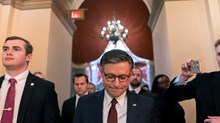 After lobbying from fellow Southern Baptists and Christians affected by the war, the House speaker moves a package forward.





