In an excerpt from his new book, Through a Screen Darkly, CT Movies critic Jeffrey Overstreet tells how certain films opened his eyes wider than ever, enabling him to look closer than ever before.
Absolutely. So says Christianity Today film reviewer Jeffrey Overstreet in his new book about a life of transforming experiences at the movies.
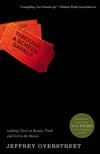
Buy this book
In Through a Screen Darkly, Jeffrey chronicles how movies have opened his eyes to the glory of God, from his childhood watching Disney films and Star Wars, to a big screen epiphany that happened while he was on a date in high school. His accounts of conversations with movie stars, filmmakers, and moviegoers—Christian and otherwise—reveals that an attentive, conscientious engagement with art can challenge us, inspire us, and lead us to revelation.
In these abridged excerpts from the first chapter of Through a Screen Darkly, Jeffrey writes about how his journey started. Long before he began to talk with the filmmakers themselves about their convictions and beliefs, his own were influenced by features like Dances with Wolves, Chariots of Fire, and Amadeus.
My "Date" (Well, Not Exactly) with Melissa
It's 1990. I'm 20 years old and on my second date … sort of.
Her name is Melissa, and she's spirited, funny and pretty. I'm thrilled that she has agreed to go with me to a new film called Dances with Wolves, because I hear it's three hours long. That's three hours in a darkened theatre with Melissa. Melissa, who doesn't really seem drawn to me in that way, but who is a lot of fun and who's happy to flirt with me so long as I don't respond to her with any earnest romantic intentions.
Sweaty-palmed, hoping that the evening might mark a change, I settle in for the long three hours.
During the course of the movie, Melissa will take at least three breaks, probably because she's rather small and has consumed a jumbo Diet Coke. But while she's gone, I remain riveted, transported through time and space. I'm not thinking about my chances with Melissa anymore. I'm thinking about the chances of that poor soldier, John Dunbar, against those natives—the mean ones, not the good ones.
By this time in my early college experience, my understanding of Native Americans had been shaped by Disney movies, cartoons and family-friendly television dramas. This version of the Old West is more complicated and it makes me uncomfortable. I thrill to the chases and bask in the panoramic landscapes captured by Dean Semler's cinematography. I laugh at the budding friendship between man and wolf. But contrary to my usual moviegoing experience, I suddenly don't know what to expect or where the story will take me.
Then the moment comes—one I still don't completely understand. Dunbar sits in a tent with a Sioux chieftain. Between them sits an agitated woman. Her wardrobe is like the chief's, but her features are more like Dunbar's. This is Stands With a Fist. When she was still a child, her white parents were butchered by Pawnee attackers and she was taken into the care of the more compassionate Sioux. Uprooted from the language of her family, she grew up with the natives, adapting to their language and locking the horrible truth about her family into a vault deep in her memory.
Now, here in the tent, as she encounters a white man for the first time in ages, her brow furrows. Terror flashes in her eyes. Under orders to translate for Dunbar, she struggles to find the right words, turning them over as if they are strange keys. When they snap into place, she trembles and begins to speak. That box of nightmares opens.
There's a lump rising in my throat, and I feel I might choke. So I sit there covering my mouth with my hand, hoping Melissa won't notice that tears are spilling down over my fingers.
I'm still not sure why that scene affects me so intensely. It is not the climax of the film. It's not even intended to be a tear-jerking scene.
Perhaps it has something to do with my personal interest in helping people understand each other through art. I started journaling about my love of cinema when I was 14, and I'm still striving to capture the mysteries of movies in words. Perhaps it's because Stands With a Fist is being set free from the identity she has assumed out of necessity. As she wraps her tongue around this forgotten language, she is pried kicking and screaming away from what she knows, dragged back through a river of pain, and at last returns to walk again in the world from which she came—a homeland she's only now remembering.
I've always had this sense that there is another language I once knew, a joy that was mine before I was born. When I get a glimpse of that glory through art, I can feel the memory of it pressing against the back of my mind, and the longing for that peace and resolution wells up inside me. I can't quite grasp it. I can't speak my native language. Not yet … but I'm learning.
If I do the difficult thing and pull myself away from art that is merely entertaining and start searching for those currents of truth that reside within beauty and mystery, I will be drawn off the path of familiarity and comfort. The reality of God is not bound to a particular earthly language, country or style. His spirit can speak through anything. But he is far more likely to be encountered in those things that are excellent rather than shoddy; particular rather than general; authentic rather than derivative. I will find myself investigating art and expression that never played for audiences in this country—art that waits overlooked on the shelves full of foreign and or independent films at the video store. And I will be changed, concerned with cares and disciplines that make no sense to Hollywood movie publicists.
Article continues below
It could be a lonely road. But it's a road that leads further up, further in, to greater majesty and more transforming truth.
First Steps into a Larger World
Like a pillar of cloud or fire, sometimes art offers us mysteries that draw us out of the captivity of our own perspective.
Growing up in a Christian home in Portland, Oregon, I lived in fear of the world of sinners beyond the walls of my sanitized religious subculture. My family showed up at a Baptist church on Sunday morning and socialized in a Christian community. My younger brother and I attended Christian schools from kindergarten through college. Word around the Sunday school room convinced me that I lived in a place like Rivendell in J.R.R. Tolkien's Lord of the Rings, where all was beautiful and good, while everything "out there" was like Mordor. I came to believe that I was safe around believers but endangered by the worldly.
In our church community, the artwork of pop culture was treated with grave suspicion. Only rare exceptions such as cute and innocuous children's stories, Sesame Street and the Disney cartoons were beyond reproach. Snow White and the Seven Dwarves was the first movie I saw projected on a big screen, and it planted the seeds of curiosity about cinema in my mind. But commercial fiction, the Weekly Top 40 on Z100 FM in Portland, the blockbuster movies of the week and all other secular stuff was considered dangerous because it showed all kinds of behavior that could lead people into temptation.
The homes my family visited were full of Christian books — usually the same volumes we had on our own shelves. So it was that I became fascinated with the larger world of literature through the neighborhood public library.
Advertisements in the newspaper for that forbidden world of movies—those "worldly" stories — intrigued me as well. I remember being troubled and fascinated by Marlon Brando's fearsome expression on the original newspaper advertisements for Apocalypse Now. And when something called Star Wars showed up on the page, my imagination grew extremely restless.
Article continues below
One afternoon in my grandparents' living room, Uncle Paul announced to the family that he was going to go see George Lucas's special-effects sensation. When he said that he wanted to take along his seven-year-old nephew, I braced myself to hear my parents refuse. They had heard rumors that the movie was scary and violent, and in retrospect, I completely understand their concerns. But then from his La-Z-Boy chair in the corner, my grandfather, who rarely spoke, stunned the whole family by announcing that he too wanted to see what all of the fuss was about. And he promised that he'd keep an eye on me. That tipped the scale in my favor.
At the Hollywood Theater in Portland, Oregon, in 1977, I took my first steps into a larger world. And I would never think of going back.
Peeling Potatoes to Perfection
The next important step in my moviegoing journey took place a few years later when I watched Hugh Hudson's film Chariots of Fire.
Should the Olympic hopeful, Eric Liddell, compromise his Christian convictions and run a race on the Sabbath in order to pursue a gold medal? Would God be so unfair as to punish him for pursuing his dream?
I worried about these issues. Sunday school, Christian education and family devotion hour had taught me the inflexibility of the Ten Commandments. "Remember the Sabbath." The appeals of Liddell's missionary sister made sense in my practical, Protestant world. Why should he waste his time competing in "worldly" races when he could be on the mission field, saving souls by preaching the gospel?
Then Eric's father looked him in the eye and spoke words that shattered so many of my assumptions about a good life: "You can glorify God by peeling a potato if you peel it to perfection."
Excellence. By doing something well, I could please the Lord. I remembered Mr. Liddell's words when I stepped out on to the basketball court in high school. I could glorify God if I followed Coach Remsburg's instructions for making a perfect free throw. And when I studied for Mr. Zimmerman's algebra tests, I could glorify God by learning to solve complex equations perfectly. In fact, I could glorify God when I was running, singing in Mr. Barber's championship concert choir, raking up the wet autumn leaves from the apple and cherry trees in the backyard, writing stories or making films. When we give others something excellent, we reflect the standards of heaven. We make others curious. When they get curious, they're open to discovering things they would not otherwise understand. Such discoveries provoke growth and a particular joy.
Article continues below
"When I run," said Eric Liddell, "I feel his pleasure."
Inspired by a Worldly Madman
A film called Amadeus took me a step further.
Director Milos Forman and screenwriter Peter Schaffer showed me that excellence—no matter where it comes from—can reveal a greater picture of the truth. I learned that God sometimes uses very naughty people to lift our spirits through art. Wolfgang Amadeus Mozart, that scoundrel of a composer, played with such memorable vigor by Tom Hulce, informed me that art by any artist, even the most reckless, could contain glimpses of the sublime.
I soon found that I could even learn something from the films of Woody Allen, Quentin Tarantino or that troublemaker Oliver Stone. I could gain insight by watching films from other countries, from pagan cultures where the characters didn't speak English.
Why did this surprise me? The psalms, the staple of my daily devotion time, had been composed by David, who as a king would murder, betray and fornicate, then write the psalms out of deep, heart-tugging confession. This deeply flawed individual was called a man after God's own heart.
Perhaps the wisdom of Sunday school and the wisdom of worldly art were not so separate after all.
Moved in Mysterious Ways
Maybe you're thinking back on very different films: Citizen Kane. Schindler's List. Bruce Almighty. Amelie. It's a Wonderful Life. Manon of the Spring. Braveheart. The Passion of the Christ. March of the Penguins. Crash. Babel. Transforming moments at the movies will differ substantially from person to person.
The things that move you will depend, in part, on your own experiences as well as the artist's own history and personality. Generations to come who watch United 93 will feel very differently from those who lived in New York during the attacks that destroyed the World Trade Center. Most of us cannot imagine what Saving Private Ryan feels like to veterans of World War II, or what The Queen feels like to Londoners who took flowers to the gates of Kensington Palace after Princess Diana died. The Passion of the Christ was a different experience for Catholics than it was for Protestants and different for Christians than for Muslims. Brokeback Mountain and The Da Vinci Code have received almost every response imaginable, from the highest praise to the most mean-spirited condemnation.
Article continues below
Does this mean that there is no such thing as a good or bad movie and that everything is relative? Certainly not. A double cheeseburger could do some good for a starving man, so it's not worthless, but let's not confuse it with a healthy meal. It's difficult to train ourselves to consider a film's quality: how it makes us feel, its flavor and what it all means. Taste is important, but so are the ingredients, their proportions, their preparation, the arrangement and presentation of the plates and whether or not the meal is nourishing.
Excellence matters.
These days, as a film critic, I am learning that a film succeeds when it makes me forget that I have a pen in one hand and a legal pad in the other. I long for those moments when I'm swept up in revelation, oblivious to all else. … The work carries us up out of our critical faculties and sweeps us to a galaxy far, far away … or to the "Old West" where a woman has an epiphany that bridges two cultures. It is something distinct to movies. We are presented with flickers of light preserved, one moment after another, motion and change reflected in a way that cannot happen in a painting, in writing, in music.
In that state of childlike attention, we are vulnerable to shocks both pleasant and discomforting, both instructive and damaging. We are open to revelations that change us. Receiving our attention, the artist bears some responsibility to behave with integrity, to serve the work and craft it with excellence, but even he may not anticipate what his arrangement of light and shadow will reveal. It's possible we will glimpse the glow of glory, truth that cannot be reduced to a simple paraphrase, glimmering through the screen darkly.












 While we pray for peace, we need moral clarity about this war.
 A Christian reconciliation group in Israel and Palestine warned that war would come. Now the war threatens their relevance.العربيةFrançais
 Helping marine biodiversity flourish is a means of participating in God’s work, says an Indonesian theologian.





