Maestro John Nelson left Shanghai shortly after directing Handel's Messiah in 2006. Most of the audience members had loved it, Nelson said, although neither the English words nor a translation had been in their programs. "The force of the text must have come through," Nelson said. During the Hallelujah Chorus, "the audience rose to its feet and stomped and clapped and even screamed.
"The government officials that were there sitting with the [Shanghai opera] music director did not stand up," Nelson said. While driving Nelson to the airport, the music director told him of an even more surprising response to the performance: "My wife was sitting next to me and said, 'I think I saw God when I was listening to this music.'"
Amid post-Olympics shifts in China's attitude toward the West, the government decided that sacred music should disappear. "Quietly and without publicity, the Chinese authorities have let it be known that Western religious music should no longer be performed in concert halls. It's an unexpected decision, and one for which there is no obvious explanation or trigger," Catherine Sampson wrote in The Guardian. Even things that merely seem like Western sacred music — including Carl Orff's decidedly unsacred Carmina Burana — have been stopped.
The ban may not last long, but it highlights the dual ambassadorship of religious art. Is an audience thoroughly engaged in Messiah a challenge to worldly authority? Is it worship? A threat to a secular Christmas? Part of a secular Christmas?
It may well be all of the above. Messiah is one of the greatest examples of Western music; it is also one of the greatest expressions of the gospel (the libretto is pulled directly from Scripture).
Nelson is Directeur Musical Honoraire of the Ensemble Orchestral de Paris and artistic director of Soli Deo Gloria, which commissions and otherwise tries to cultivate contemporary sacred music. When he directs pieces such as Mendelssohn's Elijah or Brahms's Requiem abroad, he presents his faith frankly and the works as cultural artifacts — much the way Christian scholars are teaching Christian history and theology in Chinese universities.
"I don't consider it a stealth operation," Nelson says. Indeed, the performances can be wholly cultural and wholly Christian. While good music is valuable in itself, Christians contribute transcending value when they create beautiful art that carries the gospel — the specific, explicit Good News about Jesus. Soli Deo Gloria has been commissioning works from composers Nelson believes will be significant centuries from now. Christopher Rouse composed a requiem for Nelson's organization that was performed in Los Angeles last season. Nelson says it was very well received by critics. Aaron J. Kernis is working for them on a project about Noah.
It may take deliberate action, like Nelson's, to cultivate Christian art on the highest level — art for an audience of more than one, art that strives to be something with a long half-life, art that strives to be art, not propaganda. There is no small risk involved, because we never know at the time which art will, in fact, last. Yet despite the risk and difficulty, some of us should be deliberately creating it.
"In our dilemma with Soli Deo Gloria, we feel that we should encourage the Christian composers of our time, but it is not going to have any effect unless it is culturally acceptable," Nelson said. Of course, it's nearly impossible to predict which among many perfectly good compositions will still be interesting centuries later.
The marriage of Christian content and fine art is made in heaven. If we love God with heart, soul, mind, and strength, the church as it worships will contribute to our cultures' riches. And it will have given people the means and motivation to praise God, even in the most unlikely places.
While The Daily Telegraph reported that musicians and tour organizers experienced difficulties performing sacred music last autumn, John Nelson said on his blog that Soli Deo Gloria contacts had not confirmed any new action against sacred music performances.
Other articles on Christianity and culture, include our September cover story on creating culture.















 While we pray for peace, we need moral clarity about this war.
 As my doubts about his teachings grew, so did a secret fascination with Jesus.
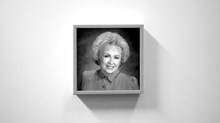 The founder of Concerned Women for America was credited by President Ronald Reagan with “changing the face of American politics.”






