Outraged by the problem of human trafficking, Justin Dillon rounded up musicians and celebrities, made a movie, and started a movement connecting art and justice.
As a teenager, Justin Dillon attended a U2 concert and was forever changed. Seriously.
He immediately decided that he was going to be a musician and, as he puts it, "to be a better person because of the art I had just experienced." And he started to ask himself, "How do we use music and art to make the world a better place?"
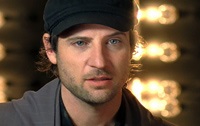
Justin Dillon
Dillon has been trying to answer that question ever since. And when he first learned, several years ago, about the devastating problem of human trafficking around the world, he quickly learned all he could about the topic and fully immersed himself into finding ways to make a difference.
That journey ultimately led Dillon—a professional musician but not a filmmaker—to make a movie, Call + Response, which releases in limited cities this week. The "rockumentary" is both a concert featuring well-known artists (including Moby, Natasha Bedingfield, and Switchfoot, and many others, all performing gratis) as well as interviews with celebrities (Julia Ormond, Ashley Judd), politicians (Madeline Albright), sociologists, journalists, and activists.
Call + Response is educational too; viewers who are unaware of the scope of the modern-day slave trade (an estimated 27 million in bondage, including many children in forced prostitution) will get a primer on the problem. But Dillon's desire is to do more than inform; he wants viewers to act—thus the second half of the film's title—and has set up the official website so people can leave comments, make donations, and more. All of the film's proceeds will go to organizations and ministries that are fighting slavery.
We caught up with director Dillon to discuss his passion and his movie.
Even before your epiphany at that U2 concert, was there anything in your upbringing that might've wired you to be so passionate about this?
Dillon: I grew up in a church, but when I turned 16, right about the time I discovered music, I decided that formal religion wasn't what touched me spiritually. Music touched me spiritually. And a band like U2 bridged the gap between rock'n'roll and the world. I think justice is an inherent tenet inside the faith I grew up in, and it's also an inherent tenet inside of what I think is the most beautiful of art. And reading some books by Os Guinness and others kind of cemented this idea that somehow you can do all three—be an artist, seek justice, and pursue a life of spirituality.
You started connecting art and justice in your band Tremolo a few years ago, giving away 50 percent of your record's proceeds to charities of fans' choice.
Dillon: Yeah. It's based off the concept of how do we take an experience from a song, or the purchase of a record, and expand those ideas out to where it leverages something beautiful and produces justice or mercy? It was like, "What if we live what we value?" Or, "What if we actually acted out what the songs are saying?"
In 2003, you went on a music tour of Russia, which also opened your eyes to human trafficking. And you met a girl—your translator—who was integral to this story?
Dillon: Yes, but let me back up a bit. About three months before I went to Russia, I read an article in The New York Times called "The Girls Next Door." It was the first exposure I ever had to human trafficking. That article really affected me. In Russia, some girls—all university students—were translating for us. They kept talking about these "exciting job opportunities" in the U.S., and I was like, This sounds really familiar to that article.
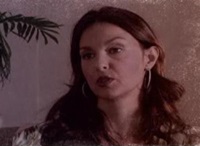
Ashley Judd is quoted in the film
I did a little investigating and asked, "These people offering you the jobs, do they know who your parents are? Do they know who your friends are? Have they done your documentation?" She brings me documentation, and it's totally bogus.
You could tell it was bogus just by looking at it?
Dillon: Yeah. They'd already taken $2,400 from her, she was leaving in a month, and she had no idea where she was going to live. I sat down with them and said, "You're at least dealing with somebody who does bad business. There's usually more documentation. And you shouldn't have to pay for the opportunity to work." I told them what sometimes happens to girls like them, but they didn't want to believe it. And then we had to leave the next day, and I have no idea what happened to those girls.
When you got back to the U.S., what came next?
Dillon: I read books on human trafficking by Gary Haugen and Kevin Bales. I called both organizations [International Justice Mission and Free the Slaves] and said, "I'm a musician in California. I'm not famous and I don't know anybody, but I want to help." They said, "Maybe you could fundraise for us." So I did some fundraiser concerts, sold out a couple of venues in San Francisco. I called them back and said, "Okay, I did that. I want to do some more. But I don't want to keep fundraising. I want to be involved." Most people would probably have dropped off at that point, but I'm a bit of an obsessive freak.
Article continues below
In this case, that's a good thing?
Dillon: I just kept pursuing it, trying to figure out ways to connect. Look, as much as I'd like to be the guy that knocks down the doors of child brothels and beats up pimps, that's not a reality for me. So I'm just going to do what I'm good at and see if I can get some energy for this movement. And nobody in the music community was doing anything about it. No one even knew about it. So I just had to work on this.
Child sex slaves in Southeast Asia
I contacted a friend at Walden Media, because they were putting out a film out about the end of the British slave trade—Amazing Grace. I said, "What if I did a benefit concert around your film and it didn't cost you anything? And you control the content and it becomes a promotion for your film?" They agreed, and I found a production company who would do all the filming for free. I had everything but the talent—the musicians to do it. Walden gave me two months to meet their deadline, and we didn't quite make it. So they dropped it. Totally understandable. But I said, I'm not going to stop. Something's supposed to happen with this.
Then you decided to take on the project yourself?
Dillon: Yes, even though I'd never made a film before. I talked to some friends who'd made commercials and music videos and I said, "How do you do this?" They said, "You need favors and a little bit of money and some miracles." I said, "Okay, the first two I can try to get. The other, I'm going to have to wait and see."
I went to some private family foundations and said, "I'm trying to make this thing and connect art and music and justice. If you donate money to this, I promise I'll get you ten dollars back on every dollar worth of activism around this issue." Crazily, people agreed to it. It wasn't a ton of money, but I wasn't able to raise it quick enough. So the first day we shot, a full film shoot of all these artists, is all on my credit card. And as they're rolling the cameras, I'm in the basement writing grants trying to get donations. It was absolutely bedlam.
What did your wife think? Did she think you'd lost it, maxing out the credit card?
Dillon: Well, that part wasn't fun. But she's had an incredible amount of faith in me and in this project. We just knew we needed to go forward. It wasn't just me. It wasn't just my wife. It was musicians. It was crew. It was donors. It was incredible.
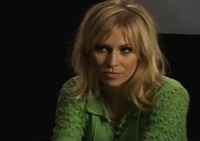
Natasha Bedingfield is among the artists in the film
And all the talent performed for free?
Dillon: Everybody performed for free. They're giving their songs. The publishing companies are giving this incredible deal to use the songs. It's an incredible act of generosity, and it's all based off of the idea that goes back to my moment with U2—that art really can be used for good and tangible and track-able results, not just awareness or promotional reasons. Art can really attach itself to something that's going to shape some real change.
Article continues below
You did all the interviews in the film?
Dillon: Yeah. I've never interviewed anyone before, and I couldn't believe they let me do it. They let me into their homes. They let me into their lives, in their offices. They're so passionate about this issue they're willing to sit down with a freaky artist like me.
Could be that you gave them one of the first opportunities to really talk about it?
Dillon: Maybe that's true. It's a start. I think we're just a piece, just one dot in this huge matrix that needs to be built. There's been a lot of movements that history does not remember because they failed; we only remember the ones that worked. This is a movement of justice and compassion and mercy, but it has to be built like a matrix, with many, many pieces. Because we don't live in a singular world anymore. We're fractioned out and we're viral and we're all over the place—much the way this film was created.
That's how this movement is happening. It's a bunch of passionate people who don't know how to connect, other than doing what they already know how to do, and they'll give toward something because they know that it's right and it's good. And then eventually all those little pieces come together and make something—hopefully a movement.
There are many people who are working on this tirelessly who don't realize that they really are making a movement. But it could fail. It could fall on its face. So it needs people to pick it up and run with it as hard as they can if it's going to sustain energy, because we lose attention just as quickly as we can gain passion for something.
Any particular wow moment while making the film that especially moved you?
Dillon: There were a number of them, but I will tell you one moment where we all lost it. It was in the editing process, a year and a half into this thing. I thought I had seen it all. I'd read all the books. I'd talked to all the people. You just kind of get, not hardened, but to the point where you're just not that surprised by anything anymore.
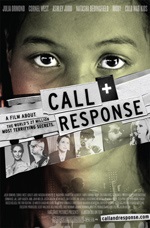
The poster looks into a victim's eyes
We were placing some footage into the film, some undercover footage of these young girls who are being solicited for sex. They're probably six or eight years old. I had seen this footage before, but always with their faces blurred—as it is in the film—to protect their identity. But in this particular footage, their faces weren't blurred. That's what made all of us lose it, because there's something about the eyes that tells a story of the soul.
Article continues below
When you look into a victim's eyes, it's almost as if they've told you their whole story, if you pay attention. So when we looked into the eyes of these girls that are trapped in these brothels and being solicited for sex, it reminded us of what we were doing. And we were just absolutely devastated. Again.
You can get so wrapped up in the sexiness and the coolness of justice that you forget who it is that you're fighting for. Because, let's be honest, there's self-interests in everything, even in worship. And there's certainly self-interests in the fight for justice. But every so often we're brought back to those moments where you have look into the eyes of the person you're helping and realize, I'm nothing.
So, in the end, what's your hope for Call + Response?
Dillon: Just the obvious pieces. That the film is built to become an activist piece. We're giving away all of the proceeds and all of the attention. So we're building a forum online where people can "Be the Response," where we're getting people connected to groups and giving them an opportunity to find their own response.
For more info, including theater listings and how to get involved in the fight against human trafficking, go to callandresponse.com.
We must always be people of the Word, but we’ll have to reimagine deep engagement with Scripture.
Brad East
Trying to Start Something
1 of 5
Justin DillonAshley Judd is quoted in the filmChild sex slaves in Southeast AsiaNatasha Bedingfield is among the artists in the filmThe poster looks into a victim's eyes













 While we pray for peace, we need moral clarity about this war.
 A Christian reconciliation group in Israel and Palestine warned that war would come. Now the war threatens their relevance.العربيةFrançais
 We must always be people of the Word, but we’ll have to reimagine deep engagement with Scripture.