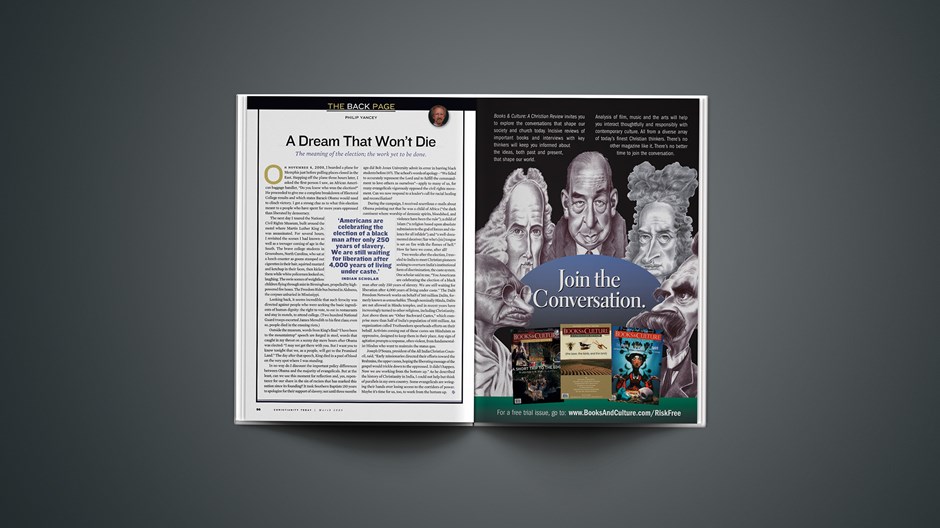
On November 4, 2008, I boarded a plane for Memphis just before polling places closed in the East. Stepping off the plane three hours later, I asked the first person I saw, an African American baggage handler, "Do you know who won the election?" He proceeded to give me a complete breakdown of Electoral College results and which states Barack Obama would need to clinch victory. I got a strong clue as to what this election meant to a people who have spent far more years oppressed than liberated by democracy.
The next day I toured the National Civil Rights Museum, built around the motel where Martin Luther King Jr. was assassinated. For several hours, I revisited the scenes I had known so well as a teenager coming of age in the South. The brave college students in Greensboro, North Carolina, who sat at a lunch counter as goons stamped out cigarettes in their hair, squirted mustard and ketchup in their faces, then kicked them while white policemen looked on, laughing. The eerie scenes of weightless children flying through mist in Birmingham, propelled by high-powered fire hoses. The Freedom Ride bus burned in Alabama, the corpses unburied in Mississippi.
Looking back, it seems incredible that such ferocity was directed against people who were seeking the basic ingredients of human dignity: the right to vote, to eat in restaurants and stay in motels, to attend college. (Two hundred National Guard troops escorted James Meredith to his first class; even so, people died in the ensuing riots.)
Outside the museum, words from King's final "I have been to the mountaintop" speech are forged in steel, words that caught in my throat on a sunny day mere hours after Obama was elected: "I may not get there with you. But I want you to know tonight that we, as a people, will get to the Promised Land." The day after that speech, King died in a pool of blood on the very spot where I was standing.
In no way do I discount the important policy differences between Obama and the majority of evangelicals. But at the least, can we use this moment for reflection and, yes, repentance for our share in the sin of racism that has marked this nation since its founding? It took Southern Baptists 150 years to apologize for their support of slavery; not until three months ago did Bob Jones University admit its error in barring black students before 1971. The school's words of apology—"We failed to accurately represent the Lord and to fulfill the commandment to love others as ourselves"—apply to many of us, for many evangelicals vigorously opposed the civil rights movement. Can we now respond to a leader's call for racial healing and reconciliation?
During the campaign, I received scurrilous e-mails about Obama pointing out that he was a child of Africa ("the dark continent where worship of demonic spirits, bloodshed, and violence have been the rule"); a child of Islam ("a religion based upon absolute submission to the god of forces and violence for all infidels"); and "a well-documented deceiver/liar who's [sic] tongue is set on fire with the flames of hell." How far have we come, after all?
Two weeks after the election, I traveled to India to meet Christian pioneers seeking to overturn India's institutional form of discrimination, the caste system. One scholar said to me, "You Americans are celebrating the election of a black man after only 250 years of slavery. We are still waiting for liberation after 4,000 years of living under caste." The Dalit Freedom Network works on behalf of 160 million Dalits, formerly known as untouchables. Though nominally Hindu, Dalits are not allowed in Hindu temples, and in recent years have increasingly turned to other religions, including Christianity. Just above them are "Other Backward Castes," which comprise more than half of India's population of 600 million. An organization called Truthseekers spearheads efforts on their behalf. Activists coming out of these castes see Hinduism as oppressive, designed to keep them in their place. Any sign of agitation prompts a response, often violent, from fundamentalist Hindus who want to maintain the status quo.
Joseph D'Souza, president of the All India Christian Council, said, "Early missionaries directed their efforts toward the Brahmins, the upper castes, hoping the liberating message of the gospel would trickle down to the oppressed. It didn't happen. Now we are working from the bottom up." As he described the history of Christianity in India, I could not help but think of parallels in my own country. Some evangelicals are wringing their hands over losing access to the corridors of power. Maybe it's time for us, too, to work from the bottom up.
Philip Yancey is editor at large of Christianity Today and cochair of the editorial board for Books and Culture. Yancey's most recent book is What Good Is God?: In Search of a Faith That Matters. His other books include Prayer (2006), Rumors of Another World (2003), Reaching for the Invisible God (2000), The Bible Jesus Read (1999), What's So Amazing About Grace? (1998), The Jesus I Never Knew (1995), Where is God When It Hurts (1990), and many others. His Christianity Today column ran from 1985 to 2009.















 While we pray for peace, we need moral clarity about this war.
 As my doubts about his teachings grew, so did a secret fascination with Jesus.
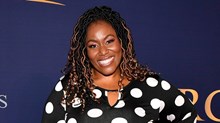 The Grammy-winning artist was found dead at her home in Nashville at age 47.






