What would you do if you found out that your loyal (or so you thought) spouse was having an affair? This is not a new question in cinema. From Dial M for Murder to Match Point and throughout the history of movies, infidelity has been a constant source of melodrama. The Other Man continues in this tradition with a trio of solid actors and an appealing European motif, but ultimately it tries a bit too hard to put a new spin on a tried-and-true genre.
From the trailer and promotional materials, The Other Man appears to be a fairly standard love triangle thriller: Man finds out his wife is having a secret affair, goes looking for the other man, plans revenge, etc. And for the first two-thirds of the film, this is pretty much what The Other Man is. But in its third act, the film takes a completely unexpected turn that causes the viewer to rethink everything they've seen. It's a dramatic ending, to be sure, but also a little cheap. It's a twist ending that feels frustrating and baffling and, unless you see the film a second time, completely out of place.
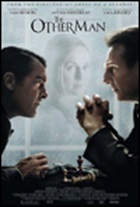
This is what I can tell you about the plot, which is adapted from a short story by Bernhard Schlink (The Reader): Peter (Liam Neeson) and Lisa (Laura Linney) are a wealthy married couple jetsetting around Europe where Peter is a business executive and Lisa is a celebrated shoe designer. They have an adult daughter named Abigail (Romola Garai) who is dating a working class man in whom Peter disapproves. After a few scenes in which Lisa talks to Peter about whether he would ever consider an affair with another woman, Lisa disappears. After she leaves, Peter looks in her files and computer and uncovers evidence of an ongoing affair she had had with someone named "Ralph" (Antonio Banderas). Enraged, Peter travels to Italy where he locates Ralph, forges a strange friendship with him (in which the two men play a lot of chess), and thinks about killing him. All along, Ralph has no idea who Peter really is (the husband of his lover), until the moment when Peter reveals his identity and the shocking truth about his wife that then turns the movie on its head.
Until the big twist, the narrative is forcibly ambiguous and painfully disjointed. On a second viewing, it all makes sense. But without the foreknowledge of what is really happening, the first two-thirds of the film is just confusing.
Part of the problem is the film's bizarre, overly artsy editing. We are rushed back and forth in time, from present to past to future and in and out of various points of view. A chess scene between Neeson and Banderas, for example, is interrupted by distracting memory flashes and scenes from we-aren't-quite-sure-where. It's extremely discombobulating, and, again, only makes sense on a second viewing.
But the biggest problem is the film's direction. British director Richard Eyre offered a truly compelling drama with 2006's Notes on a Scandal, a straightforward drama (albeit with a slightly unorthodox subject matter) aided by superb performances by great actresses (Cate Blanchett and Judi Dench). Though The Other Man has a cast of great actors, they are sadly squandered in a convoluted story that feigns elegance but comes across as pretentious Euro-trash. A less-is-more direction would have aided a film like this, allowing the actors to drive the story rather than a gimmicky plot contrivance. As it is, however, The Other Man is a cinematic indulgence with an annoying and unwelcome sense of "fooled you!" cleverness. In the pantheon of twist-ending movies, The Other Man ranks closer to The Number 23 than it does to The Sixth Sense. I.e., it's not very good).
Plot inefficiencies aside, the film is also frustrating in its utter moral ambivalence with regard to marital infidelity. Linney's character is married to Neeson's character, and by all appearances she truly loves him. But she also wonders what it would be like to be with another man. And so when she meets a cosmopolitan mystery man in Milan (Banderas), she has no qualms about letting herself be romanced into a highbrow affair. She's just curious.
"It's a choice," she tells her husband over dinner one night, when he inquires about her thoughts on infidelity. "You meet someone, you fall in love, you have the opportunity. You make a choice."
Yes, it's a choice. But in this story and film, the choice has no apparent consequences. The infidelity in this film isn't frowned upon at all, but rather elevated to the level of a sort of "inalienable right" of existence. Should we all have freedom to have a secret affair at least once in life? Of course! Or so seems to be the message of the film.
The film's paltry moral compass and its haphazard cinematic execution are at least partially tempered by luxurious scenery (Italy's Lake Como—could there be a more idyllic filming location?) and a short running time (a brisk 85 minutes). And though I can't give away why or how, The Other Man does manage to render emotional complexity and ask compelling questions about existence, love and family, mostly in its final fifteen minutes.
Article continues below
But that is not enough to salvage a film that is mostly just a huge, eyebrow-furrowing disappointment.
Talk About It
Discussion starters
Why do you think Lisa decides to have an affair with Ralph? Is it normal for a married person to consider such a thing? How should a married Christian handle such thoughts, whether fleeting or powerful?
Which of the main characters in the film is the most sympathetic?
How does the twist ending change how you feel about the main characters? Does the knowledge we have of Lisa at the end of the film make us feel more sympathy for her actions?
The Family Corner
For parents to consider
The Other Man is rated R for language, sexuality and nudity. It includes a handful of scenes of sexuality and nudity (mostly quick glimpses of topless female still photographs), as well as some language. It's pretty adult-oriented subject matter, and certainly not one for the kids.













 While we pray for peace, we need moral clarity about this war.
 A Christian reconciliation group in Israel and Palestine warned that war would come. Now the war threatens their relevance.españolالعربيةFrançaisрусскийУкраїнська
 Beyoncé’s right. Whether listening to Cowboy Carter or reading theology, diversity is a good thing.





