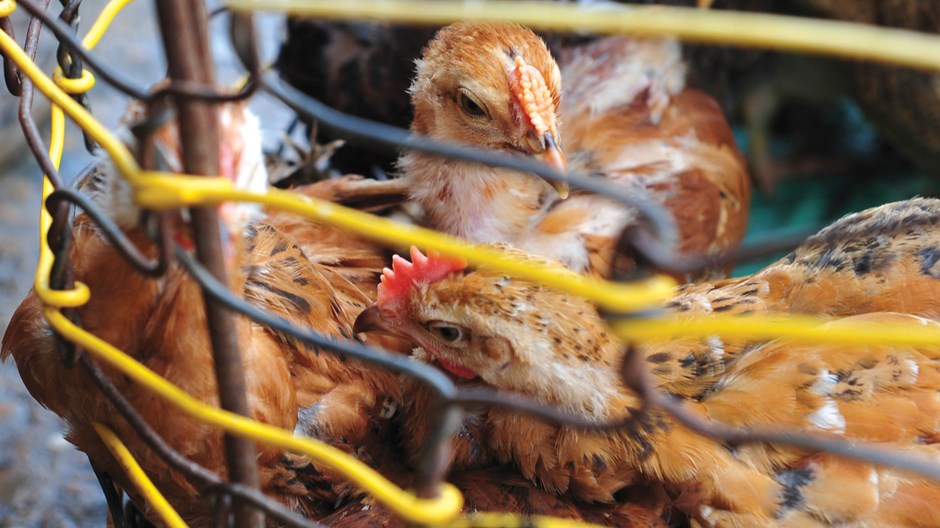
Factory farms, also known as CAFOs (confined animal feeding operations), contain half of the nation's meat, egg, and dairy animal populations, operating on a scale inconceivable to previous generations of farmers. Sanderson Farms, the fourth largest chicken producer in the United States, annually processes 397 million chickens. Circle Four Farms in Utah annually raises more than 1 million hogs for slaughter. CAFOs are characterized by the following conditions:
Confinement: Animals are strictly confined to prevent any unwanted, energy-wasting movement. Chickens are kept in "battery cages" so small (50 square inches) that they cannot turn around or open their wings. Calves raised for veal are kept in "veal crates" that prevent turning around during their 16- to 18-week lives. During pregnancy, hogs are kept in "gestation crates" typically 2 feet wide. Just before birth, they are moved to "farrowing crates" that are equally small.
Use of Chemicals and Drugs: The extreme density of animals on CAFOs requires heavy use of pesticides and antibiotics to prevent disease. Some 13.5 million pounds of antibiotics are used annually in animal feed and water. Artificial growth hormones are also used to force rapid growth and amplify milk production. Poultry grow so large that they are often unable to stand or walk properly.
Unfit Feed: Herbivores such as cattle, chickens, and turkey are often fed same-species meat byproducts, including ground-up chicken; feathers; chicken, swine, and cattle excrement; and cattle blood and fat. Farms in the Upper Midwest feed dairy cows waste from candy manufacturers, unheated starch, and rejected French fries and potato chips. The recent egg salmonella outbreak was caused by infected feed.
Disease: The above conditions have contributed to outbreaks of diseases such as E. coli, mad cow disease, swine flu, salmonella, and bird flu. Animals often suffer from bloat, acidosis, abscessed livers, ascites (congestive heart failure), pneumonia, and feedlot polio. The use of antibiotics to treat these diseases is contributing to antibiotic-resistant "superbugs" that are transmittable to humans.—Leslie Leyland Fields
'Femivores' and Food Ethics | The trend toward locally grown, naturally raised food is giving some women more fulfilling lives than the workplace ever did. (March 16, 2010)
Hunger Isn't History | The world produces more food than ever. So why do nearly a billion people still not have enough to eat? (November 7, 2008)
Food Fights | State governments increasingly regulate church potlucks. (March 15, 2005)

















 While we pray for peace, we need moral clarity about this war.
 As my doubts about his teachings grew, so did a secret fascination with Jesus.
 After lobbying from fellow Southern Baptists and Christians affected by the war, the House speaker moves a package forward.






