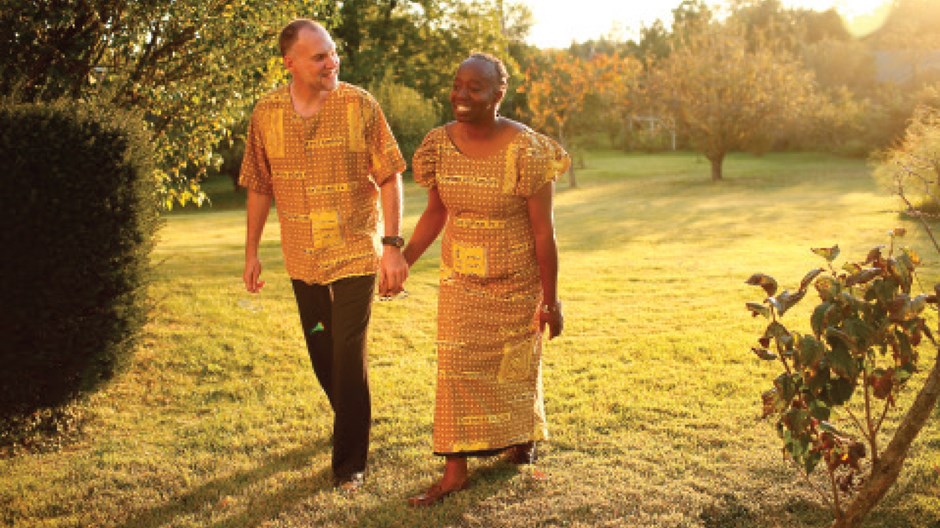
Craig Keener has the brain of a scholar and the hands of an activist. The New Testament professor at Asbury Theological Seminary has authored 15 books, 70 journal articles, and more than 100 articles for religious and general interest publications. He and his wife, Médine Moussounga Keener, are deeply involved in ethnic reconciliation ministry.
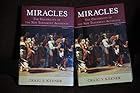
In his New Testament commentaries, Keener has investigated biblical miracles. But his newest volume—Miracles: The Credibility of the New Testament Accounts (Baker Academic)—focuses on contemporary miracle accounts, citing hundreds of recent occurrences.
Keener is ordained in a historic African American church and served as an associate minister before moving to Asbury's campus in Wilmore, Kentucky. Christianity Today senior writer Tim Stafford interviewed Keener this fall.
Miracles are an unusual subject for a New Testament scholar. What led you to it?
I was going to write a footnote in my commentary on Acts, and was dealing with questions of historical reliability. Many scholars dismiss miracle stories as not historically plausible, arguing that they arose as legendary accretions.
I was familiar with [contemporary] reports of miracles taking place. There must be thousands of such reports. It was inconceivable to me that people would say eyewitnesses can't claim to have seen such things.
What do you want to accomplish with this book?
Primarily, to challenge scholars who dismiss miracles in the Gospels as legends and not historically plausible. Eyewitnesses say these kinds of things all the time. I also want to challenge the bias that says these things can't be supernatural. I believe God does miracles, and I don't see why we scholars are not allowed to talk about it.
You're trying to break open the naturalistic tradition of writing history that scholars have followed for centuries.
I understand the historical paradigms within which we work, and I'm able to work within those by bracketing out certain questions. But I wonder who made up the rule that we have to bracket out those questions, and why we are obligated to follow such rules. The way the discipline of historiography has been defined, such questions get punted to philosophy or theology.
How is the world today different from philosopher David Hume's world, or theologian Rudolf Bultmann's, who said that a modern man who turns on an electric light can't possibly believe in a miracle?
In Hume's day, nobody he knew had experienced a miracle. But there were miracle accounts, and he addresses them in a very circular way.
'It was Hume who first spoke of miracles as violations of nature. But Christians don't believe that the Legislator is subject to any of the laws of nature.'—Craig Keener
Blaise Pascal's niece was instantly and publicly healed of a running eye sore. Hume cites the documentation for that, which most people would say was pretty good, then dismisses it by saying we know that miracles don't happen. It's a circular argument: We know that miracles don't happen because it's the common experience of humans that miracles don't happen.
It was Hume who first spoke of miracles as violations of nature. But Christians don't believe that the Legislator is subject to any of the laws of nature.
In Bultmann's day, there also weren't a lot of miracle claims. Today, we know so much more. Scholars need to go back and look again. A Pew poll I mention in my book surveyed Pentecostal and charismatic Christians in 10 countries who claim to have experienced miracles. If you total those up, we are talking about 200 million people. To dismiss miracles because they run against uniform human experience is an ethnocentric argument.
Do you think academia is genuinely open to a paradigm shift?
The academy comes to paradigm shifts with great difficulty. People are more open to it today than they would have been in Bultmann's day. In most of the places I've presented this, the response has been very positive. Still, I don't expect skeptics to throw down their skepticism.
What does New Testament scholarship gain from taking miracle stories seriously as historical phenomena?
We have been embarrassed by the miracle stories, and have tended to allegorize them more than other narratives. Accounts from the Temple of Asclepius, the Greek god of healing—nobody allegorizes those.
I agree that the Gospel writers are teaching us broader principles with broader applications. But in much of the majority world, when people read these narratives of healing, they see a God who cares about their suffering, who meets them at their point of need. I think we in the West can learn from the way they hear.
Does your personal background play a role in your views on miracles?
Certainly. I was an atheist before I was a Christian, and for that reason, I have some sympathy for skeptical perspectives.
Article continues below
When I was working on my historical Jesus book and trying to stay within these historical paradigms, I wouldn't admit things for which I could not offer evidence. Then my wife would say things to me, and I would reply, "Can you give me evidence for that?" I got into a lot of trouble. That approach doesn't work in the rest of life. If you find someone generally trustworthy, you will trust him or her whether or not he or she can provide evidence for every detail. I was well into this book when, having encountered so much evidence, I stopped trying to be neutral and said, "This is my view."
[As a young man] I had a very dramatic conversion. I had been demanding evidence in the form of an argument. God gave me the evidence of his presence. God's presence was in the room. He wouldn't let me go.
Two days after my conversion, I wasn't sure if I had done it right, so I asked a pastor to pray with me. I was overwhelmed again by the same awesome sense of God. There was no way I could praise him enough unless he gave me the words. It started coming out in another language. I had never heard of speaking in tongues, I didn't know what it was. It just happened to me.
My ordination is in the National Baptist Convention USA, so technically I'm a black Baptist. My wife does not pray in tongues. But her mainstream evangelical church in the Congo testifies to people being raised from the dead. In that sense, the Congolese church is far more charismatic than almost any charismatic experience I know of here.
How has your wife's family influenced you?
Médine comes from Congo-Brazzaville. She was introducing me to people in the Eglise Evangelique du Congo, her denomination. As she introduced me to people, I asked them for their stories.
It was remarkable. I got seven eyewitness accounts of people being raised from the dead. One was my sister-in-law, Therese. I asked my mother-in-law to tell me about it, with my wife translating from one of the local languages. My mother-in-law described how Therese was bitten by a snake. By the time my mother-in-law got to her, she wasn't breathing. No medical help was available. She strapped the child to her back and ran to a nearby village, where a friend who was an evangelist prayed for Therese. She started breathing again.
I asked my mother-in-law how long Therese had stopped breathing. She thought about how long it takes to get up this hill and down this hill from one village to another. She said about three hours.
Article continues below
I was talking about some of this at a Society of Biblical Literature meeting. We were talking about the Gospel of Matthew, and I said, "Maybe we should listen to some of the majority-world readings of these passages." Sometimes they have experiences that are more analogous to the experiences in the text.
When I finished, a scholar from Nigeria proceeded to give two first-hand accounts of his own—one, a nature miracle, and the other concerning his stillborn son. The midwife pronounced the child dead. They continued to pray, and after a half-hour, the child started breathing. He just finished his master's degree. (And by the way, Therese finished a master's degree.) There was no brain damage. I've heard a large number of such accounts.
In your book, you use the phrase "supernatural causation," but you seem uneasy with it. Is anything not supernaturally caused? What makes a miracle different in terms of God's involvement in everything else he does, such as sunrises?
I felt I had to use the category of supernatural because, to address the questions as they exist in our culture, I needed to articulate it in terms that were at hand.
But the category of supernatural really isn't a biblical perspective. It's using Hume's paradigm. If we believe that God is the Creator and is sovereign, then he is at work in the whole world around us.
I would make a theological distinction between gifts of healings and the signs and wonders in the Gospels and Acts. Both show God's compassion. If we prayed for healing (as we are told to in James 5), and somebody experienced it through medical treatment, that's a gift from God. But that's not going to convince anybody on the same level as will somebody being raised from the dead.
One is a gift from God and the other is a sign. Is that the right terminology?
In both cases, God is conferring a blessing, but only one is evidentially persuasive, drawing people's attention to the gospel.
A friend of mine talks about his brother, who had burns all over his body. His father had been praying. My friend looked up to see that his brother's skin was completely pink. God chose to do it immediately and visibly. But he didn't have to do it that way for it to be a blessing. When it's semeion—a sign—it gets people's attention.
Article continues below
One of your main points is that non-Western cultures may provide a better paradigm for reading the Gospels than the academic Western paradigm. Can you say more?
Most cultures believe and report experiences that do not easily fit our Enlightenment paradigm. Hume may have been aware of that, because he makes a point of dismissing reports from "ignorant, barbarous" peoples. Hume's ethnocentrism is well-documented. It's not an argument that would fly too well in the 21st century.
Are you suggesting that even in our own era, there is an ethnocentrism in the way scholars read the New Testament?
Yes, though I think there is more openness today. If somebody today said what Bultmann said, that nobody in the modern world believes in miracles, then that would be flat-out having your head in the sand.
Should the church concern itself with verifying miraculous healings?
It's valuable for a couple of reasons: first, for limiting fraudulent claims, and second, for providing supporting evidence.
If miracles are meant to get people's attention for the kingdom, we can continue their attention-getting purposes by getting verification. But it's much easier said than done.
What did you experience in terms of trying to verify miracles?
Most people don't collect documentation, and don't know how to get medical documentation.
Documenting that you have a certain problem is one thing. Documenting that you no longer have it is another. Even if you do that, how can you prove that the change was due to prayer?
I have a pastoral concern as well: How far do you press people? I felt very awkward when I was interviewing people and would press them with hard questions. Sometimes they felt that I was questioning their integrity or even their experience.
Some people have said that since we know that everything must have a natural explanation, we know there will be a natural explanation someday; there, we have solved the problem, it's not a miracle. At Lourdes, there are many cases with plenty of evidence, but not enough to meet very strict standards.
You mentioned that verifications discourage fraud. How concerned should we be with fraud?
Some people exaggerate. I didn't catch people in that, but other people have. Sometimes there is just no way of knowing, which is one reason I tried to depend on people I know.
Not everything that people claim to be a miracle is one. Certainly before we broadcast people's testimonies, we should try to discern reality. My guess is that people are likely to make fraudulent claims to get attention.
Article continues below
I want to make sure everybody knows that miracles occur and that I believe in them. I'm not claiming that they need to happen every time we pray. My wife and I have been through eight miscarriages. People die. The apostles are all dead. There is not an expectation of people always being healed.
How do the healing and miracle testimonies from the majority world influence the Western church?
We have an explosion of miracles taking place, especially in conjunction with the spread of the gospel. Some things are outside the norm for most Westerners, whatever kind of church we are associated with. It's probably good for us, to shake us up. Extraordinary things are taking place around the world.
















 While we pray for peace, we need moral clarity about this war.
 We’ve got little information on Jesus’ appearance and personality. But that’s the way God designed it.españolFrançais
 As Haiti is uprooted by violence, church leaders treat gunshot wounds, give up homes for strangers, and rescue dignitaries.






