Bible translations that avoid the phrase "Son of God" are bearing dramatic fruit among Muslims. But that translation has some missionaries and scholars dismayed.
Last year, representatives from several prominent mission agencies, both national and expatriate, met to compare notes about the progress of their respective ministries in one Muslim-majority country. (The country's name is withheld for security reasons.) The representatives rejoiced that more than 1,000 "fellowships," as they call them, have been established for people from Muslim backgrounds. In fact, many of the fellowships had already planted new fellowships, and those fellowships had planted still more. Many thousands of Muslims in this nation alone, then, had found faith in Jesus.
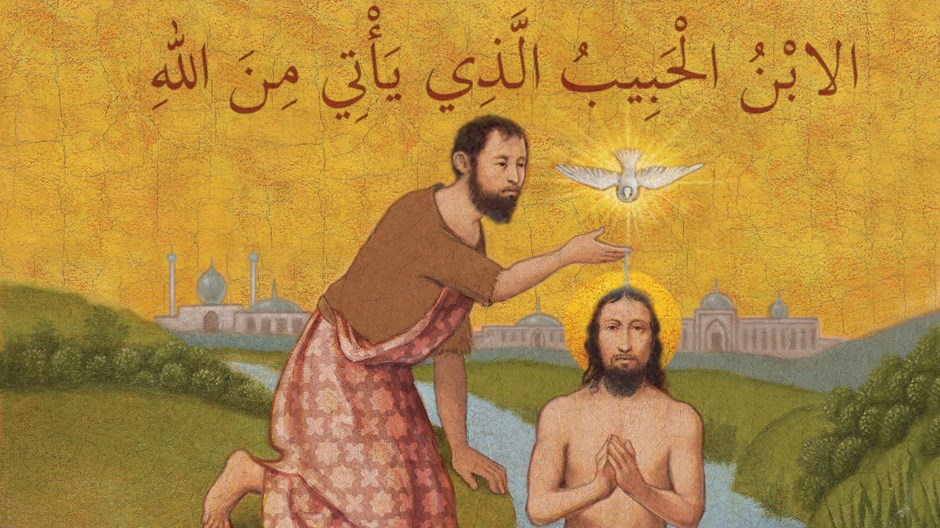
Several of these fellowships can be traced back to small networks of Muslims who had encountered Christ and in turn began sharing with family and friends what they had discovered. In one case, a middle-aged working mother had inductively studied a new translation of the Bible for a few years. Among other language choices, the translation she used did not refer to Jesus as the "Son of God," due to confused and angry reactions from Muslims who mistakenly believe this phrase means that the Father engaged in sexual relations with Mary. To avoid this misunderstanding, the new translation called Jesus "the Beloved Son who comes (or originates) from God."
The woman, who eventually professed Jesus as Lord and Savior, began inviting friends and family to read the Bible too. At first, about 10 people met with her. This was cause enough for celebration, since Muslims in her country rarely study any religious books other than the Qur'an and the Hadith (collections of Muhammad's sayings and deeds). Three months later, another group formed nearby to discuss one New Testament chapter per week, and an elderly member of the family accepted the Good News of Jesus. Within two years, seven more reading groups had sprung up. Today, no one knows exactly how many such groups have formed. But new believers in Jesus have spread the message to nearby towns, and several hundred professions of faith can be attributed to this network alone, according to a group of long-term field workers in the country.
These and many other Muslims live in places where Bible translations have been available in their languages for decades, even for more than a century. So why the sudden surge of interest in Scripture? Some translators attribute the response to the new Bible versions that use religious vocabulary familiar to Muslims. And that's precisely the problem, according to other translators and missionaries who work among Muslims.
'Missionaries can live in a Muslim culture for decades, blaming Muslims for being "resistant" to the gospel, when the problem actually lies with linguistic and cultural stumbling blocks.'—Rick Brown, Bible scholar and missiologist
They charge their colleagues with compromise that undermines belief in Jesus Christ as the pre-existent, only begotten Son of God. Both sides eagerly long to take the Good News to the nations and make it discernable to Muslims in their heart languages. Both respect Muslims; neither wants to alter Jesus' message. Yet a dispute over the most faithful and effective way to render the common biblical phrase "Son of God" is dividing missionary from missionary, scholar from scholar, in a time of evident mistrust between Western Christians and Muslims.It also underscores how few Christians in the West themselves understand this common biblical title for Jesus.
Compromise or Comprehension
Bible translation and contextualization have long divided Christians working to fulfill the Great Commission. When missionary pioneer William Carey translated the Bible into Bengali in 1809, he used the Hindu word for the supreme being, Ishwar, to refer to God. Critics charged him with making a fatal compromise in the name of comprehension. Today, "Son of God" is hardly the only point of contention among missionaries to Muslims. For example, they also tangle over whether Bible translations should use Allah to refer to God. Both sides make a compelling case. Muslims understand Allah in terms of simple monotheism rather than the dynamic Trinitarian theology that Christians profess. Yet Allah, the word for God that Muslims know from the Qur'an, actually predates Islam. Some translators have recovered it so that Muslims reading Scripture for the first time won't immediately reject the Bible as foreign to their culture.
Muslims so commonly misunderstand the phrase "Son of God" that many evangelists and missionaries refrain from using it. Bible translators, however, cannot avoid it. They must make a decision about how to render the phrase in a way that faithfully reflects the original Greek or Hebrew text and also makes sense to readers. And this phrase is anything but clear to Muslim readers. The Qur'an explicitly states that God could not have a son. In Arabic, the word ibn ("son of") carries biological connotations. Muslims reject the possibility that God could have produced a son through sexual relations with Mary. Christians confess that Jesus was conceived by the Holy Spirit and born of the Virgin Mary. But this distinction is lost on many Muslims who lack the theological context for understanding nuanced Christian teaching on the Trinity.
Article continues below
The problem, however, far surpasses a theological argument between Muslims and Christians. In fact, the Qur'an (At-Tawba 9:30) says God curses anyone who would utter the ridiculous blasphemy that Jesus could be ibnullâh ("a son of God"). Not only do Muslims disagree with Christians about the identity and nature of Jesus, they also incur a curse for even mentioning the phrase "Son of God."
Rick Brown, a Bible scholar and missiologist, has been involved in outreach in Africa and Asia since 1977 and regularly consults on language development and linguistics, including Bible translations. He says pious Muslims would sooner leave the presence of someone who utters the phrase than risk judgment in hell for hearing it. Even those who lack such devout scruples think hearing or reading "Son of God" will bring bad luck. Many avoid associating with Westerners altogether, regarding them as polytheists who harbor strange views about God's family.
"Missionaries can live in a Muslim culture for decades, blaming Muslims for being 'resistant' to the gospel, when the problem actually lies with linguistic and cultural stumbling blocks," Brown told Christianity Today. "Once these are removed, many Muslims are quite open and interested in knowing more about Jesus.
Brown says Muslims have less trouble believing that Jesus is divine and that he was crucified and resurrected than they do with hearing or saying "Son of God." So what can translators do to overcome this particular stumbling block? One option is to stick with "Son of God" and deal directly with the objection—if Muslims overcome their fears to begin with. Alternatively, translators may find a word for son in the native language that carries metaphorical connotations. (Translations that opt for a phrase other than the literal "Son of God" commonly include it in the footnotes to preserve connection to the biblical authors' word choice.) Or, they can nuance it with a more descriptive phrase, such as "spiritual Son of God" or "beloved Son who comes from God." These phrases have been shown to clear up the biological misconceptions.
Article continues below
'The Beloved Son who comes from God'
Brown, along with other translators and missionaries, contends that the alternate phrasing makes a tremendous difference in Muslims' receptivity to the Bible. The Muslims introduced at the beginning of this article have been able to read the entire Bible in their national language since the 18th century. That initial translation used language familiar to Muslims, identifying Jesus Christ as Isa al-Masih ("Jesus the Messiah") and God as Allah. Then, in the mid-20th century, a new translation adopted a style that used Greek- and European-language-based terms. Another translation in the 1970s continued this trend.
In the early 1990s, concerned Christians, national ministries, and mission agencies gathered to consider a new Bible translation that would be more meaningful for Muslim readers. Working in conjunction with the nation's Bible society, they reverted to an older translation as the basis for the new version. They updated the language and strategically changed particularly challenging phrases. After testing several options for rendering "Son of God," they opted for "the Beloved Son who comes (or originates) from God."
Some translators regarded this option as fairly conservative, and championed versions they believed would be even more comprehensible to Muslims. They noted that scriptural paraphrases are often used among Muslims to give them broader access to God's Word.
"My father never read the Bible until he got a copy of The Living Bible," says Richard Grady, a missiologist for OC International. "We are finding the same with some of the paraphrases being done for Muslim audiences."
Muslims approach the Bible with different questions from the ones Westerners often ask, Brown says. They want to know early on how Christ can be God incarnate.
"Few deny the possibility of an incarnation, because they believe that God can do anything, but they want to see the evidence that it might actually have happened," Brown says. "The biblical evidence for the Incarnation does not at all prevent Muslims from reading it or discredit the Bible in their eyes, but the taboo phrase ['Son of God'] does both."
Violent Reaction
Who can argue with results, especially church growth in the world's hardest soils? If Muslims can now read the Bible and understand Jesus as he really is, the Savior from sin, then what's the problem?
Article continues below
A lot, actually, if the contextualized translations misrepresent Jesus, as some missionaries and translators allege.
Georges Houssney is the founder-director of Horizons International, a missionary agency involved in preaching, teaching, and discipling Muslims. The Colorado-based agency offers a training program, "Engaging Islam," that teaches missionaries what Muslims believe so they can minister to them effectively. He also edited the Arabic Bible translation Kitab al-Hayat ("Book of Life"), published by Biblica (formerly the International Bible Society, the organization behind the NIV).
Houssney grew up in the predominantly Muslim city of Tripoli, Lebanon, and has worked in the Arabic, Farsi, Turkish, Kurdish, and Kabyl languages. Decades ago, Kenneth Taylor, translator of The Living Bible and founder of Living Bibles International, commissioned Beirut-based Middle East Publications (MEP) to translate the Bible into several languages spoken by Muslims. MEP founder John Ferwerda tapped Houssney to lead the translation project and encouraged him to study in Kenya with missions legends Charles Kraft and Paul Hiebert. During this time, Kraft was writing Christianity in Culture, which argued for dynamic equivalence in Bible translation. Ferwerda asked Houssney to contextualize his Arabic translation by using terms from the Qur'an. Houssney did not feel comfortable with this move, but he tested the strategy with a 32-page booklet called "The Greatest Event in Palestine," published in 1974. The booklet, which combined the birth narratives of Jesus from the Gospels of Matthew and Luke, referred to Jesus as Isa and rendered "Son of God" as habib Allah ("beloved of God").
"The reaction of church leaders was violent," Houssney says. "We received threats from pastors and Christian leaders. And it was opposed even from the pulpits."
Nevertheless, Houssney tried to defend the booklet. He visited dozens of pastors throughout the Middle East and asked why they objected so strongly. They offered several reasons. They saw the booklet's terminology as conceding too much to Islam. It threatened to confuse both Muslims and Christians, especially new believers who struggled to adjust to a more literal translation used in churches. They believed it would embolden Muslim apologists who teach that the Bible has been tainted due to translations that differ in significant ways. Others pastors said Muslim apologists would notice that translators had borrowed phrases from the Qur'an and would claim that this proved the Qur'an's superiority to the Bible. Or that Muslims would regard the translation as a nefarious plot to dupe Muslims into reading the Bible. Finally, pastors noted that a translator who adopts words from the Qur'an risks leading readers to import their prior understandings to the Bible. In other words, if the Bible calls Jesus Isa, Muslims may associate him with the Qur'an's account, which denies that he died on the cross, for example. Houssney eventually released a more literal translation.
Article continues below
In short, the challenge of accurately and effectively translating the Bible for Muslims is not new. The debate has continued in recent years in the pages of prominent missiology journals. David Abernathy, who frequently consults on translation workshops in Nigeria and has taught biblical exegesis in Kenya, took issue with Brown and his colleagues' approach in a 2010 article for St. Francis Magazine, published by Arab Vision and Interserve. He objected to various alternatives for "Son of God," such as Christ or Word, used in translations for Muslim readers.
"As much as Christian theologians have used the term and concept of 'Word' throughout the history of theology, they did so with the understanding that this eternal Word was also a person who was [the] eternal Son," Abernathy wrote. "It is the eternal sonship that makes sense of calling him the eternal Word, but when that sonship is removed, the Trinity as we know it dramatically changes. There is no eternal Father-Son relationship, only an eternal God-Word relationship, which is conceptually very foreign to the doctrine of the Trinity as it has always been understood. The historic Christian understanding of the Trinity essentially collapses."
Another response published in St. Francis Magazine came from J. Scott Horrell, professor of theological studies at Dallas Theological Seminary and adjunct professor at Jordan Evangelical Theological Seminary, in Amman. He worried that when translators substitute other words or phrases for "Son of God," readers miss out on the theological meaning intended by biblical authors, particularly as they draw connections between the Testaments. He argued that when Jesus used Father-Son language, he reached "the deepest levels of divine disclosure."
Article continues below
"Both terms 'Father' and 'Son' for God are repugnant to the Muslim," Horrell wrote. "Yet in the Bible and Christian faith these words take on more meaning than mere metaphors or titles, rather they become the divine names that most disclose the divine relations. Without the Son there is no Father, and without the Father there is no Son …. [I]t must be asked, if 'natural' terms replace 'Son,' 'Son of God,' and even 'Father' in Muslim-sensitive translations, then what other language allows us access into this intimate reality?"
Similar, but no Synonym
None of these concerns surprises Brown or his colleagues. They have heard them all—and more—many times before. They've answered them, too, but not to their critics' satisfaction. Brown speculates whether factors other than theology, exegesis, and missiology could explain the impasse.
"The current controversy is fed more by general attitudes to the Muslim world among the Western church stemming from the geopolitical situation, e.g., fear, rejection, and aggression," Brown told CT. "As Warren Larson says, there is a battle in the U.S. church whether to respond to the Muslim world with fear or faith, and fear is winning."
If there is indeed a battle between fear and faith, it isn't happening in the United States alone. Brown observes that neither cross-cultural missionaries nor minority Christian communities living in Muslim-majority nations have made deep evangelistic inroads. He faults them for criticizing other missionaries who attempted to publish Bible versions that used language familiar to Muslims. As in the story recounted by Houssney, Christians who have grown up surrounded by Muslims grow attached to a particular Bible translation and are skeptical of anyone who suggests that version might be the reason they don't see their friends and neighbors come to believe in Jesus.
Writing in the fall 2005 issue of the International Journal of Frontier Missions (IJFM), Brown argued that Jesus and the apostles used "Son of God" as a synonym for "the Christ." He appealed to Peter's confession in Matthew 16:16: "You are the Christ, the Son of the living God" (ESV). Affirming Peter's famous profession of faith at Caesarea Philippi, Jesus then told the disciples not to tell anyone he was the Christ.
Article continues below
"From a linguistic point of view," Brown wrote, "Jesus must have intended the term 'the Christ' to include the full meaning of 'the Christ the Son of the Living God.' This establishes that Jesus and Matthew saw these as synonyms."
If Brown is right, then a translation that lacks the literal equivalent of "Son of God" would not lose meaning. Brown wrote in the winter 2005 issue of IJFM that "the terms 'the Son' and 'the Son of God' can be translated by terms like 'the Christ' and 'the Christ of God.' " Or, as he suggested to me, a translation of the literal "Son of God" might say, "the One who is like a Son to the Living God," or "the Christ, the Beloved One of the Living God." The literal translation could still appear in the notes, he added.
Brown pointed out a similar synonym dynamic at work in Luke 1:32-33, where the phrase "Son of the Most High" has clear messianic implications. Later, in Luke 4:41, demons shout out to Jesus, "You are the Son of God!" Luke says Jesus rebuked the demons, barring them from testifying to him as the Christ. Here too, according to Brown, "Son of God" and Christ are synonyms.
Using synonyms in translation gets results, Brown argued. He cited the example of one closed country where the synonym approach allowed dramatized Scripture tapes to earn government approval for dissemination. The cassettes became such a hit that enterprising merchants copied the tapes and sold them in the streets. A movie released in the same country using synonyms in subtitles aired on national television.
The results may be encouraging, but the scholarship is flawed, according to several accomplished academics whose expertise spans both testaments. The scholars, including Darrell Bock (Dallas Theological Seminary), Jack Collins (Covenant Theological Seminary), and Vern Poythress (Westminster Theological Seminary), doubted they could endorse any alternative to "Son of God." They expressed sympathy with missionaries who want to dispel mistaken notions held by Muslims. But they found fault with alternatives, particularly using Christ where "Son of God" originally appeared. If "Son of God" and Christ are strict synonyms, they note, then usage of both terms in Scripture is redundant; Peter did not confess, "You are the Christ, the Christ."
Article continues below
" 'Messiah' is not an adequate substitute for 'Son of God,' " Poythress wrote. "Both have the same referent, namely Jesus the Messiah, the Son of God. But they do not have the same meaning …. The Greek expressions for 'Messiah' and 'the Son of God' do have similar meanings, in that both, in many contexts, indicate something about Jesus' role as kingly ruler under commission from God. Moreover, both expressions evoke what people know or think they know about the great deliverer sent by God. But 'Son of God,' unlike 'Messiah,' indicates an analogy with a human family relationship. And it also has the potential to connote personal intimacy and love."
'Both terms "Father" and "Son" for God are repugnant to the Muslim. Yet they are more than mere metaphors or titles. They are the divine names that most disclose the divine relations.' —J. Scott Horrell, professor of theological studies, Dallas Theological Seminary
Beyond Muslim Misconceptions
While we may lament Muslim misunderstanding of Jesus' identity as the Son of God, it's not clear how many Westerners understand the nuances, either. How many Christians could identify "Son of God" as the preferred Christological title used by Jesus as attested by Matthew in his Gospel? For a title so closely related to Christ, "Son of God" is strangely absent from the Old Testament's messianic texts. Or who could explain how the phrase is used differently in the Gospel of John? Here, the Son's pre-existence is often in view. We also see the intimate relationship enjoyed by the Father and his only Son, who perfectly obeys his Father's will (John 4:34; 5:30; 6:38; 7:28; 8:29). Indeed, "Son of God" is a rich, multilayered title whose meaning defies simple explanation. Certainly it deserves more than the cursory mentions offered in many systematic theology textbooks.
Muslim misunderstanding about "Son of God" poses a significant challenge to missionaries and translators. And the favorable response to Bible versions that avoid the phrase encourages Christians to communicate respectfully in a way that invites Muslims to find faith in Jesus Christ, who is not only a prophet sent by God but fully God and fully man. Must translations accommodate this concern? Or can teaching the true meaning of the literal phrase eventually change perceptions? After all, one can imagine what Greeks, with their anthropomorphic mythology, thought when they first heard about the "Son of God."
Article continues below
Robert Yarbrough, who teaches New Testament at Covenant Theological Seminary in St. Louis, travels every year to Africa, where he teaches ministers. Many of them come from a Muslim background. He doubts these believers would worry too much about finding an alternative for "Son of God." After all, the Qur'an appeared centuries after the Bible. Why tweak our book to accommodate theirs? Muslims already know—or so they think—that God has no son.*
"We are really dealing, at some point, with the whole notion of imago dei and not just a single technical point of Jesus being called 'God's Son,' " Yarbrough says. "This is a key point where the nature of God vis-à-vis creation is just categorically different in the two religions. In one, God is utterly transcendent and unknowable and without peer or parallel of any kind in creation. He is, quite simply, inscrutable; we cannot call him 'Father' and so forth. The God of Abraham and of David and of Jesus is not like this. The 'Son of God' language in the New Testament is the tip of an iceberg."
Maybe that iceberg thaws when Christians respect and love Muslims enough to accommodate their misunderstanding about "Son of God" by finding other ways to translate it. Or maybe this move goes further than the inspired text will allow. Thousands of new believers from a Muslim background may have genuinely encountered Jesus as Lord. And maybe some will need to unlearn some things now that they know him.
* Correction: An earlier version of this article incorrectly summarized a statement from Robert Yarbrough as saying some African "believers" think God has no son. Yarborough was referring to African Muslims. We apologize for the error.

















 While we pray for peace, we need moral clarity about this war.
 As my doubts about his teachings grew, so did a secret fascination with Jesus.
 As Haiti is uprooted by violence, church leaders treat gunshot wounds, give up homes for strangers, and rescue dignitaries.






