Jump directly to the content

Feature

The End of Worship Wars

But we're still learning from one another.

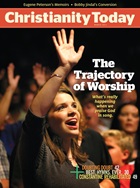
You know something is afoot when in a three-month span you receive five unsolicited manuscripts about worship and music—and all are worth publishing (especially when literally one in a hundred unsolicited manuscripts we receive sees publication). This is what happened last fall, and it didn't take me long to decide to pull together at least four of the manuscripts into a package, (the fifth will be published in a later issue).

The confluence of articles suggests a few things. First, worship music continues to be a topic that engages us both emotionally and intellectually. I'm not convinced we're still fighting "worship wars," but we are still living through a tense truce, if my local congregation is any example. Second, this tense truce continues to prod people into deeper thinking—as evidenced by the pieces in this package. What holds the package together is nothing more than this: arresting thoughts and intriguing ideas about the nature of church music.

As often happens when discussing church music in the pages of Christianity Today, the articles display a bias for traditional music. This is unfortunate, because we at CT happen to also like contemporary worship music. We strove to find an article or conduct an interview that would give more space to exploring the gift of contemporary music, but we came up empty. I'll be frank: When it comes to contemporary Christian music, I have yet to find authors who are able to probe its uniqueness with the same depth and insight as those who relish traditional music. What I usually find is articles that say, "But people like it!" That's well and good and nothing to discount, but it's not enough for a CT article! So admitting my limited exposure to this world, I want to encourage those with a contemporary bias to send us deeper ruminations on the topic.

In addition, we should acknowledge a source that does for worship music what Robert Coote's article has done for hymns. To find out which contemporary worship songs are the most popular in the U.S., check out ccli.com, and click on "View CCLI Top 25 Worship Songs." "Mighty To Save" tops the list and is followed by "How Great is Our God." (CCLI offers licenses to churches to use copyrighted music and videos. Twice a year it compiles a list of the most requested songs.)

In any event, discussions like this are not designed to make the truce tenser, but simply to help us think deeply and faithfully about the music we use in worship.

Next month: Ed Stetzer suggests ways to conduct interfaith dialogue (which more and more evangelicals are engaging in) with love and respect while remaining true to our core convictions; Eric Miller explores our fascination with Amish romance fiction; and one man gives his testimony through the ravages of schizophrenia.


Related Elsewhere:

Check back all this week for articles from March's special issue on worship. Previously posted articles include:

The Hymns That Keep on Going | The 27 worship songs that have made the hymnal cut time and again. (March 7, 2011)
Whatever Happened to Amazing Grace? | Why John Newton's famous hymn failed to win, place, or show. (March 8, 2011)
Pop Goes the Worship | Religion professor T. David Gordon says Muzak has shaped singing in church. (March 9, 2011)
Worship in Black and White | Racial reconciliation happens when we not only sing each other's songs but learn the stories embedded in those songs. (March 10, 2011)


Also, both Christianity Today and Leadership Journal have special online sections on worship.


More from Christianity Today

La complejidad hispana: Todo cambió en el 2012

¿Hacia dónde vamos?—Una palabra para los creyentes hispanos sobre forjar un futuro.
Jesus' Elevator Speech

Jesus' Elevator Speech

Or was it his inaugural address? There's a difference.

The Latest in Movie News, May 20, 2013

Box office news, Benedict Cumberbatch, Cannes, and AFI honors Mel Brooks.
Divine Rehab

Divine Rehab

Whatever your addiction, God's grace is the only hope for a way out.
Get Instant Access
Christianity Today Magazine
Subscribe now for a year (10 issues) at $24.95 for print, iPad, and instant web access.

International Orders

Comments

Displaying 1–3 of 13 comments

Arlie Rauch

April 16, 2013  1:09pm

I have championed the concept that the song's content is most important; the music is cultural and not an issue. I observe that much of the contemporary approach results in music ministry by the worship team and listening by the congregation. This may not be true everywhere, but it has been characteristic of the contemporary services in which I have participated. I have been pushed aside as have others in certain venues. We older folks have been told by youth pastors that the church is youth and that we need to get out of the way. I have a hard time accepting that attitude biblically. I was a teenager in the Jesus revolution of the sixties. We took a different approach. We loved the new music, and we thought it should be made known in the church, but we did not think it should replace what was in the church. Give me lyrics of substance, and let's add it to the hymns 'old people' know. And, by the way, new hymns are being written (Gettys, etc.), and they are terrific!

Report Abuse

Hugh Wetmore

March 17, 2011  3:38pm

Discussion of Contemporary Worship Songs tends to view them as Lyricsandmusic, instead of Lyrics and Music. This is because, for the first time in Christian Song-writing, the Musicians write both the Lyrics and the Music. We follow the example of popular secular song-writer. Previously in hymnodic history, a skilled Lyricist, usually a theologian or pastor, wrote the Lyrics; while a skilled Musician wrote the Music. I plead for a richer lyrical content that is biblically and theologically sound. I plead for a wider range of themes of the songs, covering the wide range of God's revelation to us. For we not only sing to God vertically, but we "speak to one another" in the psalms, hymns and spiritual songs of our worship services. The genre of the Music is determined by the culture and generation of the singers. The chief requirement is that it is easily Singable by the majority of worshipers. If we can get this right, then we will develop a singing church in our 21st century that will

Report Abuse

Mike Schroeder

March 16, 2011  3:58pm

You have hit upon an important truth. I like contemporary music. That said -- there are no deep or intellectually stimulating arguments for Churches to abandon traditional music in favor of contemporary music. None. The truth is -- and the sad state of worship music across Churches today -- the uprising of contemporary music is based entirely on selfish motivation. And dare I say it -- putting the big "I" front and center. This is not what Christ called us to, so it is no wonder that our "worship" has degenerated into something truly ugly. "I like it -- and I don't care if it hurts the ears of those old fuddy-duddys", or “we have to play this to grow.” In the church we formerly attended, one of our Elders was told "just don't come in if you don't like the music." Wow! And let me hasten to say that church is not a fringe church! The Bible is very clear that we are to put others before ourselves. Do this and style of music will become unimportant.

Report Abuse
See All 13 Comments
You must be a Christianity Today subscriber to post comments
(on articles open to the public, you must at least register for a free account).
Login
or
Subscribe
or
Register

Don't Miss

Forgiving Iran

Forgiving Iran

Long before I knew the true God, he helped me release my hatred.
A Man Without Breath

A Man Without Breath

Philip Kerr’s new novel centers on the Katyn massacre.

Generation Whine

Generation Whine

Embedded reporting from the Millennial front.

more | current issue

Facebook

CT eBooks & Bible Studies


Shopping