Two weeks ago, younger evangelical leaders gathered in Washington D.C. to reflect about the shape Christianity should take in the world. Q, the conference hosted by Gabe Lyons, is one of the more interesting spots in the evangelical landscape. Self-conscious in its cultural (which is to say, not political) orientation, conference attendees are an interesting cross-section of the evangelical world. Some might be emergent, others might be Reformed, but no one talks much about all that. It's concern about social issues, rather than distinctive theological ones, that attendees seem to gather around.
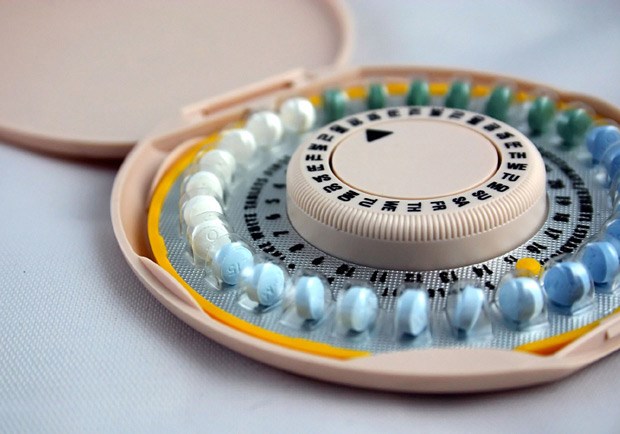
In a breathtaking moment of unity, however, conference attendees affirmed that churches should advocate for contraceptives for the single people in their midst. After a panel discussion on the best ways to reduce abortions in the church (tacit answer: contraception), an instant poll put the question to attendees: "Do you believe churches should advocate contraception for their single twentysomethings?" The question is ambiguously worded (Advocate how? From the pulpit? Which twentysomethings? All of them?). But even so, 70 percent of respondents understood enough to say "yes."
To suggest that abortion within our churches is a problem is to put it too mildly: it is a scandal, a travesty, a matter for repentance and mourning. And the same goes for the frequency of pre-marital sex among evangelical singles. They are both, as panel participant Jenell Williams Paris aptly pointed out in her opening remarks, symptoms of a stunted theological understanding of human sexuality. (Which raises the question, of course, of why the panel was devoted to addressing these symptoms rather than eliminating the disease).
The problem exists on (at least) two levels. For one, it is easy for evangelicals to proclaim God's intentions for sexuality without remembering that our tone should not shift away from offering the "good news." Regardless of how loudly we shout from the rooftops that God made sex and it is good (a refrain that is sung more often than any other), until we are willing to live inside the goodness and examine it from within, our proclamation of its goodness will invariably ring hollow. It is not enough to name human sexuality as a good before moving on to our list of rules. We must allow ourselves to linger there, to reflect upon its unique texture and explore its inner recesses. If we will do that, our proclamation will ring with the sort of poetry that will convince people that we can genuinely say with God that he has made it very good indeed.
Yet even if our moral exhortation weren't tinged with fear and legalism, we would also need to overcome the failure of our communal life and our subsequent inability to welcome those into our midst who fail to live up to our ideals. The refrain among the panelists is a trustworthy statement deserving of full acceptance: those who do get pregnant before wedlock don't exactly feel at home in our churches. The fear, shame, and isolation that unexpectant mothers feel suggests that our churches rarely exude the warmth and grace of those who live under the mercy of Christ. Their report is reason for repentance, and for serious self-examination.
There may be no easy answers to these problems. And the most convenient—advocating for contraception for sexually active single people in our churches—may temporarily reduce abortions. Yet whatever good consequences it might have do not mitigate the fact that such advocacy will inevitably further engrain into our communities the broken understanding of sex and community that is at the heart of our predicament.
For one, holding up an ideal of chastity while encouraging our single people who are sexually active to use contraception divides our practices from our proclamation. And whenever that division is introduced, it is the mentality and commitments buried in our practices that will shape our communities, reducing our proclamation to be little more than a sounding gong. The word proclaimed and the practices that are lived must be mutually reinforcing. Yet if we enshrine Augustine's famous prayer—"Give me chastity and continence, but not yet!"— as part of our pastoral recommendations to those who are sexually active, we mute the transformative power of the call to holiness.
What's more, in calling people to repent, the church calls us not merely to the confession of sin and the acknowledgment of grace, but to the changing of the material circumstances that our rebellion has led us into. In encouraging our single people who are sexually active to pursue contraception, we offer them a technological remedy to what is functionally a discipleship and community shortcoming. At its heart, this is little more than a tacit rejection of the power of the gospel to transform lives and bring people to a repentance that is genuine and genuinely holistic. Rather than building them up to maturity in Christ, the decision to pursue contraception so as to continue to be sexually active only reinforces their infantile faith.
Article continues below
In Romans 3:8, Paul establishes a standard that we ought not do evil in order to bring about good. Sin must be taken out at their root, and part of the reason why we fail in our sexual lives is that we have not yet seen that because of the indwelling Spirit resistance is no longer futile. The fellow who buys a condom or the woman who takes the pill does so for a specific reason: they do not trust themselves to remain chaste when presented with the opportunity. They presumably have good reason for their doubt, if they have failed in the past. But the purchase of contraception reinforces their self-perception of their own captivity to their sexual desires and their own inability to remain continent. Rather than fleeing temptations, the purchase of contraception engenders the conditions where such temptations can be enjoyed without the distinct and difficult (though always welcome, and potentially redemptive) effect of procreation. Contraceptives, in other words, among the sexually active can tend to become a self-fulfilling prophecy.
To see how this works, contrast the person who buys a contraceptive with the fellow who needs an internet filter. In the latter case, the technological remedy sets up a barrier between him and his addiction. It is not sufficient for repentance, but it might give him a bit more time to think things through. The man who buys a condom, on the other hand, is making certain preparations, just as is the woman who faithfully swallows the pill. Those preparations are not morally neutral: they are an act which inclines the will in a particular direction, that reinforces our self-perception in particular ways, and that prods our imaginations to walk down certain paths.
Beneath the issue of contraception is a question about the role ideals and norms play in our communal lives. Yes, they restrict our behavior in ways that are sometimes inconvenient. Yet in doing so, they intrinsically call us and our communities toward a life that we might not otherwise choose on our own. What's more, they amplify the need for repentance and reconciliation, rather than watering down such a need through the "pragmatic" concession to the fallenness of the world. We may occasionally fail to meet them. But confronting our failures can be heroic and acknowledging our sins a moment of beauty. The only thing to be gained from lowering the expectations is greater secrecy about our sexual lives within our communities. And that, somewhat ironically, only stigmatizes unplanned pregnancies within our midst all the more by making them all the more rare.
Article continues below
At the same time, ideals can inspire. "The more transcendental your patriotism," Chesterton once said, "the more practical will be your politics." Communities where contraception is advocated as a solution (whether from the pulpit or in the counselors office) are communities free from the deadly burden of the cross, free from the sufferings and co-laboring that will inevitably come from caring for single mothers and their children. When I posed this idea to someone they suggested that no one would be with the single mother at 3 a.m. while the child is crying. That the possibility is ruled out before it can be considered says more about the extent to which we strive to keep our communities free from a bloodless martyrdom than it does about whether we should accept contraception.
There is no question that we need to reduce abortions, both inside the church and without. But as a church, we are not called to reduce abortions by any and every means available to us. Sin is compounding: error has a long train, and abortion is near the end of it. It is easy to turn to contraception in order to prevent abortions. But in doing so, we have not done what only the church can do: call people to repentance for our sins and exhort us toward the holiness that ought to mark us off as the people of God.
A Hard Pill to Swallow | How the tiny tablet upset my soul. by Agnieszka Tennant (Nov. 8, 2005)
Unwanted Interruptions | Why is our culture so hostile to children-inside and outside the womb? An interview with theological ethicist Amy Laura Hall (June 22, 2004)
Make Love and Babies | The contraceptive mentality says children are something to be avoided. We're not buying it. By Sam and Bethany Torode (Nov. 12, 2001)
Mourning the Morning-After Pill | Ever since the introduction of the birth-control pill, "liberated" Americans have hankered after still more spontaneity: they have wanted a "morning-after pill" to baby-proof their relationships. A Christianity Today Editorial (Apr. 7, 1997)












 While we pray for peace, we need moral clarity about this war.
 As my doubts about his teachings grew, so did a secret fascination with Jesus.
 After lobbying from fellow Southern Baptists and Christians affected by the war, the House speaker moves a package forward.





