Phil Madeira has had the opportunity to work with some of the greatest folk musicians on the planet—Alison Krauss, Bruce Cockburn, Emmylou Harris, The Civil Wars, Buddy & Julie Miller, Steve Earle, and many more—so when he says he'd love to someday work with Bob Dylan, it doesn't seem far-fetched.
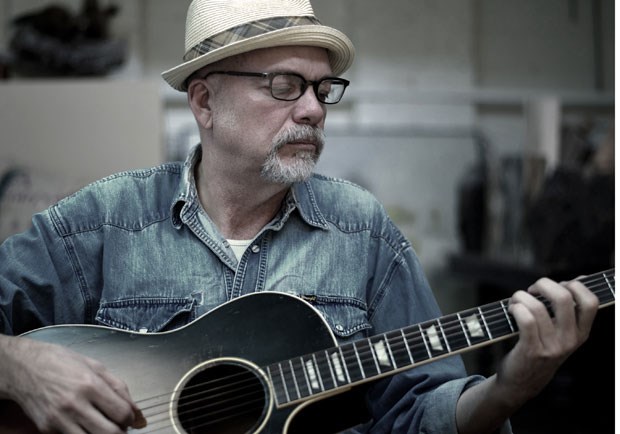
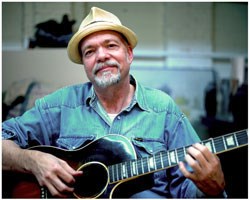
Phil Madeira
Given Madeira's reputation, both as a songwriter and as a musician, it's not surprising that he had little trouble rounding up an impressive lineup for his new album, Mercyland: Hymns for the Rest of Us. The 12-track album (our review) includes guest appearances by Harris, the Civil Wars, Buddy Miller, Mat Kearney, Cindy Morgan, jazz guitarist John Scofield, the Carolina Chocolate Drops, and more.
"This is a beautiful record," says Miller, who sings "I Believe in You," and indeed, it is. But what it is not is a Christian record, though many of the songs could certainly fit well into the genre. But Madeira pushes back against such a label not just because it's too narrow, but also because of his own spiritual journey.
He's a graduate of the fairly conservative Taylor University, but he wouldn't call himself a conservative—or likely even an "evangelical," for that matter. "My faith in Christ has moved me away from the organization we call 'the Church,' and into what feels like a more intimate and even mystical 'relationship' with the Spirit," Madeira says. He adds that he wouldn't disagree with universalism.
It's this "inclusive" theology, combined with the angry shouting of the 2008 presidential primaries, that prompted Madeira to want to do an album of "hymns for the rest of us," and thus the seeds for Mercyland were planted. Four years later, we now have a stirring collection of songs in the Americana tradition, much of it quite "Christian," with a bit of vague spirituality mixed in.
We interviewed Madeira via e-mail.
Tell me a bit about your own spiritual journey.
Raised by people of deep beliefs, I was surrounded by the notion of a personal God. My parents' faith was gracious and as inclusive as possible for Evangelicals in the 60s. They were devout Christians with a social conscience, something rare these days, in my opinion.
Jesus appealed to me, but church culture did not, with the exception of several writers (C.S. Lewis, Frederick Buechner, Madeleine L'Engle) who made me feel that spirituality and creativity were twin sisters.
And you went to Taylor University?
Yes. I don't regret my college days at all; I learned a great deal and had a good time, and was at once drawn to faith while never feeling quite at home with the faithful. Yet I still have many good friends from those days, who perhaps felt the same way.
When I attend services, I go to the Episcopal Church. I like the creeds and prayers, and the fact that they truly mean it when they say all are welcome. Yet, my faith in Christ has moved me away from the organization we call "the Church," and into what feels like a more intimate and even mystical "relationship" with the Spirit. I think there's something to the biblical notion of "where two or three are gathered"—and more often than not, two seems to be the winning number.
How did this album come about?
My parents were very supportive of the civil rights movement of the '60s, and my mother's great affection for Mahalia Jackson was rooted in the sheer passion of the woman's voice, which embodied the struggle of African Americans to be seen as equals in white America. So, that tidbit of my childhood is essential to my making Mercyland. I'm just carrying the same torch, one that hopefully illuminates the idea that faith is a journey that isn't exclusive, a pilgrimage everyone is on which requires openness and dialogue. Giving voice to "the rest of us" was a calling, if you will.
The spark for this album caught fire during the 2008 elections. I was on a tour bus with Emmylou Harris and the whole crew watching a Pentecostal preacher named John Hagee on CNN, cringing as he talked about Catholics and Jews going to hell. That was the spark, listening to someone who supposedly shares my faith, and wanting to say, "No, this isn't Christianity; this is fear." That's when my wheels started turning. Add to Hagee the Westboro Baptist people, and you get a good idea of the madness that people mistake for faith. So, in the same spirit of my parents standing for integration, I felt a need to at least put forth the idea that God is all-inclusive.
Why not just do the album yourself, rather than bring in all of these other artists?
A solo Phil Madeira record would just get lost in the shuffle, and I knew this idea was bigger than me. I saw the potential for a diverse community, both musically and philosophically.
How did you "recruit" all these folks?
I initially approached Emmylou with the idea of a project that focused on the idea that God loves everyone, that God is inclusive and merciful. She immediately responded with enthusiasm, which made asking everyone else much easier. I invited folks to co-write, including the great singer Cindy Morgan. A few people brought tunes to the party, and a few asked if I had suggestions. It was pretty easy from that standpoint.
Article continues below
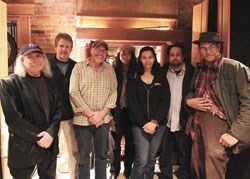
Madeira (3rd from left), Buddy Miller (left), and the Carolina Chocolate Drops
Any interesting stories behind any of these songs?
"I Believe in You" was written about 25 years ago. It is one of the most personal songs I've ever composed, yet I never released it on my own projects; it was ironically too spiritual for either of the two solo projects I released in the '90s. I asked Buddy Miller if he'd sing it, and I love his performance of it.
How about in the studio, during the making of the album?
Writing "From This Valley" with The Civil Wars is a great memory. I wanted to write about caged birds, outcasts, and the longing that comes with the territory of being an outsider. John Paul White and Joy Williams caught the idea instantly, and we just let the song write itself. It was the first song recorded, apart from the title cut, and I don't think John Paul thought I'd keep his rebel yell in the final cut. The second I heard that whoop, I knew I'd be keeping it, and I knew the track would open the record, even though they were unknowns at the time. With the exception of Emmylou adding her voice to the song, it's a live recording, as are most of the tracks.
What do the words "Christian music" mean to you, and is this album that?
One night in 1988, I was at a club listening to a Nashville blues singer named Mike Henderson when God Almighty reminded me who I was before I got involved with religious music. I don't think "Christian" is a word that should be ascribed to music. A lot of enthusiasm for this project is coming from Christians, but this is not a Christian record. It's not "theirs"; it's everyone's who might care to listen. Given that the word "gospel" means good news, Mercyland might qualify as gospel music, but I think Thelonius Monk is good news, too. All good music could qualify as "gospel," given that parameter.
The press release that came with Mercyland includes some phrases that would make some Christians raise their eyebrows—like "Stroup seeks her own personal higher power" and "no matter what creed, faith, sexual preference, race, political bias—everyone is a child of God." Is that what you believe?
I know that I would die for my child if it meant I could ensure her eternal well being, even if my child denied me the pleasure of a relationship. If I have the imagination for that kind of love, it's hard to believe that Jesus is any less imaginative. The Atonement wasn't half-hearted; I don't think God would settle for less than 100 percent.
Article continues below
Rob Bell stirred up some controversy with his book Love Wins, implying a belief in universalism, that ultimately, everybody gets into heaven, regardless of creed or faith. Do you believe that?
I haven't read Rob Bell's book, so I can't comment on it other than to say that I agree with the sentiment you've presented.
What's your favorite song on this album, and why?
I truly can't say, but I'll acknowledge two special songs. My partner Merrill Farnsworth and I wrote the title track and "Light of Your Love," so those two songs reflect on a beautiful facet of my life. "Mercyland" embodies the spirit of the project, and "Light of Your Love" was my favorite to record because of John Scofield's presence. He is among my favorite guitarists and such a great human being. I'm still pinching myself.
You've got quite a history of writing and performing with some really big names. Rattle off a favorite memory or two …
As it happens, yesterday I produced a Bruce Cockburn track, and spent the day with him and his family in San Francisco. I am amazed that I have worked with so many artists who have made an impression on my work. It still thrills me to get on stage with Emmylou, and I cannot say enough good about Buddy Miller, whom I admire as a person and as a musician. Having Alison Krauss sing "Maybe," which Gordon Kennedy and I wrote, was the thrill of a lifetime.
Who do you think is making really good music these days?
Right now, I am listening to The Wood Brothers, Mumford & Sons, Ketch Secor, Lana Del Ray, The Punch Brothers, Jack White, and lots of old stuff like Buck Owens, Blind Willie Johnson, Sister Rosetta Tharpe, and Kenny Burrell.
Who are some of your own musical influences?
The Byrds, Taj Mahal, Ry Cooder, Garth Hudson, Dylan, Randy Newman, Procol Harum, Joni Mitchell, Aretha, and of course, Mahalia Jackson.
Who would you love to work with in the future?
I would love to produce a John Scofield recording; actually, I could easily jump at the chance to work again with the entire cast of Mercyland. I'm wide open. Dylan would be a wonderful challenge.
I assume there's no chance of a Mercyland tour?
It would be difficult, but we're trying to see about an event at the Americana Music Association conference in the Fall. I'm doing a set at The Wild Goose Festival this summer with some ringers like Jennifer Knapp and Cindy Morgan.
What's next for you? Anything else we missed?
A solo record is forthcoming, and I am wrapping production on a collection of Sir Paul McCartney covers with Buddy Miller, Jim Lauderdale, Sam Bush, Cockburn, Matraca Berg, The Wood Bros., Ketch, Holly Williams, Steve Earle, Allison Moorer, Teddy Thompson, The McCrarys, Ollabelle, and Ed Snodderly. Oh, and Mindy Smith and I wrote her latest single "Closer."
Thanks for taking the time to talk about Mercyland!












 While we pray for peace, we need moral clarity about this war.
 As my doubts about his teachings grew, so did a secret fascination with Jesus.
 When I married into a Jewish family, antisemitism hit home. Now, the holy day reminds me of our future hope.