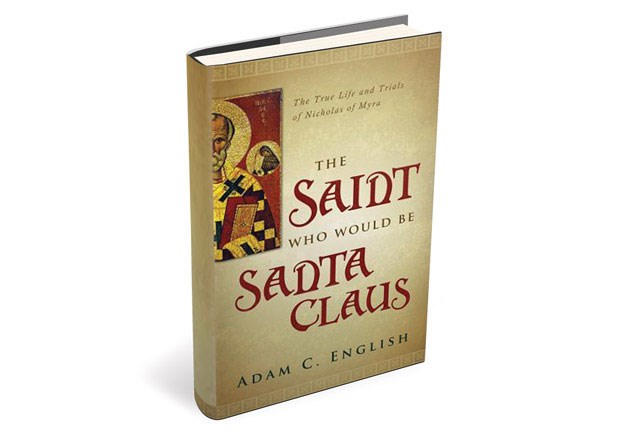
When Adam C. English visited Bari, Italy, he found an archive library full of primary sources on St. Nicholas—the real man behind the jolly, red-suited legend. St. Nicholas lived around the fourth century, during a "critical moment in church history" in which he witnessed—and helped—Christianity transition from persecution to popularity. Yet St. Nicholas's story is not well known. English, an associate professor of religion at Campbell University, talked with CT assistant editor Elissa Cooper about setting the record straight with his new book, The Saint Who Would Be Santa Claus: The True Life and Trials of Nicholas of Myra (Baylor University Press).
What were some of the most surprising things you found out about St. Nicholas?
That he existed. The three most important Nicholas experts of the 20th century expressed grave doubts about Nicholas's existence. And that verdict trickled down to popular works on Santa Claus, like the Oxford Dictionary of Saints. Many people even now think of him as only legendary. But when you study the documents and the evidence, it's surprising to find there's a wealth of evidence that attests to his deeds and his existence.
Still, the stories of St. Nicholas sound a lot like many fables told about other saints.
There are many parallels between the St. Nicholas stories and other saint folktales. To me, the story that stands out as unique is of St. Nicholas's gifts of the dowries. He visits the home of three girls who are in desperate financial straits, and he delivers a bag of gold so that they have money to get married. And he does it anonymously and at night. You don't find anything like it in the stories of contemporary saints of the time, nor in other folklore.
What do you mean by writing that Nicholas is an "every saint"?
He became popular with many people groups in so many countries. Even during the Reformation, when saints were disparaged, St. Nicholas was able to rise above that and remain popular.
He's appealing, too, because he's an ordinary guy. Many saints are biblical saints, or they're usually remembered because they were martyred or they performed some tremendous miracle. But Nicholas stands out because he didn't do supernatural miracles. He wasn't martyred. He was more of a social activist, politician, businessman, lawyer, judge, and protector.
What about his legend or reputation is forgotten today?
He also was a man of God who stood up for his faith, who challenged pagans, who was willing to confront people. Into the Middle Ages, he's depicted using the whip against Christians who have fallen astray. He may bring punishment as well as good things—to determine, in other words, whether we've been "naughty or nice."
We tend to downplay this side of him—a true and faithful judge of character and someone who is standing for the faith. We won't tell our kids any longer that if you've been naughty, Santa Claus is going to put coal in your stocking. But that's a tradition that was with us up until 50 years ago and is still carried on in Europe. In many European homes, the tradition is that St. Nicholas will come to the house and visit with the children, and make a record of their behavior and test them on points of their faith. But those things no longer connect with an American celebration of Santa Claus.
How did he move from being "St. Nicholas" to being "Santa Claus"?
His association with children is a much later development. There is a story that arose in the Middle Ages about him saving three youths from death: Three young children go into an evil inn-keeper's inn and are butchered and pickled in barrels, and then Nicholas comes along and restores them to life. It's with that story that his association with children begins.
Given this rich history, should Christians continue to play the charade with their children about Santa Claus bringing gifts?
I resonate with that concern. But at Christmas, we have an opportunity to highlight a core Christian value, which is loving our neighbors. By highlighting St. Nicholas, we can recover an alternative to commercialization and greed, celebrating the life of a true Christian example, who gave of his own, who helped the less fortunate, and who shared the love of Christ.
When it comes to telling children about Santa Claus, we tell our daughter the truth: That there was a good pastor who existed many years ago and did many wonderful things, and that mommies and daddies like to carry on his tradition by giving secret gifts to their children. I certainly don't blame parents for wanting to play along with Santa, but I think you can do it just as well and enrich the season by telling the truth about Santa Claus and St. Nicholas.
What's the future for Santa Claus—and St. Nicholas?
The 20th century has been Santa Claus's century. You think about how popular Santa Claus has been—the number of movies and TV shows, and his ubiquitous presence in people's yards, in their homes, and in shopping malls. But I think people are ready for something more substantial. The original person is much more interesting, because he was real and his deeds are based on goodness rather than on greed and acquisition. I think that we'll see a revival of St. Nicholas's traditions and practices that incorporate this true and historical person into our holiday season.
Have something to add about this? See something we missed? Share your feedback here.

















 While we pray for peace, we need moral clarity about this war.
 As my doubts about his teachings grew, so did a secret fascination with Jesus.
 We must always be people of the Word, but we’ll have to reimagine deep engagement with Scripture.






