Concern for the poor is a fundamental pillar of Christian identity and calling, a constant theme throughout the Old and New Testaments (Deut. 15:4; Prov. 14:31; Gal. 2:10; James 2:2-6). A definitive mark of the church throughout history is its members caring for the poor in their midst.
Today, thanks to economic globalization and the Internet, those who want to care for the poor overseas enjoy a plethora of attractive options: sponsoring a child, donating a farm animal, making a small loan to a budding entrepreneur, installing a well in a village, getting a morning caffeine jolt with fair-trade (instead of free-trade) coffee—among others.
But what are the best ways to help those living in developing countries? By "best," I mean most effective: things that actually help people rise out of poverty, and that carry with them a sizable "bang for your buck"—programs in which the impact on the poor is significant per donated dollar.
Answering this question proves more difficult than you'd expect.
The Economist's Challenge
Measuring the performance of a for profit institution is straightforward: you look at its profit. Measuring the performance of a nonprofit program is much more difficult. Most relief and development organizations carry out self-assessments and measure impact based on self-studies. But donors (and Christians at large) should know the deficiencies of these self-studies.
For example, many relief and development organizations measure results based on studies that compare outcomes of program participants to those of nonparticipants. Such studies typically yield biased results, because program participants are routinely a self-selected group of motivated individuals who would likely have improved even without the program. In other words, their success cannot be attributed to the program alone.
Other organizations conduct before-and-after studies and interpret the difference as "impact." But this also leads to bias: individuals tend to turn to development programs when they want to improve their lives. Just as the impact of a substance-abuse program cannot be judged by "before and after" outcomes (since the main causal effect is the addict deciding to enter the program), neither can poverty programs be assessed in this way. For example, people take micro-finance loans when they want to improve their lives; in a recent study, we find that 75 percent of the apparent impact of microfinance, based on practitioners' before-and-after observations, is an illusion (although the 25 percent that remains is not insignificant).
Some development programs rely on the perception of impact. But even honest attempts to self-evaluate are affected by what's called "confirmation bias": we naturally gravitate toward evidence that confirms a prior belief, especially a belief about our own effectiveness. People and organizations also suffer from "illusory superiority," which causes us to systematically overestimate our performance. For example, over 90 percent of us believe ourselves to be above-average drivers. (Apparently even those of my own species are not immune: another study found that 68 percent of university faculty rated themselves in the top 25 percent in teaching ability.) Development organizations are run by human beings. Like all of us, they tend to attribute their successes to program effectiveness and their failures to forces outside their control.
Donors' subjective impressions of a program's effectiveness are even less accurate. Jesus tells us that "it is more blessed to give than to receive" (Acts 20:35). But too often Christian antipoverty organizations have worked overtime to ensure that we feel blessed by our giving. Nonprofits tend to market themselves to potential donors through success stories, anecdotes, and narratives that emotionally connect. In doing so, they want our giving to feel good. But these carefully selected anecdotes virtually always exceed the average impact on a program participant, creating a bias in donors' minds about the impact of their giving.
The difficulties in assessing the impact of antipoverty efforts only magnify the need for understanding the impacts of different types of programs. Love, understanding, and giving are deeply intertwined. Genuine love motivated to action is concerned about the consequence of its action. If I truly love my wife, I study her needs and desires carefully to understand the effect of my actions toward her.
Giving that gives in response to feelings but which disregards consequences can turn into a narcissism that is only semiconscious of motives. Genuine love carefully considers how an action affects the recipient. In some cases, love may call us to acts of compassion even when there is little hope of a life-changing result, such as when we stay by the side of a dying person. But in many cases, it is more feasible to measure tangible impacts of our giving, especially when it comes to helping the poor. In these cases, we are not being good stewards if we give blindly without understanding the impact of our giving. The blessings of givers should be rooted in the blessings of receivers.
Article continues below
Measuring Blessings
In recent years, development economists have made remarkable progress in measuring blessings to receivers. I have been fortunate to belong to a generation of development economists who are borrowing tools from the field of medicine. For example, the use of randomized controlled trials to evaluate development programs has helped us understand the relative merits of different approaches to poverty alleviation. Other new methods that mimic the impact-identification power of the randomized controlled trial have also proven fruitful in this area.
So what are the best ways to help the poor in developing countries?
To answer this question, I polled top development economists who specialize in analyzing development programs. I asked them to rate, from 0 to 10, some of the most common poverty interventions to which ordinary people donate their money, in terms of impact and cost-effectiveness per donated dollar.
Today, those who want to care for the poor enjoy a plethora of attractive options. But what are the best ways to help those living in developing countries?
Sixteen researchers responded to the survey. They are from Cornell, Duke, Yale, the University of Maryland, UC-Berkeley, Stanford, George Washington, UC-Santa Cruz, the University of Minnesota, Brandeis, Michigan State, Tufts, and the World Bank. Of the respondents, five are members of the Association of Christian Economists. And they showed remarkable consensus in their ratings. Virtually none of the highly rated poverty interventions received low marks from any of the responders. Likewise, virtually none of the lowly rated programs received high marks. I did not include my own rankings in the survey, but I do comment on each. The following are the results in order of greatest estimated impact to the least, followed b organizations that use that strategy (= faith-based).
Ranking 10 Strategies
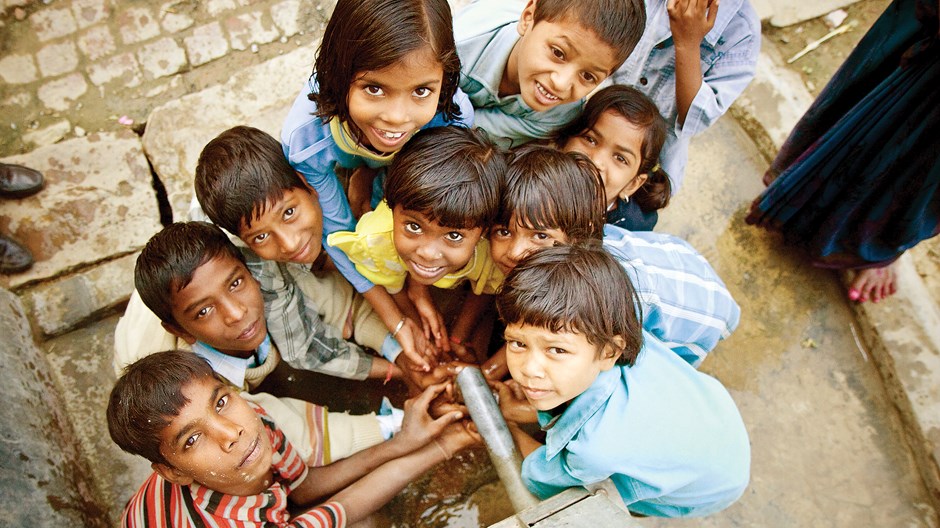
1. Get clean water to rural villages.
(Rating: 8.3)
One million children die from drinking unclean water each year. Clean water can prevent legions of child health problems and dramatically reduce infant mortality.
Scientific evidence is overwhelmingly positive on impact. A World Health Organization study estimates that the availability of clean water in a rural village reduces infant mortality by 35 to 50 percent, at a cost of roughly $10 per person per year. Because infant mortality rates in the poorest countries often range from 60 to 110 per 1,000 live births, the cost of saving a child's life by providing clean water alone may lie in the range of only $180 to $400. To development economists, cheap-plus-effective is an endearing combination.
Article continues below
A growing number of development organizations working to provide clean water in rural villages now receive online donations. Funds are used to drill wells, lay plastic pipe, and install pumps.
Living Water International†
LifeWater.org†
GlobalWater.org
WaterAid.org
TheWaterProject.org†
Flowing Streams Ministries†
2. Fund de-worming treatments for children.
(Rating: 7.8)
Intestinal worm infestation affects one in four people worldwide and is responsible for chronic poor health, listlessness, and learning impairment among children in developing countries. Albendazole and other medications are stunningly effective and very inexpensive, making de-worming another great case of "bang for your buck" effectiveness.
Measuring the performance of a for-profit institution is straightforward: you look at its profit. Measuring the performance of a nonprofit program is much more difficult.
A study by researchers at Berkeley and Harvard found that regular de-worming treatment in worm-infested areas of the developing world can reduce school absenteeism by 25 percent at a cost of only 50 cents per year per child. The only caveat: In most instances, de-worming drugs need to be administered repeatedly, especially to shoeless children, as worms typically enter through the soles of the feet.
DewormTheWorld.org
ChildrenWithoutWorms.org
3. Provide mosquito nets.
(Rating: 7.3)
Malaria is a leading killer of children in developing countries, accounting for nearly one in five deaths of children under age 5 in sub-Saharan Africa. The claim is that every 45 seconds, a child dies from malaria. The good news is that, like health problems from dirty water and worm infestation, malaria can be prevented cheaply and effectively.
Bed nets cost only $5 to $10 each. Because of their cost-effectiveness, they have created quite a buzz in the nonprofit world in recent years. The scientific community strongly supports the intervention; insecticide-treated bed nets have a proven positive impact on malaria prevention. Modern nets last for years and are proven to reduce instances of malaria by 50 percent and malaria mortality by 20 percent.
Of all the long-term development interventions, child sponsorship received the highest rating. Sponsors typically pay $25 to $40 per month, which covers a child's educational fees, school uniforms, tutoring, health care, and, in faith-based sponsorship organizations, spiritual mentorship. Many development economists today favor interventions like child sponsorship that remove practical constraints to education while building a child's self-esteem, aspirations, and goals. In this way, sponsorship relieves both external and internal poverty constraints.
Two researchers and I recently carried out a study (sponsored by the U.S. Agency for International Development) on the long-term impacts of Compassion International's child sponsorship program. The study, gathering data from over 10,000 individuals in six countries, found substantial impact on adult life outcomes for children who were sponsored through Compassion's program during the 1980s and '90s. We statistically compared formerly sponsored children to older siblings who were too old for sponsorship when the program started in their village. In adulthood, formerly sponsored children were far more likely to complete secondary school and had a much higher chance of having a white-collar job. They married and had children later in life, were more likely to be church and community leaders, were less likely to live in a home with a dirt floor and more likely to live in a home with electricity. [Editor's Note: Christianity Today will feature a full report on this study once the findings are peer reviewed.]
There are some caveats: Although the impact in the child's life is significant, compared with other forms of interventions, child sponsorship is comparatively expensive. In addition, some economists are concerned that some child sponsorship organizations, such as World Vision, Save the Children, and Plan, use sponsorship funds for development projects in the village where the child lives rather than investing them directly in the lives of sponsored children, resulting in diffuse impacts that are more difficult to rigorously assess.
Compassion.com†
Children International
ChildFund.org
PlanUSA.org
WorldVision.org†
5. Give wood-burning stoves.
(Rating: 6.0)
The World Health Organization estimates that 50 percent of all people use biomass fuels (wood, animal dung) for heating and cooking. But biomass fuels lead to two major problems: deforestation, which kills 5.8 million hectares of tropical rainforests each year; and indoor air pollution, which is believed to prematurely kill 1.6 million people each year.
Article continues below
Stoves that burn wood efficiently and pipe out harmful smoke through a chimney kill both of these bad birds with one stone. Just $150 can buy a new Onil wood-burning stove, which uses 65 percent less wood than most stoves and pipes toxic gasses out of the house. In a recently published study using a randomized controlled trial, two researchers and I found big impacts from the Onil Stove on wood usage and reduced coughing. Only $15 buys a household a new hightech "Rocket Stove," which uses even less wood than the Onil version, but has less heating power and a lower impact on indoor air pollution (since it doesn't attach to a chimney).
HelpsIntl.org
StoveTec.net
WorldStove.com
6. Give a microfinance loan.
(Rating: 4.2)
The growth of microfinance in developing countries has been nothing short of breathtaking. Currently 190 million of the world's poor are microfinance borrowers, up from 13.5 million 15 years ago. Microfinance has been supported by everybody across the political spectrum: liberals, because it represents grassroots development and empowers women; conservatives, because it promotes capitalism. Everyone loves microfinance—at least until recently, when problems stemming from borrowers' over-indebtedness have stalled the bandwagon.
Serious studies of microfinance find modest impacts: increases in entrepreneurialism and business investment, and a greater ability to smooth out bumps in income. But microfinance is not the magic bullet many once believed it to be. Today one can lend directly to an entrepreneur through websites like Kiva.org. A new loan is granted when the previous loan is repaid. Most loans start at $25.
Kiva.org
Opportunity International
VisionFund (World Vision)
7. Fund reparative surgeries.
(3.9)
Cleft palates make normal life nearly impossible for 170,000 children in developing countries. Children with cleft palates have trouble speaking and eating and suffer from social exclusion. Surgery to repair cleft palates and other visible maladies such as cataracts, crossed eyes, and limb disfigurements are typically unavailable or unaffordable to many families in the developing world. They offer new hope to children who would otherwise face a lifetime of discrimination and difficulty.
Article continues below
Smile Train is a nonprofit that performs corrective surgeries through a $250 donation. Respondents to the survey expressed little doubt about impact; its ranking is lower primarily because it is more costly than other interventions.
SmileTrain.org
OperationSmile.org
MercyShips.org
8. Donate a farm animal.
(Rating: 3.8)
Giving a dairy cow, goat, or chickens to a household in a developing country in the name of a loved one would seem the perfect Christmas gift for "the person who has everything." Christmastime marketing for animal-donation organization is second to none; who can resist the picture of the happy Bolivian girl hugging the alpaca?
Sheep cost about $70, goats $85. A water buffalo runs around $250. Preliminary evidence from a current impact study with the Heifer Project indicates positive impacts on dairy consumption from donated dairy cows and meat consumption from receiving a meat goat. But the consensus among the economists is that relative to cost, animal donation likely has smaller impact than many alternatives. Moreover, impact may be very sensitive to the recipient: the very poor lack the resources to properly care for an animal; those already with many animals (who arguably can care for them best) don't need another one.
Heifer.org
SamaritansPurse.org†
World Vision's Gift Catalogue†
9. Drink fair-trade coffee.
(Rating: 1.9)
Coffee growers are susceptible to large swings in the market price of coffee, rendering millions of coffee-growing families vulnerable to a sudden loss in income. Fair trade coffee offers a minimum "fair" price (currently $1.41 per pound) to fair-trade-certified growers around the world.
Fair-trade coffee isn't a scam, but it is hard to find a development program that has attracted so much attention while having so little real impact. The most recent rigorous academic study, carried out by a group of researchers at the University of California, finds zero average impact on coffee grower incomes over 13 years of participation in a fair-trade coffee network. Low impact is due to a flawed program design: growers must pay for FLO (Fair-trade Labeling Organization) certification and bear the costs of compliance with fair-trade standards. When coffee prices exceed the $1.41 threshold (as they do today, with prices at around $2.50), all growers essentially receive the same market price. It is when coffee prices fall below this minimum price that the real benefits of the program kick in. But in these same years of low coffee prices, coffee growers flock to fair-trade certification, lowering the fraction of the fair-trade crop that can be marketed at the higher fair-trade price, thus neutralizing the benefits of the program.
Article continues below
What is more, fair-trade programs continue to encourage the cultivation of more coffee; the best thing for coffee growers around the world would be if everyone grew less.
Better alternatives for helping coffee farmers are the cultivation of higher-priced specialty coffees and programs that promote education for the children of coffee growers to wean them away from coffee growing.
Seeking to bridge the digital divide, programs have sprung up in recent years to provide computers to children in developing countries. One Laptop Per Child has gained worldwide attention by distributing laptops to children to foster learning in primary schools in developing countries. The experts who were polled are not anti-laptop, but given the more basic needs in poor countries, they said donating computers was highly cost-ineffective compared with the alternatives. For the cost of one laptop, you could provide clean water to 20 people, and for a year de-worm an entire school of 400 children.
Moreover, a recent study by economists at the Inter-American Development Bank evaluated the impact of One Laptop Per Child in Peru, and found no change in learning or in expectations about future education.
One.Laptop.org
Carec4dc.com
ComputerAid.org
What's the Takeaway?
The above rankings offer several lessons. A casual examination of them suggests little relationship (perhaps even a negative one) between marketing hype and program effectiveness. For this reason, organizations working with the poor must subject their programs to rigorous, scientifically based evaluation by impartial third parties.
Anti-poverty programs also need to start emphasizing prevention over cure. Unfortunately, it is easier to mobilize resources in the wake of a crisis, such as a famine, than it is to mobilize resources that help prevent crises in the first place. Prevention is less dazzling than cure, but nearly always more cost-effective.
The problem is that some of the most cost-effective poverty intervention programs provide fairly mundane raw material for marketing departments. The provision of clean water to villages, child de-worming campaigns, and mosquito bed nets rank as the top three development interventions, yet they fail to attract much donor interest. But rigorous evaluation allows an organization to show real impact on recipients. This can facilitate a greatly needed shift in the focus of donor marketing from emphasizing feel-good giving to providing useful information to donors.
Article continues below
Finally, it is not enough for an organization working with the poor to show that it handles funds honestly. Plenty of organizations, such as the Evangelical Council for Financial Accountability, certify that an organization is not pilfering donated money. Many nonprofits working with the poor seek to satisfy donors with such certification, but an organization can be financially honest and still run an ineffective program. Large donors have begun to insist on scientifically based evidence of positive program impact as a condition for giving. Small donors should do the same. Aid and development organizations soliciting donations should be prepared to provide credible third-party evidence that their work actually helps the poor.
Over the course of U.S. history, an ethic of transparency about organizational performance has taken hold in private industry, the legal and medical professions, and, most recently, on account of public demand, the financial sector. It is time for this level of transparency and accountability to take root in the aid industry, and it will when small donors demand it from the organizations they give to.
We are not being good stewards if we give blindly without understanding the impact of our giving.
Another way to ensure a closer relationship to the recipient is to be involved in development work firsthand. Long-term partnerships between churches and communities from the developed and developing world can be life-changing for everyone. About five years ago, a group of college friends and I from UC-Davis's InterVarsity chapter started a tiny nonprofit, Mayan Partners, that works in an indigenous village in the western highlands of Guatemala. An organic network of about 30 friends, Mayan Partners supports a Christian school in the village, the first middle school in the area. We also work with physicians to offer clinics and have introduced clean-burning wood stoves to reduce deforestation and lung disease. A group of us visits the school once or twice a year.
None of our work has proved a magic bullet to pulling people out of poverty. There are always problems and issues to resolve. Sometimes miscommunication and hurt feelings get in the way. But our commitment to one another has thus far weathered these storms, and our long-term relationship has tremendously blessed both parties.
Article continues below
Whether one chooses to give money or work with the poor directly, what is important is to care enough about the poor to understand the effect of actions we take on their behalf.
Bruce Wydick is professor of economics at the University of San Francisco and visiting professor at the University of California-Berkeley. He is the author of Games in Economic Development (Cambridge University Press), and is writing a novel about coffee-growers in Guatemala.
Christian Microfinance Stays on a Mission | While scandals rock the microfinance industry, Christian nonprofits diversify their efforts to help the poor. (May 27, 2011)
Have something to add about this? See something we missed? Share your feedback here.















 While we pray for peace, we need moral clarity about this war.
 We’ve got little information on Jesus’ appearance and personality. But that’s the way God designed it.españolFrançais
 After lobbying from fellow Southern Baptists and Christians affected by the war, the House speaker moves a package forward.






