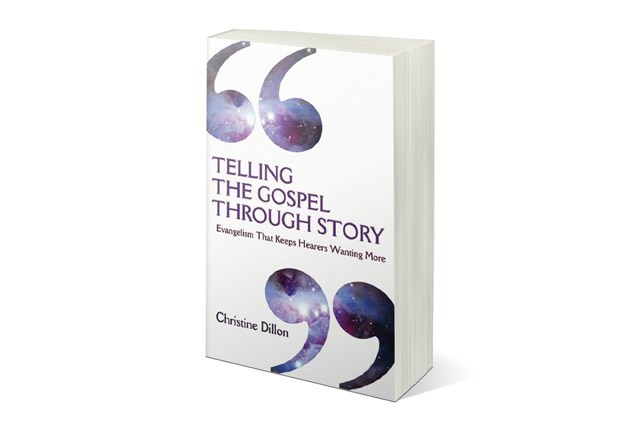
Telling the Gospel Through Story: Evangelism That Keeps Hearers Wanting More
Author
Christine Dillon
Publisher
IVP
Release Date
May 14, 2012
Pages
224
Price
15.13
There is a limit to the telling of stories. No astronaut would like it if those setting the trajectory for a launch into space contrived to do it by reciting Goldilocks and the Three Bears. Stories, like most things in life, have their place. Yet, as C. S. Lewis once observed, "Sometimes story says best what must be said." Stories can get past "watchful dragons"; that is, they can penetrate the resistance put up by rationalized bad behavior; they can pierce the heart and gain a hearing even when ears might otherwise be dull. As Christine Dillon points out in Telling the Gospel Through Story: Evangelism That Keeps Hearers Wanting More (InterVarsity), storytelling is how Jesus most frequently proclaimed the gospel. All who look to Jesus to learn how to share the gospel and announce the kingdom of God would do well to adopt the storytelling approach.
Dillon's background and experience in both Western and non-Western environments led her to a method of communicating the gospel by unashamedly proclaiming the true story of the Bible. That Dillon learned "storying" within a missionary context, where others often had no biblical background whatsoever, makes her book all the more relevant in the West, where the biblical narrative seems, in many quarters, to be nearly forgotten.
Dillon's method seeks, as all methods of evangelism should, to understand a hearer's worldview. She shapes her telling of the biblical story of redemption in a way that listeners will grasp and remember. She builds narrative richly and robustly without compromise. Furthermore, she understands how to get past the barriers and preconceptions of her hearers.
At times, she embodies the approach of the prophet Nathan, who was assigned to deliver God's message to David after he had committed adultery and murder. It was story that breached the barrier, penetrated the heart, and led to David's repentance. Furthermore, Dillon does a more than adequate job of training her readers to do storying in a wide range of contexts. She also advises them on how to multiply their efforts by training and motivating others.
There are many valuable features in Dillon's method. Among them are personal metaphors, analogies, and stories that weave her experiences into the book. These reveal vitality in her instruction. They awaken the imagination and validate the method with real-life examples, giving it the air of authority. Clearly, she has practiced what she preaches. She recognizes the supernatural nature of her work and sees prayer as essential to undergirding her use of story. Dillon's method is also helpful for contextualizing the gospel story by setting what she says in the larger context of the biblical narrative from Creation onward. It is a process, but one that captivates the hearers and awakens in them the childlike wonder that asks for more.
There are also a few liabilities in the book. At times, Dillon seems to over-egg the pudding by making judgments that partake unnecessarily, and irritatingly, of unconditional categories like "only" and "always." Furthermore, some of her anecdotes swell into unsupported and universalized applications. These drawbacks, however, need not distract from Dillon's overall point that storying is an important, even vital, way to share the gospel—especially in the present age of biblical illiteracy.
Telling the Gospel Through Story provides a fresh approach to all who take evangelism seriously and seek proficiency at making Christ known. Storying is another method one might use effectively and powerfully. The apostle Paul told the Philippians that he rejoiced in however Christ was preached (Phil. 1:18). There are many effective methods for proclaiming the gospel—and the more, the merrier.




















 While we pray for peace, we need moral clarity about this war.
 We’ve got little information on Jesus’ appearance and personality. But that’s the way God designed it.españolFrançais
 A veteran missiologist shares a lifetime of lessons on bringing the gospel into unfamiliar settings.






