The most popular games are those that rely on both strategy and luck. When we win, we like to credit our acumen. When we lose, it's easy to blame the unfortunate odds.
Many Christians seem to think discipling the next generation of Christ followers is a simple mix of skill and luck. It goes something like this: God gets the credit when the kids turn out all right, and our broken world gets the blame when things run amok. This logic may not be entirely wrong, but it oversimplifies on-the-ground realities
Our team at Barna Group has spent the past five years researching the development of Christianity among youth and young adults—more than 5,000 interviews on this subject. We've examined the perceptions of teens and 20-somethings, and we've explored the attitudes of stakeholders, including pastors, youth workers, parents, and ministry professionals who work with the younger generation. My take on our research findings is that we underestimate three aspects of discipleship, and overvalue another, regarding the next generation.
First, we underestimate the profound impact of the social changes that are taking place with the current millennial generation, or "mosaics," as we call them. Today's generation of youth and young adults is more conversant with technology, less likely to come from married families, and more financially indebted than any previous generation. Their levels of religious, ethnic, and sexual diversity far outpace those of preceding generations. And they are getting married much later in life than did the boomers. Robert Wuthnow's book After the Boomers shows just how much this current generation of young adults is "launching" later in life—taking longer to get through the major maturing events in life, like marriage, education, and parenthood.
Here's how we describe this trend: Most 20-somethings today are digitally connected, in urban tribes, and are unmarried. By comparison, the typical boomer completed most major life transitions before age 30. To put it more starkly: A majority of today's 20-somethings live in anything but conventional young families. And this is a particular problem for congregations, because most faith communities tend to "work best" with traditional family units.
The point is this: The rise of digital urban tribes of 20-somethings is having a profound, lasting impact on the spiritual trajectory of today's emerging generation and specifically the church.
Second, we underestimate how much young people are shaped by the massive power of the digital tools, consumer culture, and media of the broader American culture. Thomas Bergler's work in The Juvenilization of American Christianity gives us a fabulous phrase for this: "the deadening effect of popular culture." Of course, many Christians recognize and bemoan the impact of media and technology on young people. Many, however, miss how much the influence is increasing and how much every age group is feeling its effects. According to the Kaiser Family Foundation, the typical teenager is using more than 10 hours of media per day, far more than previous generations. Is it any wonder when you mix and stir human nature, reality television, and social media that one-quarter of today's teenagers believe there is a "definite" or "probable" chance they will be famous or well-known by age 25? Call it the American Idol effect.
In addition, our research shows that typical parents are just as "addicted" to media and technology as are their teenagers, just in different ways. In an ironic and telling shift, the teenagers we interviewed complained that their parents' use of technology was inhibiting quality family time.
Third, we misunderstand the potency of youth culture's gravitational pull. We don't influence youth culture as much as it influences us. Much of the Christian community, as Bergler adroitly points out, has been juvenilized. That is, in an attempt to keep up and stay relevant, churches have increasingly accommodated the passions and preferences of teenagers and young adults. Our fixation on all things young is changing the way we do Christianity. It's also shaping the workplace, advertising and marketing, fashion, and media, to name a few spheres of society.
Our research shows that today's parents are just as addicted to media and technology as are their teenagers, just in different ways.
So, what do we overvalue? I believe we misjudge the power of our own ideas about how to change the upcoming generation. Frankly, I was surprised at how deeply we hold our notions about what works and what doesn't—revealing this strange mix of our beliefs about luck and skill as though the fate of the next generation is a game of Risk. The hypotheses we nurture about youth and college ministry are important, of course, for they shape our actions and priorities. For instance, if we believe we do not face a fresh problem compared with the boomers, we lack any impulse to try anything new. If we imagine the problem is defined by x, we try to shift our effort with the requisite z. If we think the primary problem facing young people is biblical illiteracy, for example, then what's required is longer teaching sermons.
Article continues below
Solution-making is generally good. It reflects our creative, dominion-taking nature. Yet, our efforts are often missing key ingredients or doomed to repeat past patterns. Too few of us stake-holders think deeply, culturally, and theologically about our work with the next generation—or how our fixation on all things "young" is changing the way we ourselves do Christianity.
Making sense of today's youth culture is not easy. Grasping the nuances and shaping influences of the upcoming generation's faith is equally difficult. At times I wonder whether we love our traditions more than our children. And, as I've come to learn, we often love our youth ministry theories more than we love the complexity of connecting with the digital tribes of today's youth and young adults.
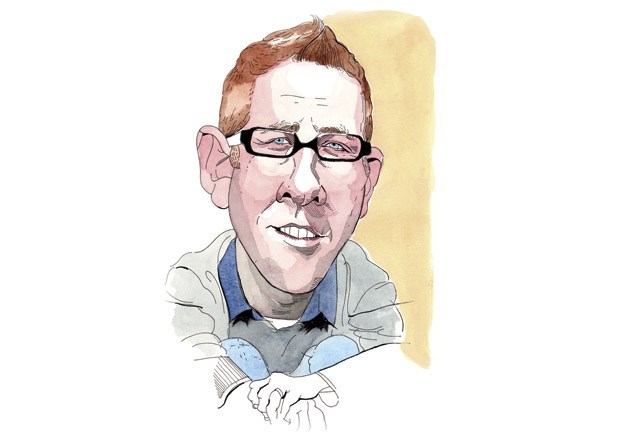
David Kinnaman is the president and majority owner of Barna Group. He is the author of You Lost Me (Baker) and coauthor of unChristian (Baker).
Miracles in Mozambique: How Mama Heidi Reaches the Abandoned | There are credible reports that Heidi Baker heals the deaf and raises the dead. One thing is for sure: She loves the poor like no other in this forgotten corner of the planet. (May 11, 2012)
The New School Choice Agenda | Why Christians in Richmond, Virginia, and elsewhere are choosing to send their children to struggling public schools. (April 9, 2012)
The Best Ways to Fight Poverty—Really | The government is by far the best institution to raise the poor's standard of living. The church does something more important for them. (February 10, 2012)
Have something to add about this? See something we missed? Share your feedback here.

















 While we pray for peace, we need moral clarity about this war.
 As my doubts about his teachings grew, so did a secret fascination with Jesus.
 Leader explains why the movement is seeing its biggest membership bump in 30 years and its mission for the years ahead.






