Few subjects prompt louder cries of anguish than suppressed religious liberty. Many Christians worry that precious freedoms are "under assault." Talk about a "war on religion" trips off the tongues of many activists.
We are right to be concerned, because religious freedom is vital and necessary for the health of society. This is why the 2009 Manhattan Declaration considers it a core concern, and why key Catholic and evangelical leaders now work together to protect it. The question is: Are we on the verge of secular totalitarianism, as some activists seem to suggest?
Christian concerns about a suffocating secularism go back decades. Yet activists who sound the alarms today fear more than the loss of a religious perspective in public life. Religious identity itself is at stake, and along with it, freedom of conscience.
Colleges and universities pressure campus fellowships to admit leaders hostile to Christian moral teaching. Governments that partner with Christian groups are now severing ties because faith groups refuse to place needy children with homosexual couples. Hospitals seek to strip medical workers' conscience protections; they strong-arm nurses into assisting with abortions. Bureaucrats bully religious employers into bankrolling health plans that include contraceptives or the morning-after pill.
Attempts to constrict religious liberty are indeed terrifyingly real; hence we understand the rhetoric of grave threats and imminent dangers. But in the midst of all this, a blessedly reassuring Supreme Court decision has arrived. We hope it will rouse the doomsday prophets from their fatalistic crouch.
In mid-January, the court issued the Hosanna-Tabor Evangelical Lutheran Church and School v. EEOC ruling. The case pitted a Missouri-Synod Lutheran school in suburban Detroit against a disgruntled former teacher. After battling back from narcolepsy, Cheryl Perich requested her job back. School officials doubted Perich's fitness to teach. So they found a replacement and asked her to resign. Then, Perich threatened to file an employment discrimination lawsuit. But school officials fired her, because she transgressed a denominational rule to resolve disputes internally.
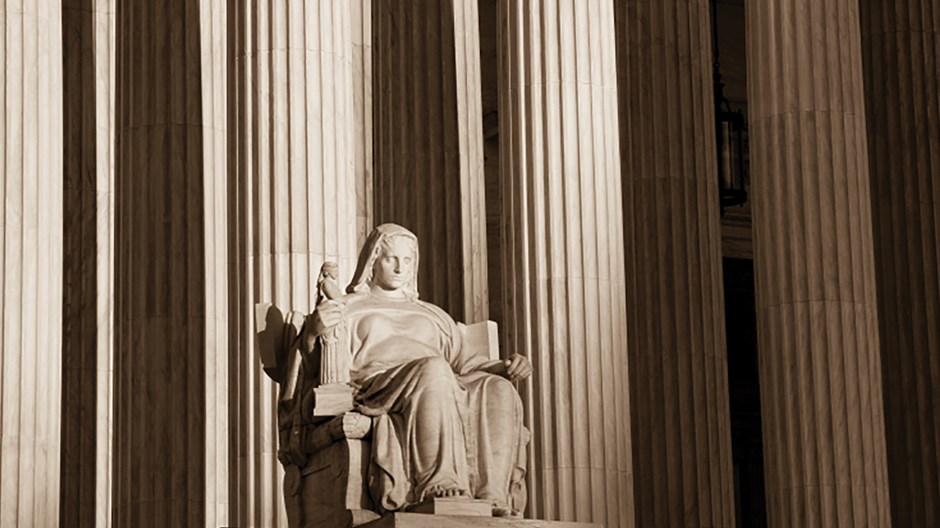
The court unanimously sided with the church and school. Religious institutions must retain the right to decide, in Chief Justice John Roberts's felicitous phrasing, who will "personify" their beliefs. The opinion affirmed a "ministerial exception" to workplace-discrimination law. It grounded this exception in both the no-establishment and free-exercise clauses of the First Amendment. Perich taught secular subjects, but she also gave doctrinal and moral instruction. She did so as a commissioned Lutheran minister. Allowing her suit to proceed would empower the courts to second-guess the school's assessment of her ministerial competence.
"The interest of society in the enforcement of employment discrimination statutes is undoubtedly important," Roberts concluded. "But so too is the interest of religious groups in choosing who will preach their beliefs, teach their faith, and carry out their mission."
We wholeheartedly endorse the Supreme Court's opinion. Government micromanagement of faith-based hiring and firing undercuts free-exercise rights intolerably. But many people don't see things this way. They sympathize with Perich. They abhor the church's exemption from rules that protect workers from prejudice. Our culture instinctively recoils at the notion of discrimination.
Has alarmism blinded us to this country's extraordinary achievements in protecting religious liberty?
Against such headwinds, the Supreme Court has recognized—again, unanimously—a "special solicitude to the rights of religious organizations" under the First Amendment. This is remarkable, and we should not underestimate its value. Perich's predicament tugs at our heartstrings. The church's prerogative to fire her makes us queasy. Religion's cultured despisers find the whole spectacle obnoxious. And yet, the highest court in the land affirms a basic right of religious groups for self-determination.
The guarantee of religious liberty affirms the dignity and equality of human beings in their pursuit of truth. Erode America's "first freedom," and you erode the basis for the freedoms of speech, press, and association that this quest requires. (More on this in a future issue of Christianity Today.)
In the meantime, we ask this: Has alarmism blinded us to this country's extraordinary achievements in protecting religious liberty? Measured against despotism in the past and in other societies today, religious Americans remain enviably free to act on their beliefs. The fact that the Supreme Court willingly vindicated an unpopular form of religious autonomy suggests that the First Amendment's safeguards are as sturdy as ever.
Article continues below
Our call for perspective is not a call for complacency. Serious battles loom on the horizon. But, in the meantime, let Hosanna-Tabor talk you off the ledge—if not out of the fight.















 While we pray for peace, we need moral clarity about this war.
 A Christian reconciliation group in Israel and Palestine warned that war would come. Now the war threatens their relevance.españolالعربيةFrançais
 C.S. Lewis recommended discernment over diatribes in exactly the moments we’re most eager to indulge in critique.






