ABC's Once Upon a Time, now in its second season, has renewed widespread interest in fairy tales and myths—and perhaps unwittingly, even in the story of Christian faith. C. S. Lewis wrote that he recognized the truth of Christianity in part because it was something in which all the hints of pagan myths were fulfilled, but was obviously more history than myth.
While we must hesitate before associating Christianity too much with any pop-culture offering, Once Upon a Time regularly includes biblical themes and tensions that pull on the inner core of our psyches—perhaps evidence of deep longings planted by God and never forgotten. Once retells fairy tales in a modern context while addressing such themes as the fall of man and redemption and salvation.
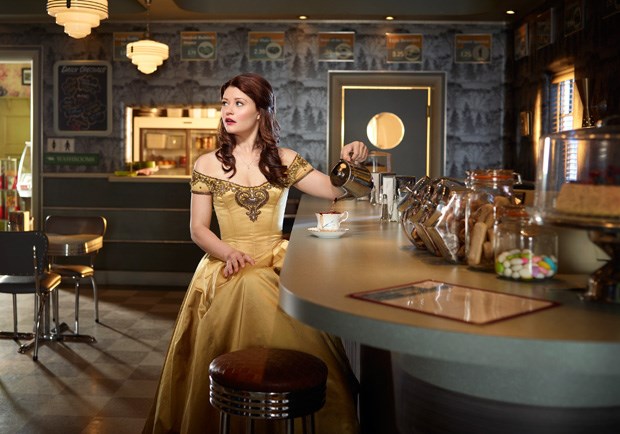
On the show, our real world intersects with a mythological one in mysterious ways. The show's characters, all from popular fairy tales, live in a world without happy endings because they are all under a curse (echoes of Genesis 3). Hinting at a cosmic battle, the main antagonist, the evil queen of the Snow White story, has cursed the entire fairy-tale world in order to get revenge on the protagonist, Snow White, and has sent its inhabitants to our world. Snow's daughter, Emma, who came to our world as a baby, can break the curse and save everyone; characters in the show even call her "the Savior." She is awakening people to a knowledge of the battle in which they are engaged and their true identity, and weakening the power of the curse.
One episode near the end of the first season reveals that the only way to break the curse is for the savior to die. It's not a perfect parallel to the old, old story; Emma is an unwitting and unwilling savior. But in the bigger picture, the narrative is remarkably similar to our own—mirroring our need for a redeemer.
Written by some of the co-writers of Lost—and with several nods to that series—Once includes its share of twists and turns. At one point, it reveals a post-modern view of reality: Emma tells her son, "Henry, just because you believe something doesn't make it true." Henry replies, "That's exactly what makes it true."
Still, Once is worth watching, reflecting ideas and conversations taking place in current culture. I will be joining many in season two—and perhaps beyond—in pulling for the curse to be broken, and the return of everything to the way it was meant to be.
The hard part is the wait once you believe.
Joy Craun has a B.A. in comparative literature from Vanderbilt and an M.Div. from Trinity Evangelical Divinity School.















 While we pray for peace, we need moral clarity about this war.
 We’ve got little information on Jesus’ appearance and personality. But that’s the way God designed it.españolFrançais
 C.S. Lewis recommended discernment over diatribes in exactly the moments we’re most eager to indulge in critique.






