Always the same. While we're all now focused on the change that's about to happen in the Catholic Church as Pope Benedict XVI steps down, the Latin phrase semper eadem—always the same—is often invoked to describe the unchanging character of the Catholic Church.
Certain critics say no real change can take place in the Catholic Church, but change does take place, though it usually happens by indirection, reassessment, and development. The result is what Pope Benedict XVI has called a "hermeneutic of continuity and reform." This was evident in the 2012 Synod of Bishops, convened to consider "The New Evangelization for the Transmission of the Christian Faith."
I participated in this recent synod as a fraternal delegate representing the Baptist World Alliance. The conveners asked the fraternal delegates to make a brief presentation to the synod, offer written comments on the proceedings, and participate in small groups to help draft the final documents. Given the distant and even hostile relations between Catholics and evangelicals in the past, this represents a remarkable degree of openness on the part of the Catholic Church. Though Vatican II documents call non-Catholic Christians "separated brothers," the synod decidedly emphasized fraternity. This was evident in three major themes of the synod.
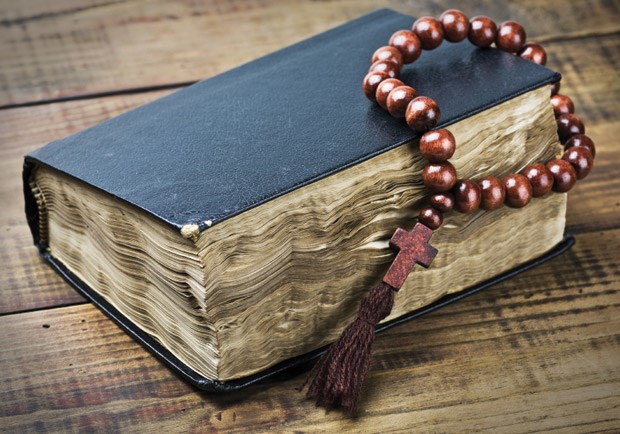
1. The centrality of the Bible. The synod recognized the importance of reading, studying, translating, and obeying the written Word of God as essential for evangelization. Lamar Vest of the American Bible Society made a special presentation to the pope and spoke of the collaborative work of spreading the Scriptures throughout the world. We should never minimize the transforming power of God's Word: The Reformation began with a Catholic monk, Martin Luther, poring over the text of the Bible.
2. Jesus Christ and his saving grace. The synod described the Christian faith as "a true encounter and relationship with Jesus Christ," "not simply teachings, wise sayings, a code of morality, or a tradition." We need a "new" evangelization because difficult challenges confront Christian witness today. These include secularism, relativism, radical pluralism, the denial of God, and the loss of basic values of decency and respect for life. Though globalization has spread these spiritual viruses throughout the world, the synod noted the new opportunities technology brings for sharing the message of Christ across the world.
The synod recognized the importance of reading, studying, translating, and obeying the written Word of God as essential for evangelization.
But none of these are distinctively Catholic issues. They concern Christian evangelists everywhere. As pluralism threatens both Catholic and evangelical thought, the synod boldly affirmed Jesus Christ as the one and only Savior of the world. Several speakers noted the 1999 joint statement by Catholics and Protestants, which said in part, "By grace alone, in faith in Christ's saving work and not because of any merit on our part, we are accepted by God and receive the Holy Spirit, who renews our hearts while equipping and calling us to good works." Such statements do not dissolve all differences, but they surely point toward a hopeful convergence.
3. The importance of religious freedom. In my remarks to the synod, I stressed this not only for Christians but for all people. Today many nations and groups assault religious freedom, sometimes blatantly, sometimes subtly. All Christians who take seriously Jesus' call to evangelize must stand and work together for the protection and flourishing of universal religious freedom, both for individuals and for institutions of faith. In his encyclical "Ut Unum Sint" (1995), Pope John Paul II emphasized the memory of the martyrs as a living part of our Christian witness today.
While in Rome, I visited the Basilica of St. Bartholomew and saw a beautiful icon of 20th- and 21st-century Christian martyrs, from East and West, North and South, Catholic and Protestant alike—including two Baptists: Martin Luther King Jr. and a Romanian pastor killed by the Communists for his faith. Just as the blood of the ancient martyrs was the seed of the early church, so the blood of today's martyrs is the seed of today's church unity.
In response to Mark A. Noll and Carolyn Nystrom's book Is the Reformation Over? I've said that the Reformation is over only to the extent that it has succeeded. In fact, in some measure, the Reformation has succeeded—and more so within the Catholic Church than in certain sectors of the Protestant world. Still, important theological differences remain. The way forward is to seek unity in truth based on God's written Word, the Holy Scriptures.
Charles Colson was the founder of Prison Fellowship Ministries, an outreach to convicts, victims of crime, and justice officers. Colson, who converted to Christianity before he was indicted on Watergate-related charges, became one of evangelicalism's most influential voices. His books included Born Again and How Now Shall We Live? A Christianity Today columnist since 1985, Colson died in 2012.
Timothy George is the dean of Beeson Divinity School at Samford University and a member of Christianity Today's Editorial Council. His books include Reading Scripture with the Reformers and Is the Father of Jesus the God of Muhammad? Like Colson, George has been heavily involved in the Evangelicals and Catholics Together discussions. George began cowriting "Contra Mundum" with Colson in 2011.
















 While we pray for peace, we need moral clarity about this war.
 A Christian reconciliation group in Israel and Palestine warned that war would come. Now the war threatens their relevance.españolالعربيةFrançais
 C.S. Lewis recommended discernment over diatribes in exactly the moments we’re most eager to indulge in critique.






