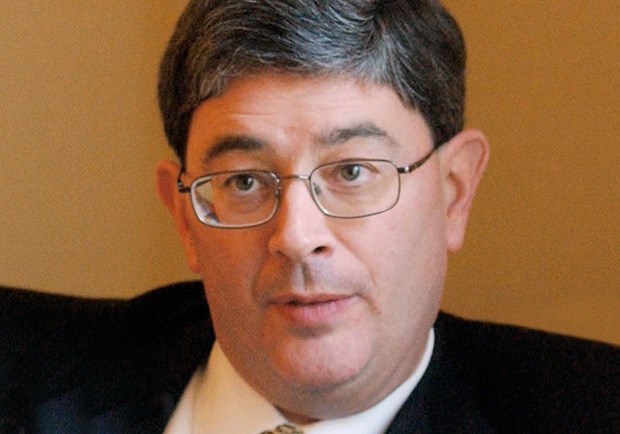
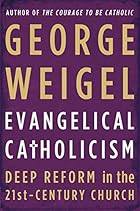
The words "Evangelical Catholic" may sound like a novel concept or a peculiar combination to some Protestants, but the phrase signifies a movement that reaches back more than a century in time. It is only in more recent years, however, that Catholicism's "evangelical" turn has acquired definite form and substance. Since Pope John Paul II articulated a new vision of lay evangelization in encyclicals such as Redemptoris Missio (1990), Evangelical Catholicism has captured the hearts and imaginations of faithful Catholics around the globe, spawning radio and television networks, colleges, a myriad of lay-led apostolates ("ministries" in Protestant parlance), and many other fresh initiatives. In Evangelical Catholicism: Deep Reform in the 21st-Century Church (Basic Books), George Weigel reflects on how this movement came about and how it promises to transform both the Catholic Church and the surrounding society. Chris Castaldo, director of the Ministry for Gospel Renewal at Wheaton College's Billy Graham Center, spoke with Weigel about obstacles facing Evangelical Catholicism, from secular hostility to challenges inside the church.
What are the biggest obstacles facing Evangelical Catholicism?
The biggest challenge facing Evangelical Catholicism in the West is an aggressive secularism that has closed its ears to any "rumors of angels," to recall Peter Berger's metaphor for the hints and traces of God's presence in the world. So the Evangelical Catholicism of the 21st century must devise ways to break through that deafness. That's one reason why Benedict XVI so stressed the beauty of the liturgy, and the need to worship God liturgically in a dignified and beautiful way. Beauty can be a window into a larger world for cynical postmoderns. If you experience something as beautiful, that can open up the possibility of exploring truth and goodness. Another challenge is the Gnosticism that has become rampant in the postmodern West—the notion that everything in the human condition is plastic, malleable, and subject to change by human willfulness. Things like maleness and femaleness. Or marriage. Evangelical Catholicism's defense and promotion of biblical realism and, in public life, of the truths of the natural moral law—the moral truths built into the world and into us—has to contend with this cultural tsunami, which finds its most powerful expression in the sexual revolution. That's why John Paul II's theology of the body and Benedict XVI's notion of a "grammar of the human" or "human ecology" are essential parts of the evangelical Catholic proposal.
Besides Father Robert Barron, which Catholic leaders in the post-Vatican II church are models of preaching for cultural change?
Certainly Benedict XVI, who's arguably the greatest papal preacher since the reign, over 14 centuries ago, of Pope Gregory the Great. Father William Joensen at Loras College in Iowa is another master-preacher. The recently named Cardinal James Harvey is a superb preacher. I could name many more. But let's also look back at the Church Fathers, whose expository preaching is a model for Catholic homilists today, and let's not forget that preaching is a form of teaching. Contemporary Catholic liturgists turn pale and start making choking noises when they hear this, and so do many preaching gurus; but that's too bad. John Chrysostom didn't tell jokes and funny anecdotes in his homilies: He unpacked the Scriptures through the tradition of the Church. And that's what Catholic preaching must do more of today. In Evangelical Catholicism, I suggest that deacons, priests, and bishops prepare their homilies with a good Biblical commentary (often Protestant in origin) in one hand, and the Catechism of the Catholic Church in the other, always keeping in mind what they've read from the Fathers that day in the Office of Reading in the Liturgy of the Hours, the breviary.
You state that "Postmodern 'spiritually' is for seekers," while "Evangelical Catholicism is for finders." Can you elaborate?
Postmodernism is about your truth and my truth, but never about the truth. Evangelical Catholicism, like all Great-Tradition Christianity, is about being found by the One who is the way, the truth, and the life, and clinging to him. Postmodern spirituality is about man's search for God. Evangelical Catholicism, like all Great-Tradition Christianity, is about God's search for us, and our learning to take the same path through history that God is taking.
What can be done to engage Catholic clergy and laity who are in a "diminished state" of communion with the Church?
Engaging them. Most of the time they're left alone in their confusions. It's a clear responsibility of bishops to invite doctrinally wayward priests into a full communion with the Catholic symphony of truth, as it's a clear responsibility of pastors to do exactly the same thing with wayward laity. Of course we're all "wayward" in an important sense, and that's why sacramental confession is an essential part of Evangelical Catholicism. But ignoring deep doctrinal and moral confusions is an abrogation of responsibility by pastors, be they priests or bishops. Shepherds engage with love; but they engage.
Article continues below
What are the primary areas of confusion about the mission laypeople have in the church?
The Catholic Church in the United States (and Europe, and Latin America) is going to go through a season, perhaps 20 years long, of a real shortage of priests. Thus many of the administrative tasks that priests now normally perform in parishes are going to have to be taken up by trained laymen and laywomen. So the administrative side of Catholicism will wear a more lay face in the immediate future, by necessity. But this is not the primary lay mission in the church. The primary lay mission in the church is to be the presence of Christ in the world: family, neighborhood, business, culture, public life. The challenge here is to get every Catholic thinking of himself or herself as a missionary: someone who enters "mission territory" every day. Getting a paycheck from the church isn't what Vatican II meant by "lay mission," or what John Paul II meant by everyone in the church putting out "into the deep" [Luke 5:4] of the New Evangelization. The Council and Blessed John Paul meant us all to be witnesses, inviting others into friendship with Jesus Christ.
In light of your conviction that the "Bishop of Rome is, above all, the Church's first witness—the witness whose own witness strengthens the witness of all the brethren," what qualities do you hope to find in the new pope?
A man of profound, transparent, and charismatic faith, who conveys the adventure of Christian discipleship through his person as well as by his words. A man of extensive pastoral experience, who can speak across and through different cultural experiences and who has demonstrated a capacity to make postmoderns soaked in the juices of irony and cynicism think again. A man with good judgment in people, who can find the collaborators he needs to reform the church's central bureaucracy and make it an instrument of the New Evangelization, not an impediment to it. A man of natural resilience, amplified by grace, who can bear the burden of the papacy without being crushed by it, physically and emotionally. A man of openness and curiosity who seeks information and analysis from outside the normal ecclesiastical channels. A man of strategic vision who can see around corners and over walls, who can discern possibilities where others find only obstacles, and who can thereby plant seeds for the long term, content to let the harvest be reaped in God's good time. A man of courage, who is not beset by problems or crumbles beneath them, which must include the courage to be a disciplinarian when necessary. A man of some linguistic facility. It's a tall order, I know, but it's been filled before and it can be filled again.













 While we pray for peace, we need moral clarity about this war.
 A Christian reconciliation group in Israel and Palestine warned that war would come. Now the war threatens their relevance.españolالعربيةFrançais
 After lobbying from fellow Southern Baptists and Christians affected by the war, the House speaker moves a package forward.





