Editor's note: "Through a Screen Darkly," a monthly commentary by CT Movies critic Jeffrey Overstreet,explores films old and new, as well as relevant themes and trends in cinema. The column continues the journey begun in Overstreet's book of the same name.
As a kid, I looked forward to Christmas movies and television programs as much as most people look forward to the holiday parties, cookies, or the stuff in their stockings.
There were movies too, but they were on too late and I wasn't allowed to stay up to see how they ended. So, for The Sound of Music, I didn't learn about Liesl's Nazi boyfriend or the family's frantic escape until I was a teenager. But the sound of Julie Andrews singing "My Favorite Things" became as familiar as any Christmas carol. Other movies that often aired during the holidays included The Ten Commandments, It's a Wonderful Life, Miracle on 34th Street, and every so often, a new version of Charles Dickens' A Christmas Carol.
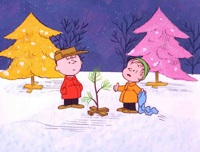
But as years went by, I became more and more puzzled about the absence of the Nativity story. Only two TV programs—The Little Drummer Boy and A Charlie Brown Christmas—bothered to acknowledge the baby born in the manger. There were no movies about it. What was the problem? Weren't the marvels, the mayhem, and the miracle of that "midnight clear" a fantastic subject for a Christmas movie?
Looking for a new 'classic'
Every December brings some new candidate to join the canon of Christmas classics.
Do The Santa Clause and its sequels or The Polar Express qualify? How about this year's zany comedy Four Christmases or Nothing Like the Holidays?
But most of these movies avoid any mention of the Nativity. If they do acknowledge the Incarnation, they treat it like just another cultural tradition or fairy tale. And they conclude by emphasizing something that vaguely resembles faith. "One thing about trains," says the conductor of The Polar Express (played by Tom Hanks). "It doesn't matter where they're going. What matters is deciding to get on." I answered that in my original review: "It does matter which train we climb aboard, which dream we adhere to, and what we choose to believe in."
Don't waste my time with simple platitudes about believing in myself. Give me images and stories of substantial hope—not wish-fulfillment images of Hallmark card coziness. Remind me of the power that inspires the children in A Charlie Brown Christmas, the story of a loving God who humbles himself to be born among livestock. When they hear that, they burst into song. We have too many Christmas movies that are merely "pretty" or sentimental—they get me thinking about earthly comforts rather than the fierce redemptive power of the Incarnation, the scandal of Christmas that shines in the darkness. If you'll excuse the battered expression, keep the Christ in Christmas.
Some of the films that have best captured the redemptive truth of Christmas are PG-13 or even R-rated for their startling and horrifying content—like Scripture's own versions of the Christmas story. But ironically, the film with the title you'd think might best depict that narrative—The Nativity Story—actually falls short.
This 'Nativity' failed to inspire
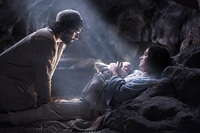
Two years ago, the movie I'd hoped to see since childhood, finally arrived: The Nativity Story. So why wasn't I moved and inspired? Why, when I ask my Christian friends about their favorite Christmas movies, does The Nativity Story never earn a mention?
I think it has something to do with Roger Ebert's mantra: "A movie is not about what it is about. It is about how it is about it."
I was impressed with the naturalistic details and the earnest attempt to make the Christmas story look real. But as the artist Georgia O'Keeffe once said, "Nothing is less real than realism. Details are confusing. It is only by selection, by elimination, by emphasis, that we get at the real meaning of things." The Nativity Story, rated PG and directed by Catherine Hardwicke, failed to inspire much of a sense of awe in the appearance of the angel, in the night of Christ's birth, or in the narrow escapes from the wicked king's soldiers.
Powerful, visceral reminder
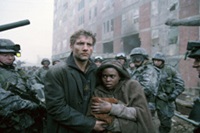
On the other hand, I felt the power of Christ's coming far more tangibly in Alfonso Cuaron's R-rated reimagining of P.D. James' apocalyptic tale Children of Men (2006).
A man, a woman, and a miracle child walk through a war zone
In that film, a young woman is—against all odds—pregnant. Together, she and a male companion—an older man who would protect her—had made a perilous journey through a war zone, a disintegrating world that looks like all of today's bad news wrapped up into one horrific nightmare. They slip through, hoping to deliver the baby and give endangered humankind some hope.
Article continues below
When the baby is born, the man and woman go into hiding, staying with those who will open their doors and find room for this vulnerable miracle. Before long, there is bloodshed in the streets, and they must make a brave escape with the child. Warriors on both sides of the urban warfare stop short, awestruck and overcome with hope, when they see the child.
Cuaron said he wasn't interested in conveying any kind of Christian message. But his desire to tell a powerful story drew him to these potent elements anyway. If eternity is written in our hearts, is it any surprise that audiences were enthralled by this movie about a miracle child who brings hope to the world?
And was it merely a coincidence that the movie opened on December 25?
Christmas joy, even in war
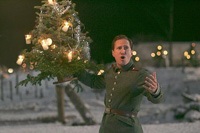
Another great film about the bright light of Christmas in a very dark world is Christian Carion's Joyeux Noël (2005).
Joyeux Noel' depicted a light in the darkness
It's a riveting account of a most unlikely Christmas Eve truce on a French battlefield in 1914. It's a true story, and that makes the film all the more astonishing. These soldiers, trained and eager to slaughter each other, weren't just within shouting distance of each other—they were within whispering distance. And yet, in acknowledgement of Christmas, inspired by the beautiful singing of "Silent Night," they all agreed to a cease-fire. They put their guns down, crossed that dangerous distance, and fellowshipped with one another, celebrating the birth of a Savior they shared. If a heavenly host appeared, would anyone have really been surprised?
This Oscar-nominated film is the best presentation of the story yet made. But if you want to see it played out by familiar American actors, there's always Midnight Clear, starring Gary Sinise and Ethan Hawke (and with an enchanting end-credits version of "It Came Upon a Midnight Clear" by Sam Phillips). There is also a documentary: Stanley Weintraub's Silent Night: The Story of the World War I Christmas Truce.
A Christmas Tale' is now in limited theaters
A blazing beacon
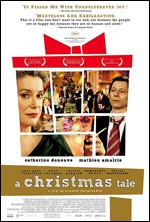
The true story of Christmas shines out like a blazing beacon, a signal from a lighthouse for those lost at sea, in Arnaud Desplechin's dark comedy A Christmas Tale (2008).
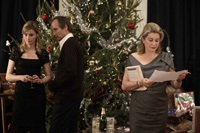
It's an R-rated tale of a large family reunion. And what a family! The Vuillards only pretend to like each other, and they spend the holiday airing their grudges, resentments, and dark secrets. Drunkenness. Obscenities. Men who sleep with other men's wives in full view of the rest of the family. When the family sits down to watch The Ten Commandments—the irony's a little too thick.
Article continues below
Without a reminder of the baby born in the manger, this film might have become the most hopeless and horrifying Christmas movie I've ever seen. Nevertheless, this tale of worldly wickedness is all the more intriguing for two fleeting but marvelous moments that have been almost entirely overlooked by critics.
In one scene, Junon's young grandchildren play with the figurines in a Nativity scene.
"When is Jesus going to come?" one child asks. "Maybe midnight," answers the other, clearly confusing the Christmas story with the Christmas fairy tale.
When they tell their father, Henri's brother Ivan (Melvil Poupaud), that they are "waiting for Jesus," he quickly instructs them: "Jesus never existed."
Without much hesitation, the boy responds: "We'll wait anyway. We want to see him."
On that same night, Junon, Henri, and young Paul attend a midnight mass. For Junon and Henri it appears to be a matter of meaningless habit. For Paul, though, it's a revelation. He falls to his knees and begins to pray with fierce intensity, while his relatives look on in bewilderment. The three then return home, and the animosity seems to have dissolved into thin air … for a while.
Even amidst the family feuding, Christmas shines through
No, the experience does not spark any revival of love or reconciliation within the family. The bad behavior continues. I doubt that the director had any intention of raising questions about faith.
Nevertheless, that flare of childlike faith and that prayer of midnight conviction stand out as curious moments of spiritual significance in the middle of this dark movie about cynical, faithless people. They indicate a longing for something essential, a sadness for something they've lost. And it's the children, contemplating the Christ child, who are closest to comprehending it.
Not just another fairy tale
A Christmas Tale reminded me of how some people want to dismiss the Nativity story as just another fairy tale. And yet, we cannot get away from it. There's something about the mysterious gravity of that story.
When we're reminded not just of the marvelous things that happened that night, but also of the darkness into which Christ was born—then we catch a glimpse of what was really at stake, of just how much our Lord gave up, and how much he suffered, to save a wretch like me.
This month, in the State of Washington's Capitol building, a Nativity scene is on display. Right beside it is a placard installed by the Freedom From Religion Foundation that reads: "There is only our natural world. Religion is but myth and superstition that hardens hearts and enslaves minds."
Article continues below
It's a free country. Atheists have every right to declare their opinion. But the sign has stirred angry protests from Christians.
I encourage them not to worry. Consider this: One exhibit offers a brash claim, unsupported by art, unadorned by anything attractive or beautiful. The other offers a beautiful and mysterious scene, a spectacle that often inspires humility, faith, and hope in those who meditate on it. Which is likely to capture imaginations? Which will speak to children?
Madeleine L'Engle wrote that we do not draw people to the truth "by telling them how wrong they are and how right we are, but by showing them a light that is so lovely, they will long with all their hearts to know the source of it."
That's true in the public square, where ideas collide. It's also true on the big screen, where images kindle questions, and stories convey experiences. Even in a film about the world's most wicked family, a momentary meditation on the Christ child can put a question in the mind of the most cynical adult.
No matter how dire the darkness, or how brash the denials and protests of those who don't believe, the Christmas story will go on burning through doubt and darkness. For young and old, in a cathedral or the neighborhood multiplex, this simple pageant inspires a catch in the breath and a surge of wild hope.
A Charlie Brown Christmas'This 'Nativity' failed to inspireA man, a woman, and a miracle child walk through a war zoneJoyeux Noel' depicted a light in the darknessA Christmas Tale' is now in limited theatersEven amidst the family feuding, Christmas shines through












 While we pray for peace, we need moral clarity about this war.
 As my doubts about his teachings grew, so did a secret fascination with Jesus.
 As Haiti is uprooted by violence, church leaders treat gunshot wounds, give up homes for strangers, and rescue dignitaries.Français