Randall Wallace, the writer of Braveheart and We Were Soldiers, and his films are in the spotlight this weekend at the City of the Angels Film Festival, with the theme of "Heroism: What Price Glory?"
Graphic violence in films? Randall Wallace doesn't mind one bit. He even encourages it … under the right circumstances.
Wallace, the writer of Braveheart and the writer/director of We Were Soldiers, knows a little something about violent movies. And he knows a little something about heroes—one of his favorite topics when making a film.
That's why Wallace is the guest of honor at this weekend's City of the Angels Film Festival (CAFF), which will spotlight Wallace's movies—and a couple that have influenced him—under the festival theme, "Heroism: What Price Glory?"
The CAFF is just one of several elements of the annual Cinema Studies Conference, a four-day event (Oct. 19-22) which also features an academic conference hosted by the L.A. Film Studies Center (LAFSC), a Reel Spirituality conference sponsored by the Brehm Center at Fuller Theological Seminary, and culminating in the 13th annual CAFF.
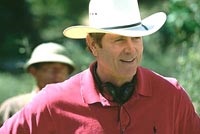
Wallace on the set of 'We Were Soldiers'
Wallace, a devout Christian who almost earned an MDiv from Duke Divinity School, says his faith strongly informs his filmmaking. At a Willow Creek conference last year, he said, "In every project I've had a moment when I've had to get down on my knees and pray, 'If this is the time, Lord, you want me to show my sons what a man does when he gets knocked down, then let me have that failure, bring it on. But please help me get up, please give me the strength to show them that if I go down, I'm going down with my flags flying, I'm going down bold in the truth as I see it.'"
Wallace's films are rife with the theme of heroism. In addition to Braveheart and We Were Soldiers, Wallace wrote Pearl Harbor and wrote and directed The Man in the Iron Mask.
We recently interviewed Wallace, who is now working on financing a movie titled The Mercenary, an adaptation of his own novel about Catherine the Great, Love and Honor.
You attended seminary yet chose an entertainment career. Are the two vocations all that different from each other?
Wallace: There are definite similarities; both careers seek to inspire. A writer/director of movies, like the pastor of a church, has the duty of encouraging people to believe, and can't do that without believing himself.Both careers seem to bring out the best and the worst in people, in those who do the job and those they encounter in doing it.
But …
Wallace: But we expect—we seem to actually crave—great flaws in entertainment industry people, while we demand that ministers be models of almost inhuman perfection.
As a Christian, how do you explain the graphic violence of your films?
Wallace: I emphasize the distinction between graphic and gratuitous.I've always intended any violence in my movies to be realistic, to tell the truth. We owe that to soldiers, we owe it to heroes.
But wouldn't a God of love have a problem with this? What would Jesus watch?
Wallace: I resist and even resent the notion that a film with faith-based values has to be placid, soft, un-masculine and un-muscular. As a Christian, I take seriously the Incarnation—that God expressed himself in Jesus, whose life was tangible and physical, as our lives are now. And to have real life in this world we must be prepared to bleed, as he did.
Your films until now are also strongly masculine, mostly about warriors.
Wallace: My films portray ideals, and their heroes—both men and women—display courage and faith and love that isn't limited to masculine or feminine. These characters, by the way, are braver and more loving than I am myself; they are models that inspire me, not expressions of a spiritual level that I've achieved. And yes, the men are powerfully masculine, and strong, deeply convicted men aren't often depicted in films.
Why is that?
Wallace: Our society as a whole is uncomfortable with them. As John Eldredge writes in his magnificent book Wild At Heart, boys are hard-wired to want to be William Wallace, but churches and schools try to turn them into Mr. Rogers. (And in case anybody wonders, I approved of Mr. Rogers; I watched his show regularly with my first son on my lap when he was three years old.)
William Wallace, the Musketeers, Lt. Col. Hal Moore. What do these men all have in common that we can learn from?
Wallace: The fictional Musketeers, and the non-fiction characters William Wallace and Hal Moore, all shared a commitment that gave them identity and shaped their choices. All these men believed in something Higher; we all become what we believe in.
What role do women play in your creative world?
Wallace: As I do with male characters, I try to portray the kind of woman who exudes and inspires love and faith, courage and hope. And as my mother would say, "There would be more gentlemen, if there were more ladies."
What draws you to the heroic?
Wallace: Doesn't everybody love stories about heroes? They grab our attention, they make our hearts pound—but only if we believe them, only if we can identify with them in some way and hope that to some extent we can become more like them.
Article continues below
Tell us how were you influenced by the other films you chose for the festival—A Man for All Seasons and The Good, the Bad and the Ugly?
Wallace: These two films are radically different, of course; I love them for their passion and their exuberance.Neither film was trying to copy another; they were both trying to be true to their own vision.
How do the two films' characters embody heroism for you?
Wallace: Both show men who were willing to embrace exactly who they were.
What do heroic films do to you? How do they change you?
Wallace: I want to walk out of a theater and think, Because of what I just experienced, my life will never be the same. I think everybody wants that.
How does the life of Jesus fit into this kind of hero figure for you?
Wallace: Jesus is the ultimate hero. His message in the face of unspeakable suffering—spiritual, physical and mental—was, "You can try to kill my body, but I will never deny who I am."












 While we pray for peace, we need moral clarity about this war.
 A Christian reconciliation group in Israel and Palestine warned that war would come. Now the war threatens their relevance.العربيةFrançais
 As Haiti is uprooted by violence, church leaders treat gunshot wounds, give up homes for strangers, and rescue dignitaries.





