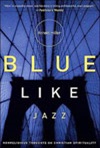
Donald Miller's Blue Like Jazz has been adapted into a screenplay, with The Second Chance director Steve Taylor at the helm—and both men are pretty excited about it.
It's been nearly seven years since Donald Miller sat down to write the spiritually evocative and personally revealing Blue Like Jazz. Since it was published in 2003, the book's popularity has spread like wildfire, selling more than a million copies.
Miller has joined forces with Christian music icon-turned-movie director Steve Taylor and co-writer Ben Pearson to create a big-screen version of Blue Like Jazz. The three creatives recently completed the screenplay and will begin a six-week film shoot in mid-May on the campus of Reed College in Portland, Oregon. With Taylor at the helm, the indie film has modest budget—by Hollywood standards.
Taylor, whose last movie project, The Second Chance, starring Michael W. Smith, was a hit with Christian audiences, hopes to release Blue Like Jazz in the first half of 2009.
CT Movies recently caught up with Taylor and Miller in the final pre-production days before shooting begins.
How did this idea come about?
Steve Taylor: A friend gave me the book at Christmas 2004, and then Don came to Nashville for a book reading in early 2005 and we met there. I loved the book. Particularly the confession booth scene was really moving. I thought, "I'm not sure what else this movie's going to be like, but I want to make a movie with that scene in it." I didn't know that you could make a movie about a Christian writer in his early 30s who lives off-campus and audits classes. I thought this needed to be about a 20-something-year-old who lives this experience, and Don was pretty much on board from the very beginning. He's very movie-savvy and didn't have any illusions that the book was an easy adaptation. He knew that it would take some work.
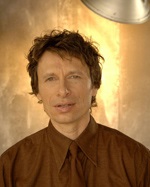
Donald Miller
Donald Miller: I'd already been approached by some people about making a film and wasn't interested. I just didn't know how you'd take a book of topical essays and turn it into a story arc, a film. But Steve helped me understand that we would be writing a story using the characters that would have the feel of the book. The essence of the ideas communicated in the book would come through in a narrative form, and that would be our definition of truth. That helped me say, "That's not only doable, but it would be a blast to take these characters and flesh out a fictional version of their lives, dealing with the issues that the book deals with."
So you began the process of collaborating on a screenplay. How did that work?
Taylor: Don would come out to Nashville for a few days, and then we'd go out to Portland. We went back and forth, trying to work out the ideas; I even got Don to take a three-day screenwriting class. It was a blast; we spent so much time laughing. We had a big board and started putting ideas up and started talking about what parts of the book people would be angry about if they weren't in the movie. We came up with a pretty short list, but we may all be totally deluded about that. The thing we all felt was that when you finish the book Blue Like Jazz, it evokes a certain feeling, and we just wanted people to leave the theater with that same feeling.
Miller: I guess it was about a year process from start to finish. We would meet for a week and have very intensive sessions. We'd wake up in the same house and start working, and go to bed very late. I don't think we even typed a single page of dialogue for probably the first six months. It was all, "What happens next" and "what happens next" and "if we go back and change this scene, we get more drama here." That process was a blast. Then we started writing the dialogue, which kind of writes itself once you know what's happening in each scene.
How was the screenwriting class?
Taylor: This is the class taught by Robert McKee—the famous class that Nicolas Cage's characters, the brothers, attend in the movie Adaptation. I've been to the class myself. I think Don really soaked up the class.
Miller: I fell in love with screenwriting in this process. We're working now on another major film with another group, and there's another group that we're working with on a television series with. I will probably be writing less books and more for the screen, mainly because I like being behind the scenes more than I like being "on stage." Taking this course was the next step, and I've taken another one since then on story. The next book that I'm writing, which will release in September 2009, is about story. It's about when two filmmakers came into my life and said, "We have to make things up because your life is so boring." Can the same principles they use to make a movie exciting make my real life exciting? The fictional me is getting better and better and having a more meaningful experience—and I want one, too. So it's kind of about those elements of story, and the way screenwriters create their drama. So going to that Robert McKee seminar set up the next five to 10 years of my career in terms of thinking about story.
Article continues below
For this film, how challenging was it to create a fictional story from what is essentially a book of essays?
Miller: Our first storyboarding session, which lasted a few days, I can only describe as magical. We kept coming up with ideas that were very entertaining to us. Who cares if the movie got made, we wanted to find out how the story ended. And that continued to happen every time we got together—just more and more magic. I mean, there would be times when we'd have to stop and I would have to go outside and be amazed at what just happened with these characters. The story really tells itself. I really don't feel very responsible for it. We were writing once at my buddy Jim's house in Nashville and I just remember stepping out on his deck and thinking, "Man, I can't believe that was what was happening all along in this story, and we never saw it." And yet somehow we put the pieces in play—it's like somehow our subconscious always knew, and then it was revealed to us just as it would be to a viewer. It was a very powerful experience.
Steve Taylor
Taylor: On a typical day, we'd work on a scene and talk about it, and then Don would say, "I've got an idea." He'd take the computer and we'd leave him alone for 40 minutes or so. Then he'd say "Okay, check this out," and he'd read it to us and we would just crack up. He's really funny, and he's good with dialogue. Then Ben and I would take it and go back to LA and would work it some more and turn it into what would be an actual screenplay. It just started taking shape over time.
So without giving too much away, what would you say is the basic story arc?
Taylor: It's about a 20-year-old from Houston who has basically grown up in church and is confused, disillusioned, and kind of at the place most college sophomores are. He decides to flee his upbringing and go to this school—Reed College—that he perceives as being the most opposite of where he's grown up in his life. I don't want to give away a lot, but essentially, the fictional "Don" character lives a lot of the experiences that Donald Miller writes and talks about in his book. The "Don" character is a lot different, but we thought that was the most interesting way to portray this experience.
Miller: It's a movie about coming out of the closet regarding who you are as a person. The character happens to be a Christian and is very ashamed of that, but he's able to come out of the closet by the end of it. It's really a film more about a human being than it is about Christianity. Christianity is really just the thing that this human being is dealing with.
Article continues below
Will the real Donald Miller have a cameo appearance?
Taylor: Yes! There's a character in his book called "Trendy Writer," and the content's been changed quite a bit, but he will play that part. He also originally had it in his rider that Zac Efron has to play the "Don Miller" character, but I'm not going to do that. Nobody breaks into song or anything in this movie.
There's also a book reading/debate scene that takes place in the world-famous Powell's Bookstore in downtown Portland, and I need Tim Keller to make a cameo in this movie. I've heard pretty much every sermon of his—we go to New York now just to hear him preach. So mention that we're looking for Tim Keller. He'll probably never do it, but a man can dream, right?
How are you planning to finance the movie?
Taylor: We showed it to a couple of studios who were enthusiastic, but I didn't really want them to pay for it, because we wanted at least a co-production deal where we would keep ownership of the creative process. Studio funding is typically problematic because it comes with too many strings attached. So we're in the process of raising the entire budget via private investors so we can do this ourselves, because we feel that we know what this movie needs to be and, frankly, a Hollywood studio doesn't. My business partners and I decided private funding is the best route to ensure that the movie retains the true spirit of the book and has the best shot for commercial success.
As far as distribution goes, we have one studio who has already agreed to distribute it, but we also now have three studios tracking the project because they've read the script and are interested. So we'll let them see it when it's done and we'll see how it all goes.
Do you feel like you're making a movie with universal appeal, or one that will be targeted primarily to a Christian audience?
Miller: We want it to have a universal appeal, but honestly I think it will be mostly Christians who go to see it. People bought cases of the book to hand to people who weren't Christians and many people have come to know Christ through reading the book, and I think the movie is very similar. It's the sort of film I could bring my friend who's not a Christian to, not to introduce them to the gospel or to Jesus, but to introduce them to me. This is my life, this is my struggle and this is how I feel. I think the movie will be kind of a relational tool for Christians to help them be understood in an American culture. And to me that's a very powerful tool. Many people come to know Christ through their relationships with believers, and this is a tool that enhances and deepens those relationships.
Article continues below
Taylor: Hollywood has this system of readers who read screenplays and give their comments by rating them "pass," "consider," or sometimes "strong consider." A reader for [a major studio] gave us a "strong consider" rating. What made it stand out to him from the typical college comedy were these struggles of faith—but they didn't keep it from being a funny and engaging movie. It kind of managed to make what can be a stupid genre more interesting, true and poignant, but also more funny. His comments sounded like something I think I could have actually written about the movie myself.













 While we pray for peace, we need moral clarity about this war.
 A Christian reconciliation group in Israel and Palestine warned that war would come. Now the war threatens their relevance.العربيةFrançais
 Helping marine biodiversity flourish is a means of participating in God’s work, says an Indonesian theologian.