The myth of the noble savage lives on in the popular imagination. This myth holds, of course, that indigenous tribespeople live in harmony with nature and with one another. A corollary, promoted by some anthropologists, says that the pristine cultures of such remote people groups should remain undisturbed by modernity—and especially by missionaries, who are seen as meddling cultural imperialists.
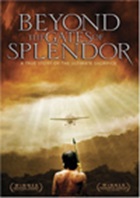
If this wishful fairytale is important to you, don't watch Beyond the Gates of Splendor, newly released on DVD. This documentary, telling the true story of five American missionaries murdered on a remote sandbar in Ecuador half a century ago, explodes the myth of the noble savage. But it doesn't stop there, showing through interviews with the five widows, two anthropologists, and numerous Waodani Indians the spiritual and social transformation of a murderous "stone age" tribe.
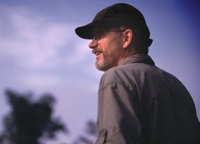
Steve Saint, son of one of the martyrs, narrates the documentary
The film begins not with the missionaries, whose plight captured a shocked nation's attention through stunning coverage in Life magazine, but with the indigenous Waodani people, known derisively as the "Auca," which (loosely translated) means "naked savages." This small but feared group unwittingly did its best to live up (or down) to the stereotype.
At the time, the tribespeople killed not only hapless outsiders who crossed their territory, but one another, with a ferocity worse than anything seen in the slums of Chicago or Los Angeles. Beyond the Gates of Splendor, while not gory, relentlessly conveys through interviews with tribe members the pitiless culture of the Waodani, who would kill each other for what we might call the most insignificant slights. An estimated six in every ten adult deaths were homicides.
The documentary is noticeably short on evangelical clichés. In it, anthropologists Clayton and Carol Robarchek state that the Waodanis' main problem was not a scarcity of natural resources leading to vicious competition, but a dysfunctional culture that valued egalitarianism and autonomy to their logical conclusions. These uncomfortably familiar values to Americans, good when balanced by others such as mercy and by adequate social structures to adjudicate between competing claims, were a recipe for self-inflicted genocide among the Waodani, for whom blood feuds and sudden murder had been a way of life for at least five generations.
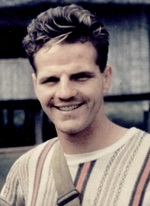
Jim Elliot was one of the five martyred men
By the time the missionaries showed up, the Waodani were in danger of extinction from within and a rapacious form of capitalism from without. The documentary then turns to the missionaries, tracing their academic careers, their marriages, and the decisions that brought them to the Amazon Basin. It mixes fresh comments (but occasionally confusingly) from the missionary wives with old footage from the early years to bring these martyrs to life in a way that books and yellowed newspaper clippings simply cannot. The contrast between the idealistic, smiling American missionaries, who looked as if they just stepped off the set of Happy Days in the flower of their youth, and the pitiless and hunted faces of the Waodani is striking.
Then the documentary, based on widow Elisabeth Elliot's classic account, Through Gates of Splendor, moves inexorably but tastefully to the slaughter of missionaries Jim Elliot, Roger Youderian, Nate Saint, Ed McCully, and Pete Fleming. Their grisly deaths are conveyed mostly through suggestion and interview, but viewers will see some corpses from a distance in the old footage.
Interestingly, Beyond the Gates clarifies for viewers who have only a hazy memory of the fatal encounter of January 8, 1956, why the Indians speared the missionaries to death. The day before, after numerous flights over Waodani territory, pilot Nate Saint secretly flew the five men in a small plane to the remote sandbar, where they made what seemed to be friendly contact with the locals, whose language was mostly incomprehensible to them. One of the Waodani, a man the missionaries called "George," would play a big role in their murders the next day. While the missionaries for some reason carried guns, they didn't intend to use them in self-defense, saying that they were ready to die, but the Waodani weren't. (This is about a close to a clear gospel presentation as the film gets.)
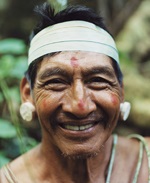
Mincaye, one of the men who speared the missionaries, is now a Christian
But the next day, after the missionaries returned, a Waodani named Nenkiwi ("George" to the missionaries), caught unsupervised with a young Waodani female, blamed them. Enraged, the Waodani returned to the sandbar and slaughtered the unsuspecting missionaries. The lie came out only years later.
After lingering over the subsequent horror and heartbreak perhaps a touch too long, the film moves to its most compelling section, the decision by Elisabeth Elliot and Rachel Saint, the strong-willed and assertive sister of Nate Saint, to live among the Waodani and share the gospel with them. Steve Saint, one of the children left fatherless, lived for a time among his father's killers, too.
But eventually, Elliot, now a famous speaker and author, had a disagreement with Saint about ministry philosophy and returned to America. Disappointingly, the documentary provides no details. (While the film provides copious detail about the sins of the Waodani, it is much more circumspect when it comes to the inevitable failings of the missionaries.) Rachel Saint assumed full responsibility for the tribespeople, increasing numbers of whom were becoming Christians, walking the "Jesus trail."
Article continues below
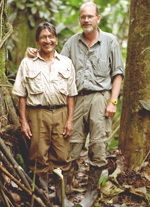
Steve Saint and Mincaye during the filming of the documentary
Fast forward to 1994. Rachel Saint has died of cancer, and the Waodani, nearly four decades after hearing the gospel, still seem bereft and dependent on Westerners. (Unfortunately, the makers of the documentary show little interest in why, which no doubt would be of great concern to anthropologists.) The Waodani ask the visiting Steve Saint to help them adapt to the encroaching outside world, and he agrees.
The film ends with powerful scenes of love between Saint family members and the Waodani who killed their father and grandfather. A more graphic presentation of the reconciling power of the gospel would be hard to find. Beyond the Gates then ends with some amusing but somewhat incongruous Coming to America-type cross-cultural observations from Mincaye, a diminutive Waodani who participated in the 1956 murders (but who is now called "Grandfather" by Steve Saint's son).
While light on missiological principles and on today's changed context for the North American missions movement, and skipping questions about what mistakes the missionaries might have made, Beyond the Gates is likely to appeal to young people raised on "extreme" sports and looking to go beyond myths and practice "authentic" discipleship. There are plenty of unreached people groups still out there, and plenty of challenges for a new generation. Here's hoping this fine documentary will spark even a fraction of the interest the actual events generated 50 years ago.
Beyond the Gates of Splendor is now available on DVD at ChristianBook.com. A feature film about the 1956 events, End of the Spear, will release to theaters nationwide in January.
What did the missionaries do right—and wrong? What might you have done differently if you were in their shoes? How do we draw the line between sensibly avoiding danger and trusting God to care for us?
Article continues below
How did the film's portrayal of reconciliation affect you? What lessons might you learn from those portrayals? How might they affect your own life?
What is the proper balance of evangelism and social work?
The Family Corner
For parents to consider
This film is rated PG-13 for some violent content and thematic elements. The documentary deals with difficult issues such as violence and murder in a sensitive, though at times emotionally wrenching, way. While ample historical footage gives us a clear portrayal of Christian grief, actual bodies are only seen from a distance, without the gore.
NIL deals in college athletics present new challenges—and opportunities—for colleges and students.
Emily Belz
Beyond the Gates of Splendor
1 of 3
Steve Saint, son of one of the martyrs, narrates the documentaryMincaye, one of the men who speared the missionaries, is now a ChristianSteve Saint and Mincaye during the filming of the documentary













 While we pray for peace, we need moral clarity about this war.
 As my doubts about his teachings grew, so did a secret fascination with Jesus.
 NIL deals in college athletics present new challenges—and opportunities—for colleges and students.