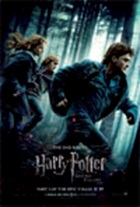
In Harry Potter and the Deathly Hallows - Part 1, the popular movie franchise experiences its dark night of the soul.
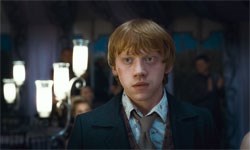
In the opening minutes, the heroic trio of Harry (Daniel Radcliffe), Hermione (Emma Watson), and Ron (Rupert Grint) say goodbye to their innocence in a series of powerful vignettes. On the brink of war, forced into hiding, they dramatically leave behind their old lives—and for viewers, they leave behind the typical Harry Potter film.
From there, Deathly Hallows 1 (part 2, the final film in the series, releases July 11, 2011) is a tonal and structural departure from the six previous movies. We never see Hogwarts School for Witchcraft and Wizardry. There's no longer a school-year schedule to pace the film. No Quidditch. Few brooms. And for a series that has been defined by its frenzy of characters, busy plots, and wondrous visual imagery, this sparse film—focused on three people in the wilderness—feels like a full stop.
Some viewers will applaud the film for bringing a new degree of maturity and depth. Others will complain it's a drab and boring downer in which very little happens.
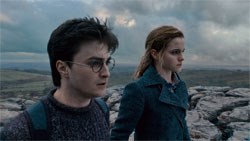
Daniel Radcliffe as Harry, Emma Watson as Hermione
In fact, this first half of J.K. Rowling's final Harry Potter book has all the makings of becoming the most divisive movie in the series. Rowling's epically long novel presented a difficult choice for the filmmakers: Either drastically hack the longest—and most detail rich—book of the series into one movie, or split it into two parts, knowing that the first half is largely internal conflict, back story, and exposition. Fans will argue both sides. Could this whole film have been condensed into one hour at the beginning of one epic Deathly Hallows movie? Yes. (In fact, I think this film would have been stronger if trimmed by about 20 minutes.) But I still feel the split was the right decision. It allowed the filmmakers to take their foot off of the gas, to let their established and strong characters roam, and to explore emotions and dynamics that otherwise would have been lost.
In many ways, this film reminds me of the quintessential "middle" movie, Star Wars: Episode V - The Empire Strikes Back (1980), and its simple plot: Bad guys come, good guys run. It's not much different here. With the power of the evil Lord Voldemort and his Death Eaters growing, Ron, Harry and Hermione are on the lam—separated from their allies and in constant danger. Their only hope is to locate and destroy horcruxes, split pieces of Voldemort's soul, so that he will again become mortal. But in this film, there's not much in the horcrux-smashing business. Mostly, the trio dodges attacks, thinks through mysteries, and gathers intel.
That backdrop allows the characters to breathe, to grow, and to wrestle with internal conflict: What if I am wrong? What if everything I believe is false? What if I am—as I suspect—really not good enough? This is a coming-of-age for Harry. His plans don't work. The path is not clear. Now what? Can he be who Dumbledore thought he was? What if he can't find his way?
This film is the closest that HP movies will get to a reserved character drama—and it works. Despite some great caper scenes and three or four bits of thrilling action, my favorite parts are the tiny, dialogue-less character moments packed with emotional undercurrents—scenes that would have likely been cut had Deathly Hallows been turned into one movie.
What really strikes the viewer here is the tone—a sparse, ominous tone of desperation—created by director David Yates, who excels in telling story with location and mood. He infuses visceral action with the frenzy and confusion of violence by using shaky cams and close shots. Stylized animation deftly tells an important fable. Washed out colors and a greenish-gray palate give the movie a somber Saving Private Ryan-esque crispness.
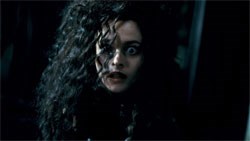
Helena Bonham Carter as Bellatrix Lestrange
As the heroes wander through cold, eerie forests, barren landscapes, and unyielding rock cliffs, the movie feels a bit like The Road or some other post-apocalyptic film. The journey into the heart of darkness is also reminiscent of The Lord of the Rings: Fellowship of the Ring. As Harry's world has plunged into darkness, so Yates has matured the films to the point that this installment feels heavy and serious. There are tough moments and frightening scares.
While this tonal shift allows for depth and character development, it also has drawbacks. It's not as fun as previous films. There's little relief from the melancholy and doom. And the movie really has no ending. It just … stops. One could argue it's just one long middle, with Half-Blood Prince as its beginning and next summer's Part 2 its conclusion. As a comparison, even Empire Strikes Back and the middle Lord of the Rings film ended with a sense that even in the darkness, dawn was coming—progress had been made.
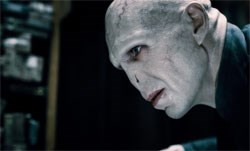
Ralph Fiennes as Lord Voldemort
Half-Blood Prince ended with a powerful symbol of hope: With wands lifted high in solace after a tragedy, the denizens of Hogwarts sent light into the dreary sky to diffuse the symbol of evil hanging over them, a hint that maybe things will be okay. Not so here: This film ends abruptly after two dark events, without any hope. Some will wonder: What was actually accomplished in those 146 minutes? Are our heroes any better off?
Article continues below
If I could play-up one obscured detail from the book, it would be to highlight an impossible-to-read inscription on a tomb: "The last enemy to be conquered is death." Now, the book doesn't cite this line's source—1 Corinthians 15:26—but Hermione does explain to Harry that it points to life after death. In the heaviness of Harry Potter's cinematic dark night of the soul, it would have been a nice reminder of the promise that the sun will indeed rise.
Talk About It
Discussion starters
Read 1 Corinthians 15:12-19. What does this section say about death? Why do you think J.K. Rowling had 1 Corinthians 15:26 on the tombstone of Harry's parents? What does it suggest to you—in terms of our world and Harry's—about the future?
Much is made of Voldemort's hatred for muggles and "mudbloods," those who have both magical and muggle parents. What real-life hatred do these scenes remind you of? Is hatred of anyone ever excusable? How does Jesus instruct us to react to those different than us?
In the fable of the three brothers, we learn that death was cheated by the use of magic. Can anything—including magic—stop death? How have Voldemort's attempts to cheat death with magic worked? What has it turned him into?
What do you think of the "magic" in these stories? How is it similar to, or different from, the sort of "magic" practiced by popular magicians and illusionists? How does it compare to occult practices or Wicca? How is it similar to or different from the sorcery mentioned in the Bible (see Deuteronomy 18:9-11)? Why do you think people like to imagine doing impossible things?
How is magic handled and practiced differently by Voldemort and the Death Eaters compared to Harry and his friends? Is the slogan "Magic is Might" a good slogan? What does it imply?
The Family Corner
For parents to consider
Harry Potter and the Deathly Hallows - Part 1 is rated PG-13 for some sequences of intense action violence, frightening images and brief sensuality. A woman, bruised and contorted, is suspended in pain over a table and murdered by a killing curse in front of a group of people. Her dead body falls to the table and it's suggested that she is then eaten by a snake. Hermione is pinned down by a woman and tortured—she screams in frantic pain and we later discover that a racial slur ("mudblood") has been cut into her arm. Action sequences involve shooting spells and frantic chases scenes. A character says something smells like "goblin piss." The "brief sensuality" comes in a vision that Ron has of Harry and Hermione kissing in a seemingly-naked embrace. The image is distorted by smoke. There are several eerie moments of scary peril.













 While we pray for peace, we need moral clarity about this war.
 As my doubts about his teachings grew, so did a secret fascination with Jesus.
 C.S. Lewis recommended discernment over diatribes in exactly the moments we’re most eager to indulge in critique.