


Jump directly to the content
subscribe:
magcover

Already a subscriber?

Home > Issue > 2007 > Summer > The Real Worship War
Average rating:

PREVIOUSFIRSTPAGE 1 of 4NEXTLAST

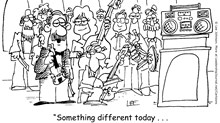
At a worship service I attended, my attention was drawn to the enthusiastic worship leader. He opened our time with prayer, asking God to meet us and draw us into the Lord's presence. Then he stood with eyes closed and the band playing. He lifted his hands and offered his joyful praise to God.

That's when I really took notice, for as he sang so rapturously, he kept stepping on the feet of the people behind him. Not just once or twice but repeatedly throughout the singing. No apology. No acknowledgment of his "tromping in the spirit." He was just praising God while oblivious to his neighbor.

I have no doubt the worship leader was just so caught up in his own experience of worship that he lost track of others. That's exactly the problem.

For all of our apparent passion about God, in the end much of our worship seems to be mostly about us. We presume we can worship in a way that will find God but lose track of our neighbor. Yet it was this very pattern in Israel's worship life that brought God's judgment. Biblical worship that finds God will also find our neighbor.

What is ironic and especially pertinent is that many debates about worship are just indirect ways of talking about ourselves, not God. Our debates devolve into how we like our worship served up each week. It's worship as consumption rather than offering. It's an expression of human taste, not a longing to reflect God's glory.

If we worship Jesus Christ, then we are to live like Jesus. In fact, Jesus says in Matthew 25:31-46 that our worship will be measured by how we have lived.

The heart of the battle over worship is this: our worship practices are separated from our call to justice and, worse, foster the self-indulgent tendencies of our culture rather than nurturing the self-sacrificing life of the kingdom of God.

Paralyzed in the pews

I do not stand outside of this sweeping critique, not for a moment. Nor does the congregation I serve. Many of us are simply busy with our daily lives. Apart from major headlines, few international needs go deep into our hearts. When we do pay attention, we often experience information overload and an unending sense of need and desperation when we hear of places like East Timor, Darfur, sub-Saharan Africa, Bangladesh, Haiti.

We admit that people may be suffering in the world. But we conclude that the suffering of "those people" is not what it would be for us; that dying of starvation in a refugee camp in Sudan is roughly the same kind of suffering experienced by the street person we encounter on the way to work; that it is beyond our grasp to respond effectively to suffering on a global scale.

Part of the malady is this tragic rationale: that in the face of global need, if we can't do everything, we can't do anything. We are paralyzed, inert.

Meanwhile our suffering world waits for signs of God on the earth, "with eager longing for the revealing of the children of God" (Rom. 8:19). God's plan is that we, the church, are to be the primary evidence of God's presence. Every continent needs solid signs of that. Staggering statistics of land grabbing and bonded slavery, of malnutrition and starvation, of HIV/AIDS and wrongful imprisonment are rife. An enormous chasm exists between these daily realities in our world and the preoccupations of most Christian disciples in North America.

PREVIOUSFIRSTPAGE 1 of 4NEXTLAST

Mark Labberton is Lloyd John Ogilvie chair for preaching and director of the Lloyd John Ogilvie Institute for Preaching at Fuller Theological Seminary in Pasadena, California.

From Issue:Visualcy, Summer 2007 | Posted: July 1, 2007

Related Training

from BuildingChurchLeaders.com
Forming the Team

Forming the Team

Get the right people in the right positions and watch them flourish.
Parents: Stop Praying for Your Kids

Parents: Stop Praying for Your Kids

Before passing along this advice to parents in your ministry, please read this article.

Not a Subscriber?

Subscribe Today!

  • One risk-free issue
  • Instant access to all Leadership Journal web content
  • OFFER DETAILS

Print subscriber?Activate your online account for complete access.

rating & comments

Average User Rating: Not rated

Rate and comment on this article: *

Low

High

1000 character limit

* Comments may be edited for tone and clarity.

From Powerlifter to Powerless

Meditation

From Powerlifter to Powerless

How physical debility strengthened my reliance on God.

Why Civic Engagement Belongs in Every Church's Mission Statement

This Is Our City

Why Civic Engagement Belongs in Every Church's Mission Statement

Churches can commission their members to vocationally bless their community, says California pastor Michael Decker

more | current issue

Christian Bible Studies

Unbalanced Blessings

Unbalanced Blessings

The balancing act of...

Books & Culture

Quiet

Quiet

Shhh! Introverts working...

Preaching Today

NFL Star Junior Seau Searched for Peace

Small Groups

Prepare with Prayer

Prepare with Prayer

Don't leave out this...

Shopping
Scripture Search
Go Deeper