
Jump directly to the content
subscribe:
magcover

Already a subscriber?

Home > Issue > 2008 > Spring > Which Half-Brain Do You Lead With?
Average rating:

There are two very different approaches to church leadership today. One is practical, focused on measurable outcomes, and concrete. Call it "left-brained." The other is intuitive, focused on process, and organic. Call it "right-brained." From these two mindsets have emerged two effective, respected church leaders with two new books. Andy Stanley is founding pastor of North Point, a megachurch near Atlanta. Tim Keel is founding pastor of Jacob's Well, an emerging church in Kansas City.

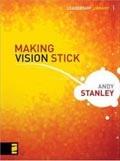
Even their book titles reveal their divergent views of leadership. Stanley's title, Making Vision Stick, communicates the pragmatic, how-to nature of his book. Keel, in contrast, declares, "This book is not a manual." Instead, Intuitive Leadership is all about story. Keel shares large portions of his own story, moving us from his childhood, through college, seminary, and into pastoral ministry.

Keel then takes the reader through a sweeping story of world history to explain how we arrived at Postmodernity. Not until page 228 does he give any practical application regarding these cultural shifts. And even this is not in the form of concrete action steps, but rather nine changes in "posture" important for ministry in this new world.

While the right-brained Intuitive Leadership is all about story, the left-brained Making Vision Stick is all about steps. Stanley's book is so short, so practical, it doesn't even need a table of contents. From "State the vision simply" to "Live the vision personally," he gives handy instructions with examples from North Point.

The differences between Keel and Stanley go beyond style, however. They have very different views of the leader's role. For Stanley, the leader is central to a church's vision, responsible for creating it, communicating it, and maintaining it. "When a leader blames the follower for not following, the leader has ceased to lead," he writes.

Keel, by contrast, presents a decentralized approach in which direction is discovered from within the community. In this setting, the leader's primary role is that of environmentalist, not program director; one of asking questions, not giving answers. "Such a move requires that you trust the people with whom you dialogue enough to listen to what they have to say."

While Stanley clearly believes in the importance of a central visionary leader, he does not advocate North Point's vision as normative for everyone. He shares his own church's story but never suggests that vision is best for another church. Both Keel and Stanley understand the importance of context.

Keel emphasizes contextualized leadership. Stanley ideas of contextualization are more subtle, but both clearly understand that their churches' unique callings should not be generalized.

Both authors also understand systems and what can sabotage their effectiveness. Stanley writes, "It's tough to make vision stick. Time has a way of eroding the adhesive." Keel agrees, "Organizations, as they mature, often lose sight of the original ...

log in

To view the rest of this article, you must be a subscriber to LeadershipJournal.net.
Print subscriber? Activate your online account for complete access.

Related Training

from BuildingChurchLeaders.com
The Heart of a Servant Leader

The Heart of a Servant Leader

We are servants first and leaders second.
Postmodern Spirituality

Postmodern Spirituality

Lessons learned in evangelism and Christianity while serving a cynical generation.

Not a Subscriber?

Subscribe Today!

  • One risk-free issue
  • Instant access to all Leadership Journal web content
  • OFFER DETAILS

Print subscriber?Activate your online account for complete access.

From Powerlifter to Powerless

Meditation

From Powerlifter to Powerless

How physical debility strengthened my reliance on God.

Why Civic Engagement Belongs in Every Church's Mission Statement

This Is Our City

Why Civic Engagement Belongs in Every Church's Mission Statement

Churches can commission their members to vocationally bless their community, says California pastor Michael Decker

more | current issue

Christian Bible Studies

Unbalanced Blessings

Unbalanced Blessings

The balancing act of...

Books & Culture

Quiet

Quiet

Shhh! Introverts working...

Preaching Today

NFL Star Junior Seau Searched for Peace

Small Groups

Prepare with Prayer

Prepare with Prayer

Don't leave out this...

Shopping
Scripture Search
Go Deeper