




The New Tent-Makers
"Well Tim," I said "I'm about to feature you and Scott in my writing. Perhaps you can become one of the role models." Maybe future seminarians (as well as seminaries of the future) will realize that bivocationalism should not be seen as a failure, but in fact can be a successful strategy and a legitimate way of pursuing one's calling.
Coffee Church
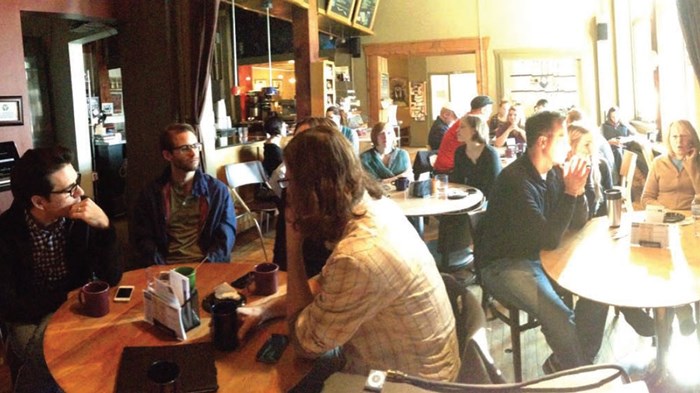
Scott Woller leads a church in the North Loop area of Minneapolis. Corner Coffee/Corner Church is actually two distinct legal entities sharing a single location—and the same vision. Monday through Saturday, Corner Coffee is, you guessed it, a coffee shop. Their product is coffee, although creating a sense of community is the underlying goal.
Given that a fair amount of this article was written in the coffee shop, I'm able to attest to the fact that Scott and his team are accomplishing this goal. Corner Coffee is a for-profit LLC that creates neighborhood jobs. While the coffee shop has never paid a salary for Scott or other church staff, 100 percent of the profits of the coffee shop go toward the church's operating budget. The church, as a legal entity, is the sole shareholder of the coffee shop. Scott is, in effect, the coffee shop's volunteer CEO.
Corner Coffee was conceived as a way to plant Corner Church in an urban setting. Being an Assemblies of God plant, members of that denomination would feel theologically quite at home at Corner Church, just so long as they don't mind the espresso machine hissing in the background. By having a fully-functioning, profitable business six days per week, the separately incorporated church has very low overhead for Sundays, and is able to meet in a comfortable, casual setting. (By the way, it took two years for Corner Church to be profitable. Scott hastens to add that a coffee shop is not a way to make "easy money.")
Being in a non-traditional environment is crucial for the work of Corner Church. The vast majority of the church's Sunday attendees are formerly churched individuals, many of whom have been scarred by past church experiences. Some of these negative experiences involve issues with the offering plate. So to grow and reach new attendees, Corner Church must keep a low overhead and strive to keep pressure around giving low, especially for newer attendees. In addition, Scott explains that being held in a coffee shop allows Corner Church to be an important part of the neighborhood. Scott feels meeting in a coffee shop "as church" sends that signal quite naturally.
Scott never wants to have a conversation about why the church doesn't pay taxes: Corner Coffee does! And he never wants the neighborhood to have a sense that the doors are closed or the parking lots are gated Monday through Saturday. And most of all, Scott doesn't want the "church community to let their faith become dormant during the week. We want the church facility to encourage people to live out their faith every single day."
Related Training
from BuildingChurchLeaders.comSubscribe to read more
Subscribe Today!
- One risk-free issue
- Instant access to all Leadership Journal web content
- OFFER DETAILS