In Roman Polanski's Chinatown, detective Jake Gittes became suspicious of a devious California millionaire named Noah Cross, played by the great John Huston. Dazzled by Cross's fortune, acquired by laying irrigation pipelines across LA, Gittes asked why such a rich man would want to get richer. "What can you buy that you can't already afford?"
Cross's answer was simple: "The future."
That answer would probably make sense to Daniel Plainview, the central character of There Will Be Blood, written and directed by Paul Thomas Anderson. Plainview makes his fortune tapping into "an ocean of oil" under his feet, driven by insatiable ambition.
As Plainview tries to buy up land and put in a pipeline of his own, he consults a real estate expert about the area surrounding Little Boston, California. He points to a specific spot on the map, and the expert nods: "That can be got, I'm sure." Plainview, his ravenous appetite growing with everything he consumes, asks, "Can everything around here be got?"
Curiously, it's not just greed and pipelines that Plainview and Chinatown's Cross have in common. It's the voice. Played with monstrous energy and complexity by Daniel Day-Lewis, Plainview seems possessed by the same evil spirit, rasping each line as if his throat is a chimney. He's the kind of guy who probably drinks coffee straight from the pot—and then swallows the grounds.
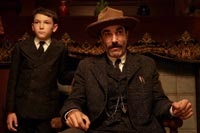
Daniel Day-Lewis as Daniel Plainview
When we first meet Plainview, he's mining for silver. Hunting for something beautiful, he emerges with something darker, something flammable, something that stains. He calls it "gold." And barrel by barrel, he builds a hellish heaven of his own. With every achievement, his ambition grows, until it squelches the sparks of his dying conscience.
Most of the time, Plainview glad-hands like a campaigning politician. Calling himself himself a "family man," he assures his target communities that he prefers "plain speaking," that he happens to "enjoy all faiths," and that "the children are our future." He even passes off H.W. (Dillon Freasier)—the orphan of a driller killed in the line of duty—as his own cute-as-a-button boy, so that he can seduce the Little Boston locals.
But in a rare moment of honesty, Plainview admits, "There is a competition in me. I want no one else to succeed." Like the oil saturating the ground, his hatred rests on the surface, twisting his smile and his speech. But it takes 158 minutes to plumb the depths of the reservoir beneath his hard façade. Suppressed rage blasts to the surface if Plainview perceives anyone's judgment, or if his failures and weaknesses are exposed.
Throughout the film, oil is a metaphor for blood. In a moment of unsettling and almost ceremonial reverence, a man smears oil on a baby's forehead. And when young Eli Sunday, the preacher at Little Boston's Church of the Third Revelation, pays Plainview a surprise visit to reveal the secret of his family's ranch in Little Boston, Plainview hurries off like an oil-thirsty vampire, all but baring his fangs.
Paul Dano is terrific as the manipulative preacher Eli Sunday
This film's title might be a reference to oil, but it could also be a line from one of Sunday's euphoric (and perhaps even demonic) sermons. Played with riveting confidence by Little Miss Sunshine's Paul Dano, Sunday rigorously compels confessions and conversions like a rig pumping oil. He's a charismatic minister, twisting the terminology of traditional Christianity into incantations and manipulation. Claiming to cast out an evil spirit, he advances toward the camera, shrieking and spitting his words, scarier than any evil spirit. He's a holy-roller version of the chauvinistic motivational speaker played by Tom Cruise in Anderson's Magnolia.
Some might find Dano's performance a joke, wondering what congregations would sit still for such histrionics. But it's not hard to find other examples of misguided, seduced congregations—on YouTube, cable TV, or in classic American literature. Anderson's movie is not a condemnation of Christian faith. In fact, on a deeper level it's consistent with Christ's teaching about the nature of ego and greed. Sunday's little sister—tellingly named "Mary"—is a faint figure of grace at the edge of the frame.
Sunday infuriates Plainview. The oil man probably recognizes his own deceitful tactics manifested in this man of the cloth. And he knows he'll win this community's trust only if he makes some kind of tenuous bargain with this evangelist.
When industry holds hands with religion, there's more arm-wrestling than affection. The marriage of Christianity and capitalism is easily corrupted. Businessmen exalt themselves by squeezing precious resources, even their children, for the sake of money, just as evangelicals can succumb to ego and self-righteousness in their zeal to save souls.
Dillon Freasier plays an orphan boy whom Plainview uses as a means to an end
When Plainview himself accepts Jesus Christ—or goes through the motions in order to win the congregation's approval—Sunday gives him a public beating until Plainview roars "I want the blood!" We're not sure if he's demanding Christ's blood for salvation—or Sunday's blood in revenge for this humiliation.
Article continues below
The film's title is also a promise from Anderson that all of this evildoing will end badly. Plainview damns himself because he cannot conceive of a relationship outside the framework of control or competition. When oil erupts in a pillar of fire—the most spectacular sight at the movies this year—we suspect that this will be followed by an equivalent eruption of Plainview's own hatred for "these people."
There's a biblical simplicity to these events, as brother turns against brother, father betrays son, and son strikes back at father. Eventually, Plainview's guilt about his crimes against a brother and a son leads to something other than repentance. He wants to turn one of heaven's "sons" against the Almighty himself.
These symmetries emphasize one of the film's central themes: How we treat our brothers, sons, and fathers will define us. Heaven is a grace-filled community, and hell is isolation and the absence of love. If there were categories in the video stores called "The Wages of Sin" or "The Nature of Evil," this film could fit perfectly in either section.
Day-Lewis has finally found a film where he can unleash his full potential without overwhelming the scenery. Plainview's as volcanic and arrogant as any big screen character portrayed by DeNiro, Pacino, Brando, or even Orson Welles. It's an extraordinary performance.
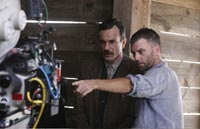
Writer-director Anderson on the set with his star actor
But the film is an even greater show of Anderson's talent. His first four features—Hard Eight (aka Sydney, 1996), Boogie Nights (1997), Magnolia (1999), and Punch-Drunk Love (2002)—earned him a reputation as an unpredictable talent who divides audiences. Since then, he worked as assistant to one of his heroes, Robert Altman, on the set of A Prairie Home Companion. He must have learned some new tricks. The patience that Anderson demonstrates, trusting Day-Lewis and Dano to dig deep and find moments of spontaneous genius—that's pure Altman. The torch has been passed.
There Will Be Blood is a masterpiece. While it's dedicated to Altman (who died in late 2006), Blood feels more like a collaborative effort from Stanley Kubrick, Terrence Malick, Peter Weir, and Francis Ford Coppola. And the film's bizarre finale is 100 percent Anderson—a plunge into the unexpected that will bewilder and divide viewers. Decades from now, cinephiles will still be passionately debating this film.
Like Kubrick's 2001: A Space Odyssey, Blood boasts a brilliant musical score in which dissonant waves of strings seem to shriek and groan like plate tectonics, alarms blaring from the desolate landscape. Radiohead guitarist Johnny Greenwood has composed a soundtrack that will probably inspire imitators.
Article continues below
Like Malick's Days of Heaven, Blood's centerpiece features a glorious, terrifying conflagration. Photographed by Anderson's faithful cinematographer Roger Elswitt, the film's visual metaphors suggest that Anderson has been studying Malick.
Like Weir's Picnic at Hanging Rock, The Last Wave, and The Mosquito Coast, Blood exemplifies Anderson's interest in landscape as metaphor.
And like Coppola's Godfather trilogy, Blood echoes that director's style, and its culmination is reminiscent of General Kurtz's moment of self-realization at the end of Apocalypse Now. Where Kurtz gasped "The horror!" in comprehending his depravity, Plainview makes an ecstatic announcement—a mocking distortion of Christ's own "last words." And by way of bitter irony, he's telling the truth.
There Will Be Blood may as well have been called Heart of Darkness.
Talk About It
Discussion starters
Does oil strike you as a metaphor in this film? What might it represent? Talk about scenes in which oil suggests something more than itself. What about the biblical names of the characters; any significance?
What can you discern about Daniel Plainview's personal history? What do we know about his family? Do you suspect anything beyond the details given in the film?
Discuss H.W.'s final scene. What do you think his future will be like? Will he be like his father, or different? Why do you think so?
What do you think of Mary Sunday? Discuss how Plainview responds to her. Does she really reach him at all with her kindness, or is he just pretending to care for her?
Talk about the similarities and differences of Plainview and Sunday. What motivates them? Are they both dishonest?
Talk about their final confrontation. What do we learn about Sunday in that scene? Why does Plainview give Sunday such cruel instructions? Why do you suppose the scene is set in a private bowling alley?
The Family Corner
For parents to consider
There Will Be Blood is rated R for violence, but the film is a horrifying portrait of human evil. There is accidental violence, deliberate violence, verbal abuse, and scenes in which children are severely injured and abandoned. Its portrayal of a misguided church might mislead viewers who would jump to unfair conclusions about the faith that the church claims to uphold. This film is for discerning adults only.
Beyoncé’s right. Whether listening to Cowboy Carter or reading theology, diversity is a good thing.
Khristi Adams
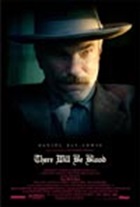
There Will Be Blood
1 of 4
Daniel Day-Lewis as Daniel PlainviewPaul Dano is terrific as the manipulative preacher Eli SundayDillon Freasier plays an orphan boy whom Plainview uses as a means to an endWriter-director Anderson on the set with his star actor















 While we pray for peace, we need moral clarity about this war.
 We’ve got little information on Jesus’ appearance and personality. But that’s the way God designed it.españolFrançais
 Beyoncé’s right. Whether listening to Cowboy Carter or reading theology, diversity is a good thing.