






Zoning the Land for the Glory of God: A Developer's Lament

To participate in segregation or not.
To settle for "marginal" when excellence could be achieved.
These are some of my internal struggles.
What I'm referring to is my growing discontentment with the land-use patterns and decision making so often used in the United States. For the past 13 years, I have been employed by a large homebuilder in the Southeast and done everything from manage residential construction to oversee the purchase of property for development. My eye is trained on our physical environment and places—the realm in which we carry out our daily lives.
Have you ever wondered why our physical environment (roads, buildings, cities, suburbs, and rural areas) has developed the way it has? The use of most pieces of property is governed by rules known as "zoning." Zoning laws are usually localized and specific regulations that describe what is legal to do with one's land. For instance, a retail store owner often needs public zoning approval prior to building a new shop on a vacant corner. Regulations can be so detailed that homeowners might even be demanded to notify the neighborhood and hold community meetings to gain public approval of the color, material and architectural style of a front porch renovation if their house is located in an area designated as a historic district.
In the state of Virginia, where I live, zoning is managed by two rules: (1) a comprehensive plan that must by law be reviewed and updated regularly in a process that involves the community; and (2) the Board and Council members who are called to determine if a project meets the comprehensive plan and ultimately to determine if it will be developed. There are as many local zoning nuances as there are jurisdictions across the country.
Thinking strategically about how we use the land is both wise and biblically supported in the Genesis cultural mandate. Land-use planning prompts the careful use of resources, summons public input in growth decisions, anticipates future infrastructure needs like drinking water and sewer systems, plans transportation, helps use taxpayer dollars in a cost-effective way, and shapes the physical environment where people live. But like anything, the tool is not the trouble, but its misuse.
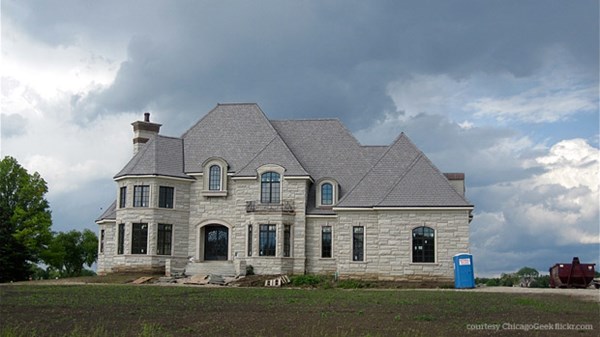
In the region where I work, I've noticed that these planning processes are increasingly used to quietly segregate people into socioeconomic and racial buckets—all in the name of "orderly development" consistent with the comprehensive plan. For example, in one recent zoning case, a locality determined that a property was suitable for residential development, but that new homes must have a minimum of 2,800 square feet, use costly brick construction and front facades, have irrigated lawns, hold two-car garages, and be built on no less than quarter-acre lots. From a builder's perspective, I know that the cost of simply building a home with these features will exclude many in the community who are not able to support the attached mortgage. This is a convenient and quiet way to perpetuate segregation and to drive the poor away. In fact, a locality could establish a comprehensive plan that not only segregates people within its borders but functionally pushes a class of people outside of its borders over time. That's not a great way to care for the least of these—the poor, the widow, the fatherless and the alien, as we are encouraged to do throughout Scripture.
Further, why are landowners forced by zoning to use property for a single purpose? Why are so many commercial shopping centers vacant wastelands of parking from 8pm to 8am? When the Lord asked us in Genesis 1:28 to steward the earth, did he really envision sprawling and separated uses in the manner we have crafted in the West for the past 60 years? How can we glorify our Creator in the stewardship of his creation? Another silent group that needs an advocate is our children who will need to deal with an ailing infrastructure. Our desire to segregate leaves a staggering infrastructure maintenance burden on the next generation.
I should emphasize that there is no "one size fits all" answer for land use decisions. In the best case, such decisions are conversations between all affected parties. But while there is no "right" answer to land use, there are certainly ways that zoning laws further injustice, deter mercy, and discourage community instead of foster it.
But what can I do? I have influence within my organization but certainly not enough to change the charter from maximizing shareholder value to seeking justice. And besides, if our group doesn't build in the ways required by the zoning, someone else will, and the pattern will continue. Is it not enough to act with integrity, make a living, and follow the rules? As a Jesus follower who filters life through the truth contained in Scripture, this presents tension for me on a variety of levels.
But maybe this is what Daniel felt in his early service to Nebuchadnezzar, or Moses in the house of Pharaoh. It was in those times that both were prepared and equipped to take the steps God had ordained "at the right time" to pursue change and systemic justice. Micah 6:8 calls us to love mercy, pursue justice and to walk humbly with our God. I feel that often love, justice and mercy are available in small bites but that addressing systematic injustices requires time and preparation.
Working in the light of this has been a journey. I have gained a reputation as a man of integrity in the local real-estate community, and have done my best to influence company decisions. But at the end of the day, a for-profit construction company is in the business of providing a salable product to a customer, not community building. I am ready for another way. A way forward in real estate that blends financial return with kingdom returns. A way that listens to the needs of those who are not heard. What is my next step to pursue market based development that promotes justice and mercy? Psalm 24:1 reminds that "the earth is the Lord's and everything in it, the world and all who live in it." I will steward and be a co-creator in light of this truth and in a manner worthy of the One who created me. That is my goal.
Rob Lanphear is a land manager in Richmond, Virginia, where he attends Third Presbyterian Church.

Rethinking the $3,000 Missions Trip

Furniture Fit for the Kingdom

Faith in a Fallen Empire

 RSS
RSS
 TWITTER
 FACEBOOK
Comments Are Closed
Displaying 1–1 of 1 comments
See all comments
Roger McKinney
I would really like to know if the author has read any of the late Jane Jacobs' books on development and zoning. I think she had the right answer: get rid of zoning laws. In my experience, zoning not only segregates, but is used by the large developers to keep out competition from smaller builders.