While our mothers and grandmothers burned bras and flooded the workforce, we chose a different life. We refused to pick between holding a job and raising our kids at home. We're doing both.
My story is like many other stay-at-home moms'. I was very career-focused in high school and college, then I got married and had kids, and that changed. I didn't want to leave them in daycare so I could work a 9-to-5.
At home, though, I became bored, restless, and unhappy. Many women who have been there share my frustration. We want to "have it all" as they say, and by many standards, today's families who blend work and family are making that happen.
Before factories and cities, there were no lines between work and family life, explains Anne Bogel, who traces the history of work in her popular ebook Work Shift. People worked where they lived, and everyone—even the kids—pitched in. Then came the Industrial Revolution, and more people left home to go to work. In the postwar years, gender roles became more defined: men went to work, and women stayed home.
Feminism in the 20th century introduced more and more women into the workforce, leading to the female CEOs and industry leaders of today. They are great role models, and many are making a lasting difference in our world. Still, many children raised by feminists didn't want to sacrifice their family for work. They pushed for a better balance.
Women began to choose home-life, and their spouses didn't want to miss out either. Now, with the rise of technology, both men and women find themselves building a more modern version of the pre-industrial economy, where work and family blend.
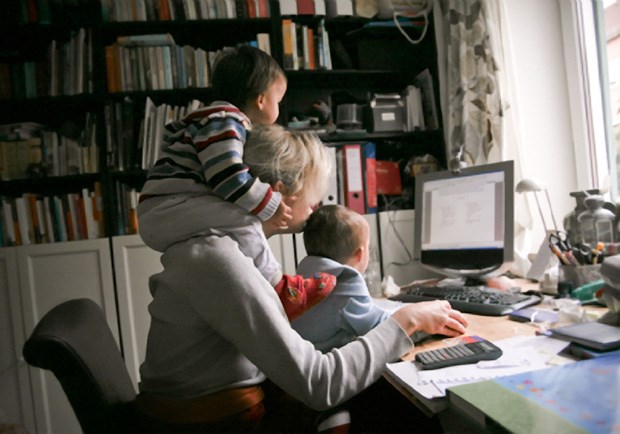
These busy moms are building all kinds of careers for themselves: blogging, writing, photography, baking, sales, and consulting to name a few. They are selling products, working flex or part-time, and focusing the time they need to on their young kids. In many cases fathers are also finding more flexible working arrangements, putting them at home more often than ever before. Some researchers predict that the number of Americans working from home, at least part-time, could double by 2016.
My friends Ashleigh and Paul are great examples of this. She runs a photography business, producing beautiful pictures of families and kids in our city. He is a pharmacist at a large corporate pharmacy. He goes into the office a few days a week, but spends most of his working time on-call to handle any problems patients have with medicines. He can be on-call almost anywhere, which gives him a lot of freedom in how he manages his time. They take turns parenting and working, managing their schedules so that all responsibilities are taken care of.
Families like my friends' aren't starting million dollar tech companies (at least not intentionally). They won't be on the cover of Forbes or Fast Company any time soon. But they are creating their own choices, earning a good income, and raising their own children. Those truly bucking the system are even homeschooling, a growing trend that could cause all manner of new shifts in the next generation.
When I begin to rant about the work or school environment, people tend to reply, "Well, that's just the system." My answer—echoed by the women across the country who are redefining work-from-home—is, "It's time to change the system."
The great thing about these new workers is that they don't just trace their roots through modern history. The Proverbs 31 woman—that ultimate analogy—is a biblical example of blending work and family. She is often used in the argument that all women should stay home with their children. However, that interpretation misses so much of the story. She cares for her home and children, but she also "considers a field and buys it…She sees that her trading is profitable." She brings food into her home from far away, works from dawn until dusk, and cares for the sick and needy who come her way.
She looks a lot like the work-from-home mothers of today.
As this generation continues to innovate the way work and family combine, they continue to create more choices for themselves and others. And that is truly women's liberation.












 While we pray for peace, we need moral clarity about this war.
 A Christian reconciliation group in Israel and Palestine warned that war would come. Now the war threatens their relevance.العربيةFrançais
 As Haiti is uprooted by violence, church leaders treat gunshot wounds, give up homes for strangers, and rescue dignitaries.Français





